
Moisture in walls is a common problem that many homeowners notice during monsoon or after leakage issues. What may start as small moisture spots on wall surfaces or minor wet patches on wall corners can gradually lead to peeling paint, mold growth, bad odor, and serious walls dampness if ignored. From my experience, identifying these early warning signs quickly can help prevent bigger issues like mold growth, damaged plaster, and expensive waterproofing repairs later.
Common Signs of Moisture in Walls
In most homes, moisture in walls usually starts because of a few common issues that are easy to miss in the beginning. Here are some of the most common signs of wall dampness homeowners should watch out for.
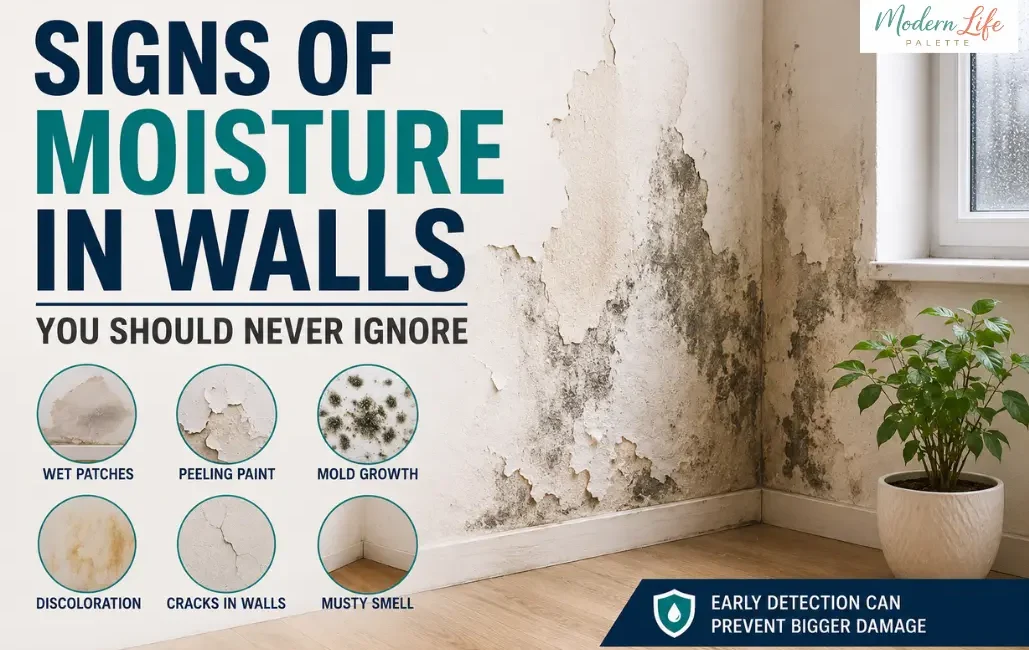
1. Damp or Wet Patches on Walls
One of the earliest signs of moisture in walls is the appearance of damp or wet patches on wall surfaces. These patches may look darker than the surrounding area and often become more visible during rainy weather or humid conditions. In severe cases, the moisture spots on wall surfaces continue spreading over time.
Wet patches commonly appear:
- Near ceilings
- Around windows
- On bathroom walls
- Along exterior walls
- Close to plumbing lines
These patches are usually linked to water seepage, pipe leakage, roof leakage, or poor exterior waterproofing
2. Peeling or Bubbling Paint
When moisture starts getting trapped behind the wall surface, the paint slowly begins to peel, crack, or bubble. Many homeowners repaint the wall repeatedly without addressing the actual moisture in walls, causing the damage to return within a few months.
This type of walls dampness is often caused by:
- Hidden water leakage
- Rainwater entering through cracks
- Poor damp proofing
- Internal wall condensation
If ignored, the plaster underneath may also weaken and start falling off.
3. Mold and Mildew Growth
Black, green, or grey mold spots are another strong indicator of excess moisture in walls. Mold usually develops in areas with poor ventilation and continuous dampness, especially behind furniture, near bathrooms, or on exterior-facing walls.
Apart from damaging the wall surface, mold growth can also affect indoor air quality and trigger:
- Allergies
- Breathing issues
- Bad odor indoors
Persistent mold often indicates deeper wall seepage problems that may require professional dampness treatment and waterproof wall coating solutions.
4. Musty or Damp Smell Indoors
A persistent damp smell inside the house is often a hidden sign of moisture in walls, even before visible damage appears. This odor usually develops when water gets trapped inside walls for long periods, creating the perfect environment for mold and bacteria growth.
The smell is commonly noticed:
- Inside closed rooms
- Near wardrobes
- Around bathrooms
- In poorly ventilated spaces
In many homes, this issue is linked to condensation problems, rising damp, or hidden plumbing leakage inside walls.
5. Wall Discoloration and Water Stains
Yellow, brown, or uneven stains on walls are common signs of water damage. A water patch on wall surfaces may initially appear small but gradually spread as moisture continues entering the wall.
These stains often indicate:
- Roof seepage
- Bathroom leakage
- Exterior wall cracks
- Pipe leakage behind walls
If the source of seepage is not repaired early, the wall may eventually develop severe dampness and structural cracks.
6. White Powder Deposits on Walls
White chalk-like deposits, also called efflorescence, appear when water carries salts through bricks or plaster to the wall surface. Once the moisture evaporates, the salt residue remains visible.
This is a common symptom of:
- Rising damp
- Ground moisture absorption
- Poor waterproofing treatment
- Long-term seepage issues
Although many people clean these deposits repeatedly, the problem usually returns until the source of moisture in walls is permanently fixed.
7. Cracks and Damaged Plaster
Continuous walls dampness weakens the plaster layer over time, leading to cracks, flaking, and surface damage. In severe situations, chunks of plaster may begin falling from the wall.
This damage is commonly associated with:
- Structural seepage
- Long-term water penetration
- Poor construction waterproofing
- Untreated wall leakage
Timely crack repair and damp proofing treatment can help prevent further structural deterioration.
Conclusion
Small signs like wet patches on wall surfaces, peeling paint, mold growth, or a damp smell are often early indicators of moisture problems. Regular waterproofing checks and proper monsoon home maintenance can go a long way in keeping your home dry, protected, and free from long-term dampness problems.
FAQs
1. Is 40% moisture normal in a room?
Yes, 40% indoor humidity is generally considered healthy and comfortable for most homes. It helps prevent excess moisture in walls, mold growth, and condensation problems.
2. How can I tell if my walls are damp?
Common signs of moisture in walls include wet patches on wall surfaces, peeling paint, mold spots, musty smell, discoloration, and soft or swollen plaster.
3. Can moisture in walls be fixed?
Yes, moisture in walls can usually be fixed permanently if the actual source of seepage, leakage, or condensation is identified and treated properly with waterproofing and damp proofing solutions.
4. Is 70% humidity too high for a room?
Yes, 70% humidity is considered high for indoor spaces. Excess humidity can lead to walls dampness, mold growth, condensation, and a persistent damp smell inside the house.
5. Does opening a window reduce humidity?
Yes, opening windows improves ventilation and helps reduce indoor humidity, especially in kitchens, bathrooms, and rooms with poor airflow.
6. Will mold grow at 55 humidity?
Mold can begin developing when indoor humidity stays above 55–60% for long periods, especially in dark or poorly ventilated areas with moisture buildup.
7. long does it take to lower humidity in a house?
It depends on the severity of the moisture problem, ventilation, and weather conditions. In most cases, improving airflow and using dehumidifiers can help reduce humidity within a few hours to a few days.
8. Will mold go away if moisture is removed?
Removing the moisture source stops further mold growth, but existing mold should still be cleaned properly to prevent spores from spreading indoors.
9. What kills mold naturally?
White vinegar, baking soda, and hydrogen peroxide are commonly used natural solutions to clean minor mold growth on walls and surfaces.
10. How do I prevent moisture in walls during monsoon?
Regular waterproofing maintenance, repairing leaks early, sealing exterior cracks, improving ventilation, and controlling indoor humidity can help prevent moisture in walls during monsoon.