
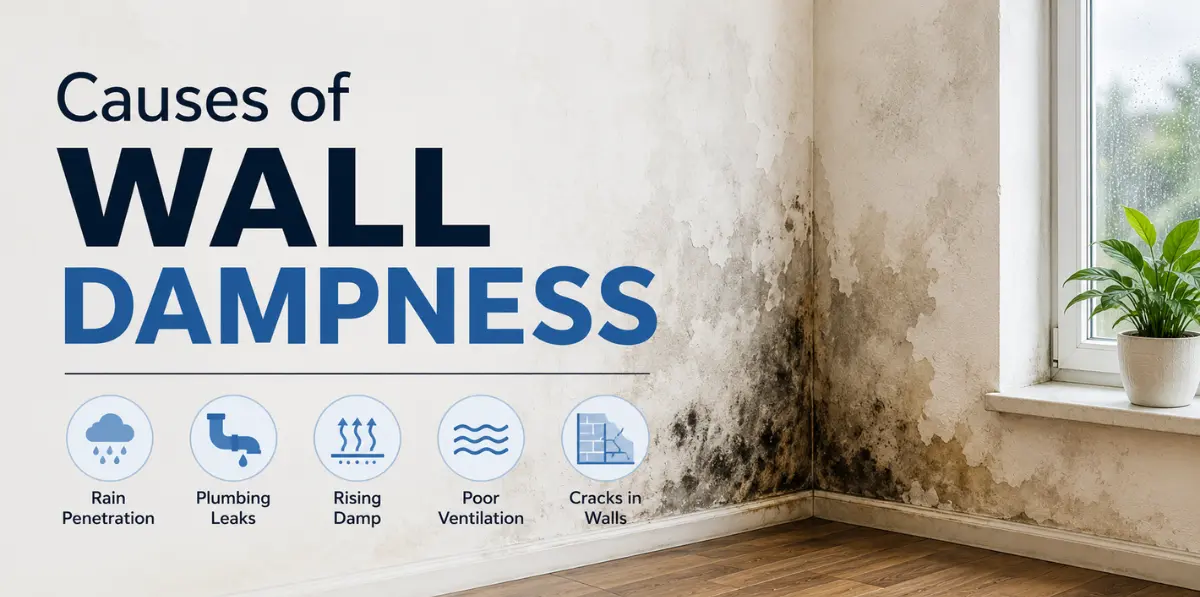
If you’ve noticed moisture marks, peeling paint, or a damp smell inside your home, there’s usually an underlying moisture issue affecting your walls. While many homeowners assume it is only a seasonal problem during monsoon, untreated dampness can gradually damage paint, plaster, furniture, and even structural surfaces over time.
Understanding the causes of dampness in walls can help you identify the source early, prevent recurring seepage problems, and avoid expensive repairs later.
What is Wall Dampness?
Wall dampness happens when moisture enters walls through leakage, seepage, cracks, condensation, or rising groundwater. Over time, this trapped moisture weakens wall surfaces and creates unhealthy indoor conditions.
The causes of moisture in walls may vary from one home to another. In some cases, the problem starts from leaking pipes, while in others it may be due to poor waterproofing or rainwater seepage during monsoon.
Why Wall Dampness Should Not Be Ignored?
Wall dampness is more than just a cosmetic issue. If moisture continues to spread inside walls, it can weaken plaster, damage paint finishes, increase indoor humidity, and create long-term structural concerns.
In many homes, the problem starts small but gradually worsens during rainy seasons when walls remain exposed to continuous moisture and humidity.
According to the Environmental Protection Agency (EPA), long-term indoor moisture problems can contribute to mold growth and poor indoor air quality.
Major Causes of Dampness in Walls
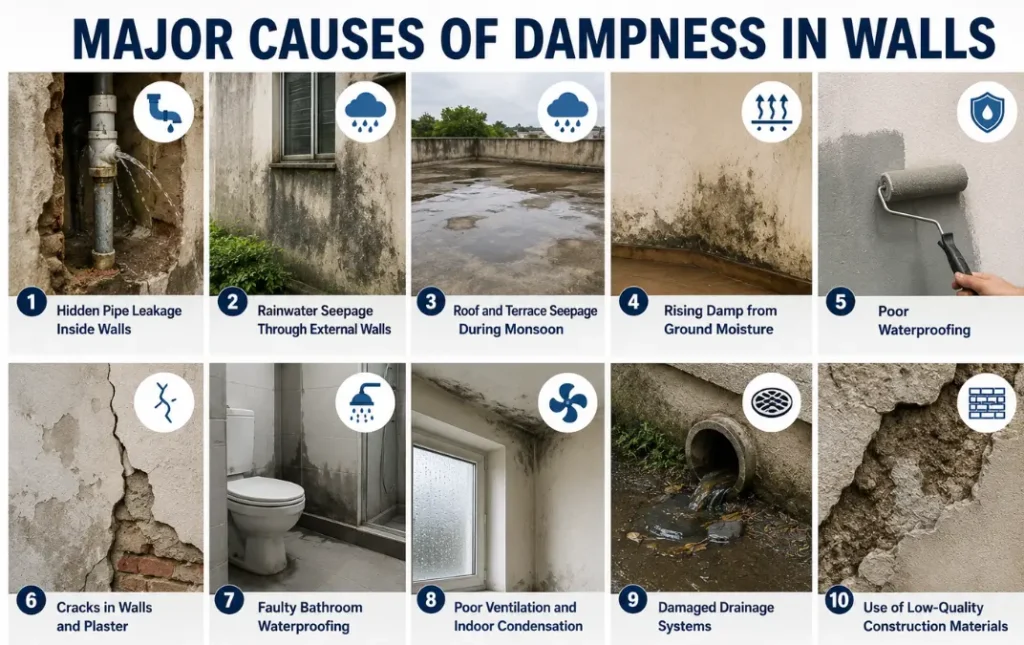
Before starting any waterproofing or repair work, it is important to understand the major causes of dampness in walls. Identifying the actual source of moisture can help homeowners choose the right solution and prevent the problem from returning again.
1. Hidden Pipe Leakage Inside Walls
Hidden pipe leakage is one of the most common causes of dampness in walls, especially in bathrooms and kitchens. Since concealed plumbing runs inside walls, even a small leak can slowly spread moisture without being noticed immediately.
You may first notice:
- Damp patches that keep expanding
- Paint bubbles or peeling paint
- Moisture near bathroom walls
- A constant damp smell indoors
If ignored for too long, the moisture can weaken plaster and damage nearby wall surfaces.
2. Rainwater Seepage Through External Walls
During heavy rainfall, water often enters through cracks and weak exterior surfaces. This is one of the biggest reasons for dampness in walls during monsoon season.
Homes that face direct rain exposure are more likely to experience:
- Wet patches on external walls
- Moisture near windows
- Paint damage after rainfall
- Damp corners inside rooms
In many cases, damaged exterior plaster or failed waterproof coatings allow rainwater to slowly seep into the structure.
3. Roof and Terrace Seepage During Monsoon
If your terrace or roof is not properly waterproofed, rainwater can gradually penetrate the ceiling and walls below. The problem usually becomes more noticeable during prolonged monsoon showers.
Common signs include:
- Ceiling damp patches
- Water stains spreading downward
- Dripping water during heavy rain
- Mold growth near ceiling corners
Many homeowners only repair visible patches indoors, but the actual problem often starts from the terrace surface above. Simple monsoon home maintenance practices like checking exterior cracks and terrace drainage can help reduce recurring seepage problems.
4. Rising Damp from Ground Moisture
In older homes and ground-floor properties, moisture can rise upward from the ground through bricks and wall pores. This process is called rising damp.
You may notice:
- Dampness near the bottom of walls
- White salt deposits on surfaces
- Peeling paint close to flooring
- Crumbling plaster
Without proper treatment, the moisture keeps traveling upward and gradually damages larger wall areas.
5. Poor Waterproofing
One of the major causes of moisture in walls is inadequate waterproofing during construction or renovation. If waterproof layers are weak, damaged, or missing, water can easily enter walls during rain or regular water exposure.
Areas commonly affected include:
- Bathrooms
- Terraces
- External walls
- Balconies
- Basements
Proper waterproofing helps create a protective barrier that reduces water penetration and long-term moisture damage inside walls.
6. Cracks in Walls and Plaster
Even small wall cracks can become entry points for water during rainy weather. Over time, moisture enters through these openings and spreads internally, eventually leading to several visible signs of moisture in walls such as peeling paint, damp patches, bubbling surfaces, and mold growth.
These cracks may develop because of:
- Building settlement
- Temperature changes
- Poor construction work
- Aging wall surfaces
Many homeowners overlook minor cracks until they begin seeing visible damp patches indoors.
7. Faulty Bathroom Waterproofing
Bathrooms constantly remain exposed to water, making them one of the most vulnerable areas for seepage issues. If tile joints or waterproof layers become damaged, water slowly passes into adjacent walls.
This often causes:
- Damp walls outside bathrooms
- Peeling paint near washrooms
- Mold growth around corners
- Persistent moisture patches
Bathroom seepage should never be ignored because the damage usually spreads gradually behind the walls. If the moisture continues spreading behind the surfaces, homeowners may eventually need proper treatment of wall dampness to prevent further damage.
8. Poor Ventilation and Indoor Condensation
Not all dampness problems are caused by leakage. In many homes, poor airflow traps humidity indoors, leading to condensation on walls.
This is common in:
- Bathrooms without exhaust fans
- Closed rooms with little ventilation
- Kitchens with excess steam
- Areas receiving limited sunlight
Over time, the trapped moisture creates ideal conditions for mold and mildew growth.
9. Damaged Drainage Systems
Blocked gutters, leaking drainpipes, and improper water drainage around the building can also contribute to wall dampness.
When rainwater accumulates near walls or foundations, it slowly penetrates the structure and increases moisture levels inside the home.
Regular drainage maintenance becomes especially important during monsoon.
10. Use of Low-Quality Construction Materials
Sometimes the problem begins during construction itself. Poor-quality plaster, cement, or bricks may absorb more water and weaken faster over time.
Improper construction practices can also leave gaps and weak waterproof barriers that increase the chances of seepage and moisture damage later.
Conclusion
Wall dampness is often an early indication of hidden moisture problems inside a home. Whether the issue is caused by seepage, leakage, poor ventilation, or weak waterproofing, identifying the root cause early can help prevent long-term structural damage and repeated repair costs.
Regular inspections, timely waterproofing, and proper monsoon home maintenance can go a long way in keeping your home dry, comfortable, and better protected throughout the year.

Other Articles
Signs of Moisture in Walls You Should Never Ignore