

Does your bathroom floor stay wet for hours during the rainy season? Do you notice a damp smell every time you walk in? If so, you’re dealing with one of the most common monsoon home maintenance challenges.
During monsoon, high humidity slows down the drying process. Water remains on floors, walls, and fixtures longer than usual, creating the perfect environment for mold, mildew, and unpleasant odors.
The good news is that you don’t need expensive renovations to solve the problem. A few simple changes can help keep your bathroom dry, fresh, and hygienic throughout the season.
Why Is Your Bathroom More Damp During Monsoon?
Even if you clean your bathroom regularly, monsoon weather can make it feel constantly wet.
This happens because:
- Humidity levels are much higher.
- Bathroom floors dry more slowly.
- Moisture gets trapped in corners and cabinets.
- Poor ventilation prevents air circulation.
- Small plumbing leaks become more noticeable.
Understanding the cause makes it easier to tackle the problem effectively.
How to Keep Your Bathroom Dry During Monsoon?
Now that you know what’s causing the dampness, let’s look at some simple ways to keep your bathroom dry during monsoon. A few small changes can help reduce moisture, prevent mold, and keep the space fresh throughout the season.
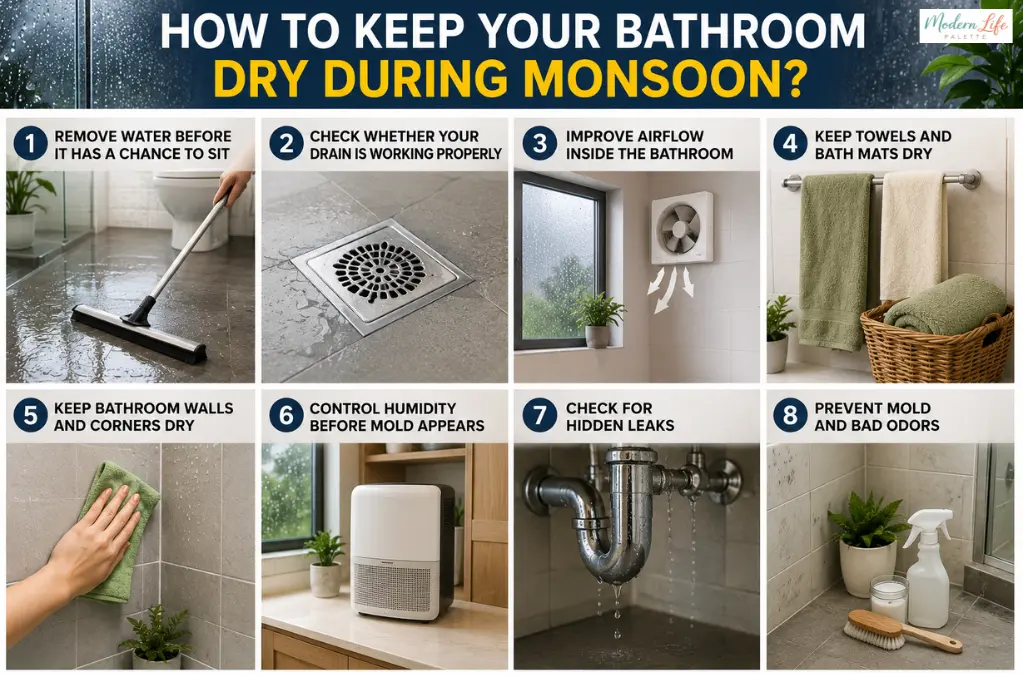
Remove Water Before It Has a Chance to Sit
If you’ve noticed that your bathroom floor stays wet long after everyone has finished using it, standing water is probably part of the problem. During monsoon, even small puddles can take much longer to dry, allowing moisture to build up throughout the day.
After every shower, try to:
- Push excess water toward the drain using a floor wiper.
- Wipe puddles near the wash basin and toilet.
- Check that water isn’t collecting in corners.
It only takes a minute, but this simple habit can go a long way toward keeping your bathroom dry during monsoon.
Check Whether Your Drain Is Working Properly
Sometimes the issue isn’t the amount of water in your bathroom – it’s how quickly that water leaves.
If you’ve ever stepped into your bathroom and noticed water still sitting on the floor from a previous shower, your drain may not be working efficiently.
Keep an eye out for:
- Slow-draining water
- Water pooling near the shower area
- Unpleasant smells coming from the drain
Cleaning your drains regularly can help prevent water buildup and make it easier to maintain a dry bathroom.
Improve Airflow Inside the Bathroom
Have you ever noticed your mirrors staying foggy or your walls feeling damp hours after a shower? That’s usually a sign that moisture has nowhere to go.
Even the cleanest bathroom can feel damp if there isn’t enough airflow.
To improve bathroom ventilation:
- Open windows whenever possible.
- Run the exhaust fan during and after showers.
- Keep ventilation grills clean.
- Leave the bathroom door slightly open after use.
The better the airflow, the faster moisture can escape, helping your bathroom dry naturally.
Keep Towels and Bath Mats Dry
When trying to reduce bathroom moisture, most people focus on the floor. However, wet towels and bath mats can quietly hold moisture for hours.
A damp towel hanging in a humid bathroom may never dry completely, while a soaked bath mat can become a breeding ground for mold and bacteria.
To avoid this:
- Wash bath mats regularly.
- Dry towels in a well-ventilated area.
- Replace waterlogged mats when necessary.
- Avoid leaving wet clothes inside the bathroom.
These small changes can make your bathroom feel noticeably fresher.
Keep Bathroom Walls and Corners Dry
Not all moisture is easy to spot. In many bathrooms, water slowly collects on walls, grout lines, and hidden corners without attracting much attention.
The next time you finish showering, take a quick look at:
- Shower walls
- Tile grout
- Window corners
- Areas behind the toilet
These are often the first places where mold begins to appear.
Giving these surfaces a quick wipe every now and then can help prevent moisture buildup and keep your bathroom looking cleaner.
Control Humidity Before Mold Appears
Even when your floor looks dry, excess humidity can still make your bathroom feel damp.
You might notice:
- Foggy mirrors
- Condensation on windows
- Musty odors
- Damp walls
These are signs that moisture levels are higher than they should be.
To reduce bathroom humidity:
- Place moisture absorbers in enclosed areas.
- Use rock salt or charcoal to absorb excess moisture.
- Consider a dehumidifier if dampness is a recurring problem.
The sooner you control humidity, the easier it becomes to prevent mold and mildew.
Check for Hidden Leaks
Have you ever cleaned your bathroom thoroughly, only to find the same area wet again a few hours later?
A hidden leak could be the reason.
Take a few minutes to inspect:
- Faucets
- Showerheads
- Pipes beneath sinks
- Toilet connections
Catching small leaks early not only helps conserve water but also prevents unnecessary moisture from accumulating in your bathroom.
Prevent Mold and Bad Odors
One of the biggest complaints homeowners have during monsoon is that persistent damp smell that seems impossible to get rid of.
In most cases, mold, mildew, and trapped moisture are the cause.
To keep your bathroom fresh:
- Clean grout lines regularly.
- Use anti-fungal bathroom cleaners.
- Remove soap scum from tiles.
- Disinfect corners and moisture-prone areas.
A little preventive cleaning now can save you from dealing with stubborn mold and unpleasant odors later in the season.
Quick Monsoon Bathroom Checklist
Before you finish cleaning, make sure you’ve checked these essentials:
✔ Remove standing water
✔ Run the exhaust fan
✔ Clean drains regularly
✔ Wash bath mats frequently
✔ Dry towels properly
✔ Check for leaks
✔ Wipe down wet walls
✔ Use moisture absorbers
✔ Clean mold-prone corners
Final Thoughts
Keeping your bathroom dry in monsoon is less about deep cleaning and more about managing moisture every day.
When you remove standing water, improve ventilation, control humidity, and address leaks quickly, you create a bathroom that stays fresher, safer, and easier to maintain throughout the rainy season.
Looking for more seasonal home maintenance tips? Explore our Monsoon Home Care Guide for practical ways to protect your entire home from dampness, mold, and water-related damage.
Frequently Asked Questions
1. Why does my bathroom stay wet during monsoon?
High humidity during monsoon slows down the drying process, causing water to remain on floors, walls, and fixtures for longer.
2. How can I keep my bathroom dry during monsoon?
Remove standing water after use, improve ventilation, keep drains clean, dry wet towels and mats, and fix any leaks promptly.
3. Does an exhaust fan help reduce bathroom moisture?
Yes. An exhaust fan removes humid air and helps surfaces dry faster, reducing dampness and mold growth.
4. Can wet towels and bath mats make a bathroom damp?
Yes. Wet towels and bath mats trap moisture and can increase humidity levels inside the bathroom.
5. How do I prevent mold in my bathroom during the rainy season?
Keep the bathroom well-ventilated, wipe down wet surfaces, repair leaks, and clean mold-prone areas regularly.
6. Can a clogged drain cause bathroom dampness?
Yes. A clogged or slow drain can leave water standing on the floor, making the bathroom stay wet for longer.

Other Articles

How to Prevent Mosquitoes at Home