

When I first started trying to reduce my child’s screen time, I kept asking the same question: “How much is actually okay?”
There’s a lot of advice online – but most of it feels either too strict or too vague. Over time, I realized something important: it’s not about perfection, it’s about balance.
This guide breaks down realistic daily screen time limits by age – based on expert recommendations and real – life parenting.
Why Screen Time Limits Matter?
Before we get into numbers, let’s be clear – screens aren’t the enemy.
Kids learn, relax, and even socialize through screens today. But too much screen time can lead to:
- Poor sleep
- Reduced attention span
- Less physical activity
- Mood swings and irritability
The goal isn’t to eliminate screens. It’s to create healthy boundaries early.
Screen Time Limits by Age
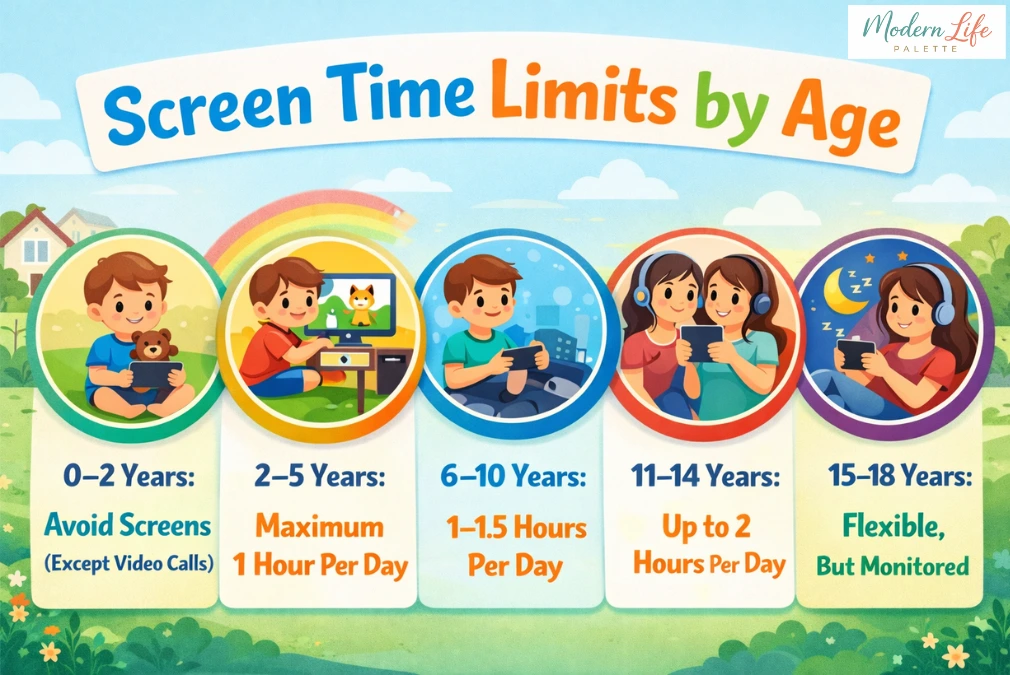
As my child grew, I realized the rules that worked earlier just stopped working. That’s when I understood – screen time limits need to change with age.
0–2 Years: Avoid Screens (Except Video Calls)
Recommended limit:
No screen time (except occasional video calls with family)
At this stage, your child’s brain is developing rapidly. They learn best through:
- Eye Contact / Face – to – face interaction
- Touch and movement
- Sounds and voices
- Real – world exploration
What worked for me:
Instead of using screens during fussy moments, I started using music, toys, or just talking, dancing and singing. It felt exhausting in the beginning, especially on busy days – but after a few weeks, I saw a real difference.
2–5 Years: Maximum 1 Hour Per Day
Recommended limit:
Up to 1 hour per day (high – quality content only)
This is usually when cartoons and videos enter daily life.
But here’s the key:
- Choose educational and slow – paced content
- Avoid fast, overstimulating videos
- Watch with your child whenever possible
Simple rule that helped me: “Watch together, not alone.”
It turns passive watching into active learning.
6–10 Years: 1–1.5 Hours Per Day
Recommended limit:
1 to 1.5 hours per day (excluding schoolwork)
At this age, kids start balancing school, play, and entertainment.
Instead of just setting limits, focus on:
- Creating a daily routine
- Prioritizing homework, outdoor play, and hobbies first
- Keeping screens as a reward, not a default activity
What changed everything for us: “First responsibilities, then screens.”
And surprisingly, the daily arguments just… stopped. That was a big win for me.
11–14 Years: Up to 2 Hours Per Day
Recommended limit:
Up to 2 hours per day (excluding study time)
This is where things get tricky – because:
- Social media enters the picture
- Peer influence increases
- Devices become more personal
Instead of strict control, shift toward:
- Open conversations
- Teaching digital responsibility
- Setting clear boundaries (no screens before bed, during meals, etc.)
A real struggle I faced: Saying “no” stopped working, but explaining why and involving my child in setting rules worked much better.
15–18 Years: Flexible, But Monitored
Recommended limit:
No fixed limit, but strong boundaries
Teenagers need independence – but they still need guidance.
Focus on:
- Healthy habits (sleep, study, social life)
- Screen – free zones (bedroom at night, family time)
- Self – regulation instead of strict enforcement
What I’ve learned: You can’t control everything at this age, but you can influence their choices.
These age – based limits become much easier to follow when you understand how to reduce screen time for kids in a practical, realistic way.
What Actually Counts as Screen Time?
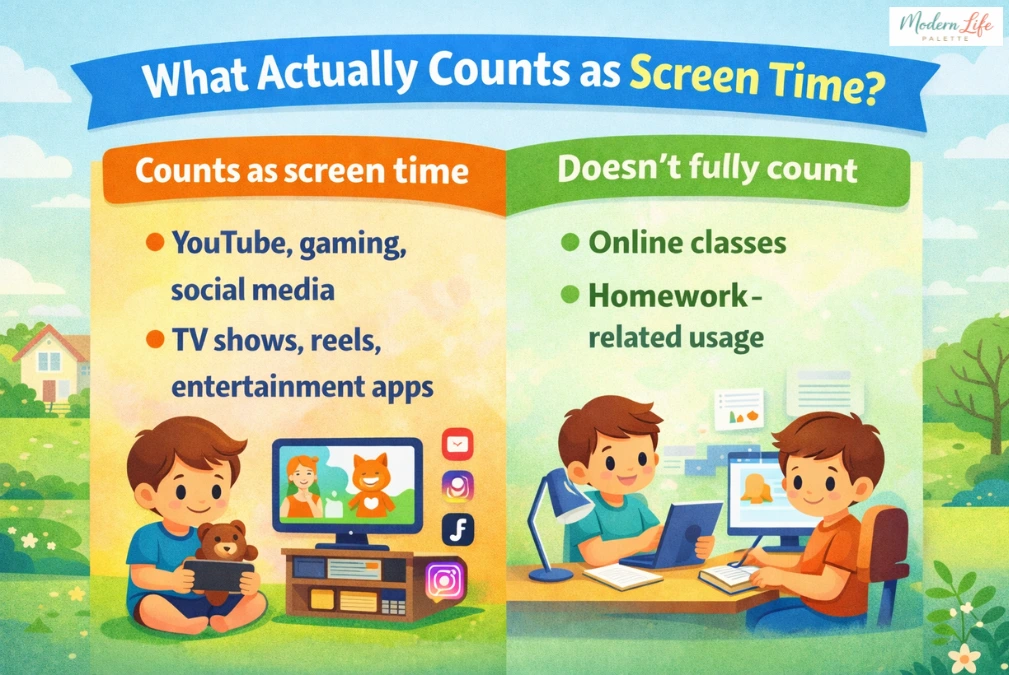
This is where many parents get confused.
Not all screen time is equal:
- Counts as screen time:
- YouTube, gaming, social media
- TV shows, reels, entertainment apps
- Doesn’t fully count (but still monitor):
- Online classes
- Homework – related usage
A helpful mindset:“Entertainment screen time needs limits. Productive screen time needs balance.”
Sample Daily Screen Routine (By Age)
This is where things started working better for me – when screen time became part of a routine instead of random usage.
For 2–5 Years
- Morning: No screens
- Afternoon: 30 mins
- Evening: 30 mins
- No screens 1 hour before bed
For 6–10 Years
- After school: Rest + play
- Evening: 1 hour screen time
- Night: No screens after dinner
For 11–14 Years
- Fixed screen slot: 1–2 hours
- No screens:
- During meals
- 1 hour before sleep
For Teens
- Flexible usage during the day
- Strict night cut – off time (very important)
This single habit can improve sleep, mood, and focus dramatically.
Real – Life Adjustments (Because Perfect Rules Don’t Work)
There were days when screen time went way beyond what I had planned – and honestly, I stopped feeling guilty about it, and that’s okay.
Because even after noticing early signs of screen addiction in kids, real life doesn’t always follow perfect rules.
Here’s what works better:
- Weekdays vs Weekends:
Slightly relaxed limits on weekends - Sick Days / Travel:
Temporary flexibility is fine - Family Time First:
Screens should not replace bonding time
The goal is consistency over time – not perfection every day.
A Quick Note from My Experience
Earlier, I focused too much on reducing screen time, but what actually worked was structuring the day better.
When kids have:
- Enough play
- Enough attention
- A predictable routine
Screen time naturally reduces without constant battles.
Final Thought
Looking back, I don’t think strict rules made the biggest difference. What really helped was creating a rhythm that worked for our family – and being okay when things didn’t go perfectly.
Start small. Stay consistent. Adjust as your child grows.
Because the goal isn’t to remove screens completely – it’s to make sure screens don’t take over childhood.

Other Articles

15 Signs Your Child Is Getting Too Attached to Screens
How to Reduce Screen Time for Kids (Without Daily Fights)