

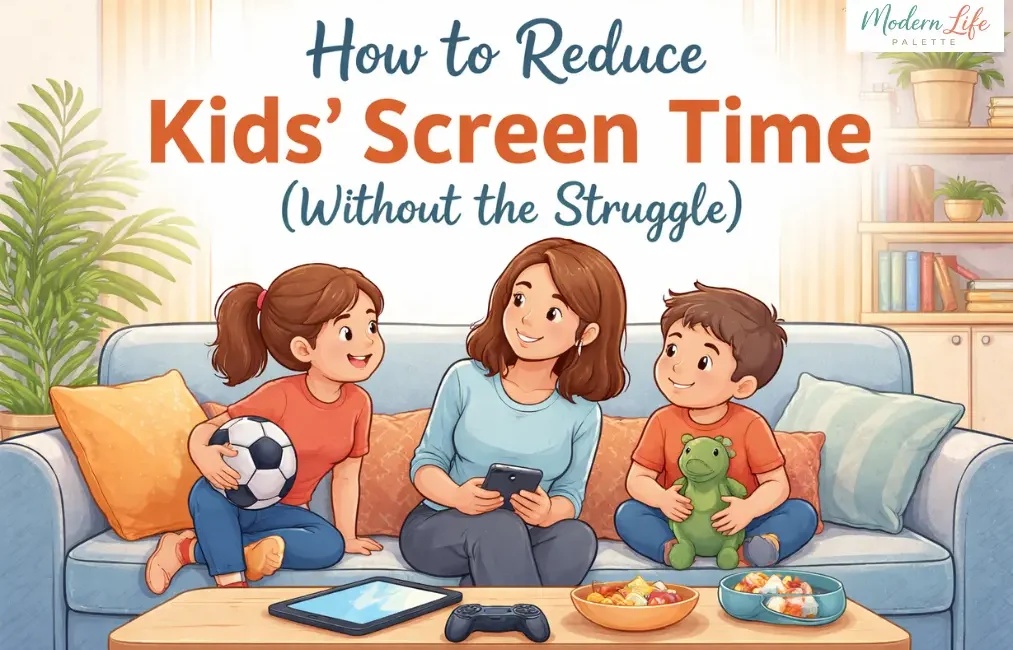
Just 5 more minutes (“बस 5 मिनट और…”)
I never realized when those 5 minutes slowly stretched into an hour every single day.
At first, it felt harmless – a cartoon while I finished some work, a game to keep things calm during a busy afternoon. But slowly, it became a routine. And the moment I said “no more screen,” it turned into tears, frustration, and honestly… guilt on my side too.
As a mom, I kept asking myself – Am I being too strict? Too lenient? Or just too tired?
If you’re trying to reduce screen time for kids without daily fights, I want you to know this – you’re not alone, and you’re definitely not failing.
This isn’t just about taking a phone away.
It’s about understanding habits, emotions, and finding a balance that works for your family.
Why Reducing Screen Time Feels Like a Daily Battle?
Before we jump into solutions, it’s important to understand why this is so hard.
Screens are designed to be addictive. Bright colors, fast movement, rewards in games – they all trigger dopamine, the “feel-good” chemical. Over time, this can lead to screen addiction in kids, making it difficult for them to switch to slower, real-world activities.
But there’s another side too.
As parents, we also often rely on screens:
- When we need a break
- While finishing work
- During meals or travel
And that’s okay. No guilt here.
But this is how screens quietly become a habit – not just for kids, but for the whole family.
How Much Screen Time Is Actually Healthy for Kids?

This is one question I found myself Googling more times than I’d like to admit –
how much screen time is healthy for children?
Because some days, I felt like I was being too strict… and on others, not strict enough.
Over time, I realized there’s no “perfect” number that works for every family. But having a rough guideline definitely helps bring some clarity (and a little less guilt).
Here’s a simple, realistic breakdown you can use as a reference:
- 0–2 years: Ideally, avoid screen time (except video calls with family – those little smiles are worth it)
- 3–5 years: Around 1 hour per day
- 6–12 years: 1–2 hours with some boundaries in place
- Teens: More flexible, but with clear and consistent limits
But here’s something I’ve personally learned –
it’s not just about screen time limits for kids, it’s about how that time is being used.
A meaningful video, learning app, or family movie night feels very different from endless scrolling or mindless watching.
So instead of chasing the “perfect number,” I started focusing more on balance – and that made things a lot easier (for both of us).
Signs of Screen Addiction in Kids
Honestly, this is something I didn’t notice right away.
At first, it felt normal – wanting to watch a little more, asking for the phone again, choosing cartoons over toys. But slowly, I started seeing small changes that made me pause and think… is this becoming a habit?
Sometimes, we don’t realize when regular use quietly turns into dependency.
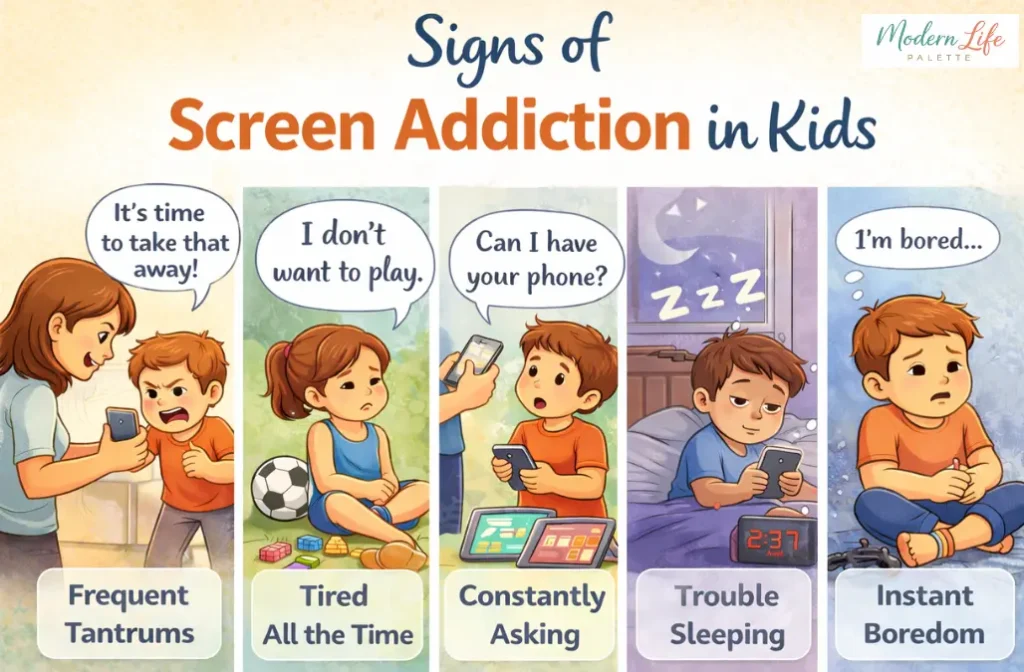
Here are a few signs of screen addiction in children that I’ve personally learned to watch for:
- Getting irritated or unusually upset when screen time is reduced
- Losing interest in toys, outdoor play, or activities they once enjoyed
- Constantly asking for the phone, TV, or “just one more video”
- Trouble sleeping or waking up feeling tired
- Saying “I’m bored” the moment screens aren’t available
If you’re noticing these screen addiction signs, here’s a detailed guide to help you identify and manage them better
The good thing is, once you’re aware of it, you can slowly start making small changes. And trust me, even small shifts can make a big difference over time.
7 Practical Ways to Reduce Screen Time (Without Fights)
This is the part I struggled with the most.
I didn’t want constant arguments. I didn’t want to feel like I was always saying “no.” And honestly, I didn’t want to take away something that kept things calm (we all have those days).
Over time, I realized reducing screen time for kids isn’t about strict rules – it’s about small, smart changes that actually work in real life.
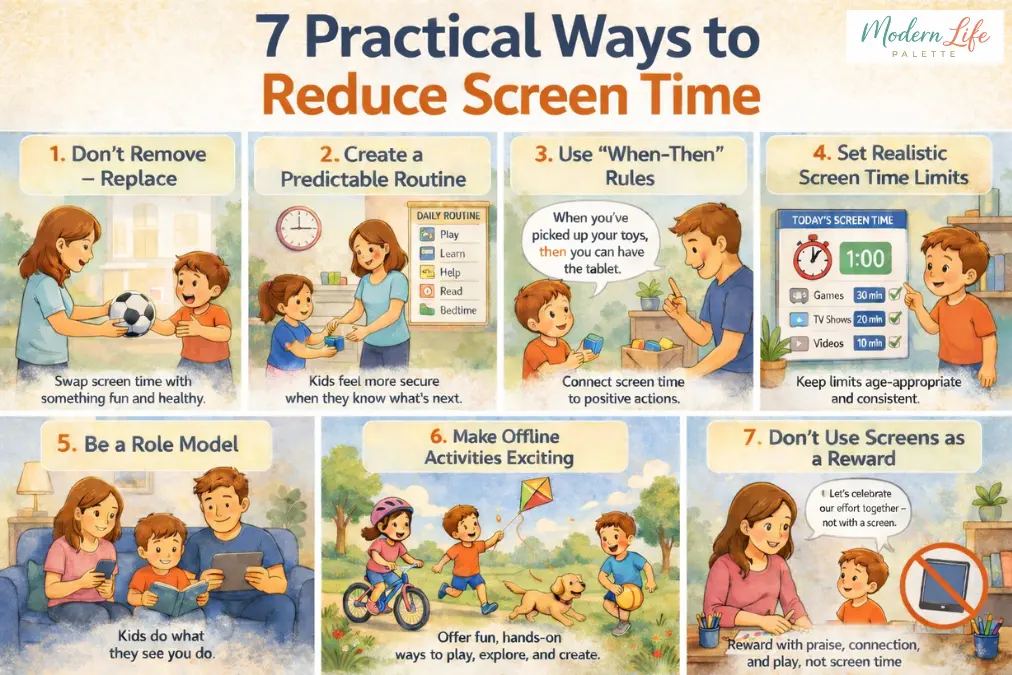
Here are a few kids screen time control tips that made a real difference for me:
1. Don’t Remove – Replace
One thing I learned quickly – if I just took the screen away, it always led to resistance.
So instead of removing it, I started replacing it with some screen free activities.
Simple things like:
- Building blocks
- Art and craft
- Simple games
And surprisingly, once my child got involved, the screen was forgotten (at least for a while!).
This is honestly one of the most effective ways to reduce screen time for kids without creating a battle.
2. Create a Predictable Routine
Kids feel more secure when they know what to expect – and I saw this firsthand.
Earlier, screen time was random. Some days more, some days less… and that’s what caused confusion (and arguments).
So I started predictable routine for kids (Eg: Homework → Playtime → Screen time) and it worked.
When kids know when they’ll get screen time, they stop asking for it all day.
3. Use “When–Then” Rules
This felt like a small change, but it worked like magic.
Instead of saying “no,” I started saying: “When you finish your homework, then you can watch TV.”
It shifted the focus from restriction to responsibility. This is actually one of those simple discipline strategies that works without creating pressure or daily arguments.
And somehow, it reduced the power struggle completely.
4. Set Realistic Screen Time Limits
I’ll be honest – I tried cutting down screen time suddenly once and it did not go well. That’s when I realized, gradual changes work better.
If your child is used to 3 hours daily, bring it down slowly. Even a 20–30 minute reduction is a great start.
This makes screen time limits for kids feel manageable instead of forced.
5. Be a Role Model (This One Is Hard!)
This one hit me the hardest. I was asking my child to reduce screen time… while I was constantly checking my phone and he was noticing everything.
I didn’t aim for perfection, but I started making small changes – keeping my phone away during meals, being more present. And slowly, I saw the same behavior reflecting back.
6. Make Offline Activities Exciting
Sometimes, it’s not that kids love screens too much – it’s that other options feel boring.
So I started putting a little more effort into making offline time fun:
- DIY crafts
- Storytelling (even silly made-up ones!)
- Cooking together
These became our little moments – and they worked as great alternatives to screen time for kids.
7. Don’t Use Screens as Rewards
I used to say things like, “Finish this and you’ll get phone time.” It worked… but only temporarily.
Over time, I realized it made screens feel like a “prize” – something even more desirable.
So I changed the approach.
Instead of making it a reward, I treated screen time as just a regular part of the day – like playtime or rest time. And that small shift made a big difference.
If there’s one thing I’ve learned through all this, it’s this:
You don’t need a perfect system. You just need something that works for your home, your routine, and your child. And once you find that balance, the fights start reducing on their own.
How to Set Screen Time Rules That Actually Work?
I used to think setting rules meant being strict.
But what I’ve learned over time is – it’s not about how strict the rules are, it’s about how consistent we are with them.
There were days I’d say “no screens during dinner”… and then break my own rule because it was a long, tiring day. And honestly, that’s when things got confusing – not just for my child, but for me too.
That’s when I realized, creating screen time rules by age is helpful, but keeping them simple and consistent is what actually makes them work.
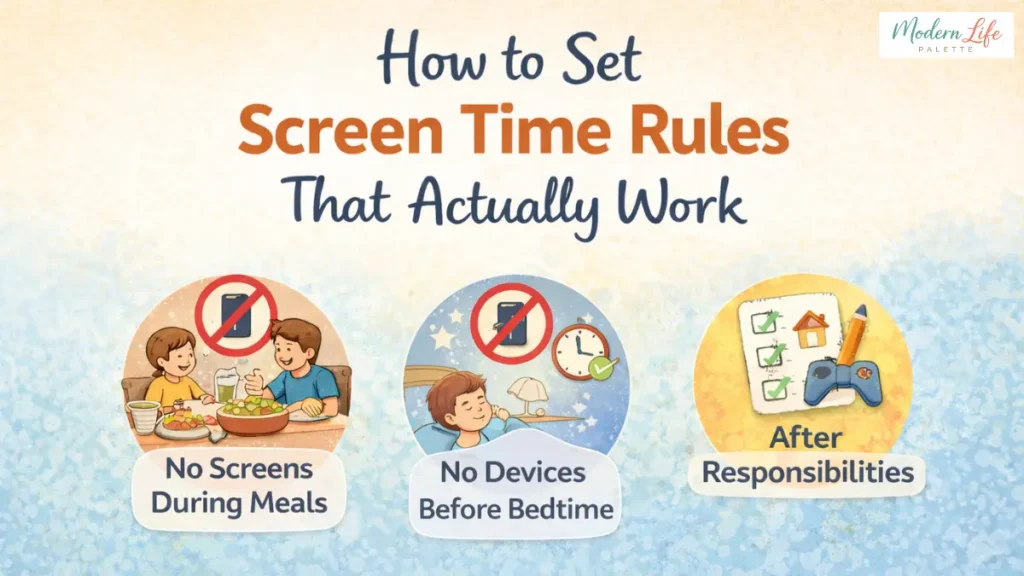
Here are a few easy rules that worked in our home:
- No screens during meals (we try to actually talk… even if it’s random conversations!)
- No devices at least 1 hour before bedtime (this really helped with better sleep)
- Screen time only after responsibilities like homework or chores
Nothing complicated. Nothing unrealistic.
And of course, we’re not perfect every single day – and that’s okay.
But the more consistent I became, the less I had to repeat myself… and the fewer arguments we had.
If there’s one thing I’d say from experience:
Consistency matters much more than strictness.
What to Do When Kids Still Resist?
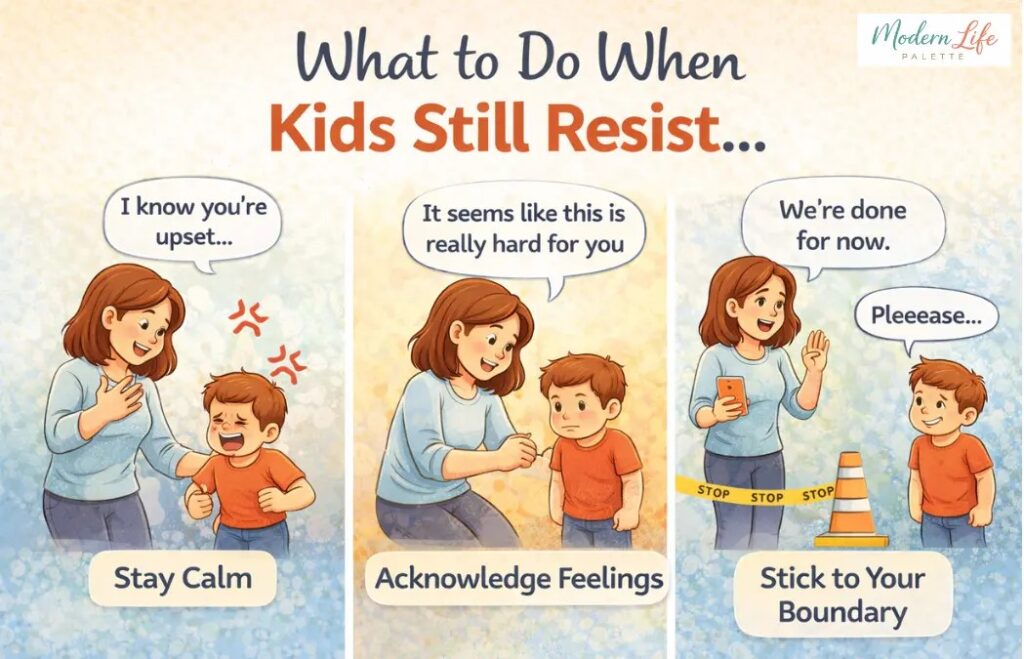
Even after trying everything, there will still be days when your child resists.
I’ve had those moments too – where no matter how calmly I explained, it still ended in frustration, tears, or that one extra “please just 5 minutes” request.
And I had to remind myself… this is normal.
We’re not just changing a habit – we’re taking away something they really enjoy. Of course there will be resistance.
On those days, here’s what I try to come back to:
- Stay calm (honestly, this is the hardest part for me too)
- Acknowledge their feelings instead of dismissing them: “I know you want more time, it’s hard to stop”
- Stick to your boundary, even if it’s uncomfortable in the moment
I’ve noticed that when I stay calm, the situation settles faster. When I react, it only stretches the battle longer.
If you’re wondering how to stop kids from using phone all the time and handle tantrums, this is the honest truth I’ve learned:
It doesn’t change overnight.
There’s no perfect trick.
But with small, consistent efforts, things do get easier. The resistance reduces, the routine settles in, and slowly… it stops feeling like a daily fight.
And on the tough days, just remind yourself – you’re doing your best, and that’s enough.
A Simple 7-Day Screen Time Reset Plan
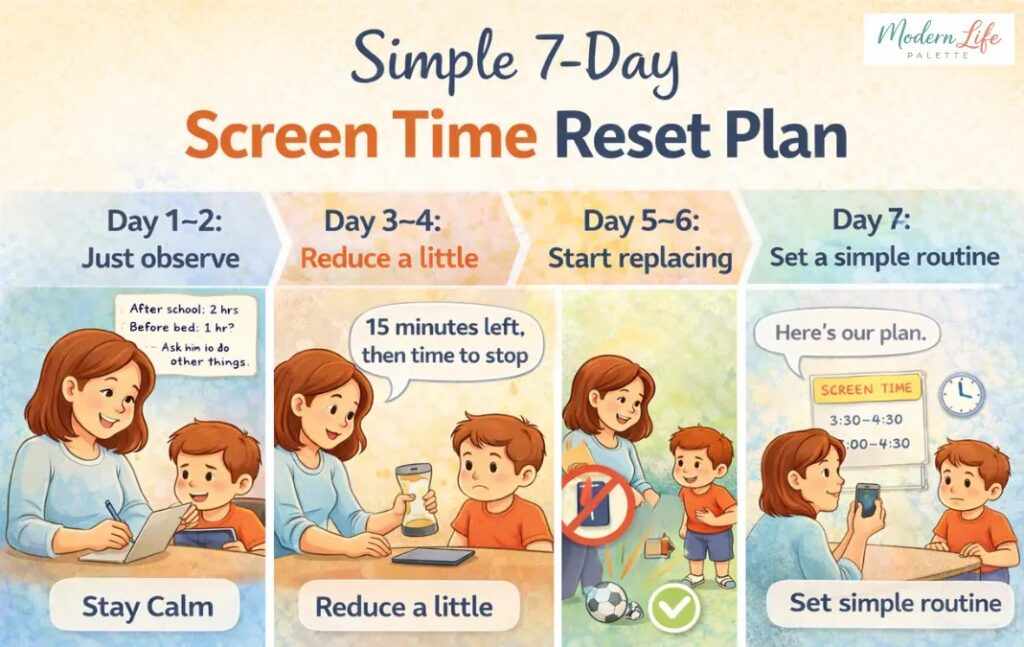
There was a point when I felt like screen time had just taken over our daily routine – and I didn’t know where to begin fixing it.
I didn’t want to suddenly take everything away and deal with meltdowns all day. So instead, I tried something gentler – a small reset, one step at a time.
If things feel a little out of control for you too, this simple digital detox for kids plan might help:
- Day 1–2: Just observe.
Notice when and why your child reaches for screens – boredom, habit, or just routine. - Day 3–4: Reduce a little.
Cut down screen time by 20–30 minutes. Nothing drastic, just a small shift. - Day 5–6: Start replacing.
Introduce a few fun activities – games, crafts, or even just spending more time together. - Day 7: Set a simple routine.
Fix a consistent time for screen use so it becomes predictable, not constant.
Check out this complete digital detox guide for kids and start with it.
What worked for me was keeping it gentle. No sudden bans or strict punishments.
Just small, steady changes that didn’t feel overwhelming – for my child or for me. And honestly, that made all the difference.
Mistakes Parents Make When Reducing Screen Time
If there’s one thing I’ve learned on this journey – it’s that there’s no perfect way to handle it. And yes, I’ve made my share of mistakes too.
Some days out of frustration, some days out of pure exhaustion… and some days just because I didn’t know what else to do. So if you’ve been feeling the same, you’re definitely not alone.
Here are a few common mistakes I’ve personally experienced while trying to reduce screen time:
- Cutting off screens suddenly
I tried this once – and it only led to more resistance and bigger meltdowns. - Being inconsistent
Saying “no screens today” and then allowing it the next day (I’ve been guilty of this!) can confuse kids and make boundaries harder to follow. - Using screens as a babysitter
On busy days, it feels like the easiest option – and honestly, sometimes it is. But over time, it quietly turns into a habit. - Not offering alternatives
Taking away screens without giving them something else to do almost always backfires.
Looking back, I realized it was never about being a “perfect parent.” It was about learning, adjusting, and doing a little better each day – including correcting a few common screen time mistakes parents make without noticing.
And that’s more than enough.
Final Thoughts:
At the end of the day, this isn’t about eliminating screens completely- it’s about balance. Some days will be perfect and on some days, screens will win.
And that’s okay.
After pregnancy and stepping into motherhood, I realized parenting isn’t about control – it’s about connection. When we focus on connection, the battles reduce on their own.
So if you’re trying to reduce screen time for kids without daily fights, just remember:
You don’t need to be perfect, you just need to be consistent.
FAQs
1. How to reduce screen time for kids without tantrums?
Start by gradually reducing usage, setting routines, and replacing screens with engaging activities instead of removing them suddenly.
2. What are healthy screen time limits for kids?
It depends on age, but generally 1–2 hours per day for school-aged children is considered balanced.
3. What are signs of screen addiction in kids?
Irritability without screens, loss of interest in other activities, and constant demand for devices.