


That damp, musty smell that suddenly appears during monsoon can make even a clean house feel unpleasant. Sometimes the room smells musty when you open the wardrobe, switch on the AC, or enter a closed bedroom after a few hours.
In most homes, this happens because moisture gets trapped indoors during rainy weather. Damp walls, wet furniture, poor ventilation, or hidden fungus are usually the real reason behind that musty smell in house spaces.
The good news is, a few simple changes can help remove the smell and prevent it from coming back throughout the monsoon season.
Why Does Your House Smell Musty During Monsoon?
A musty smell in home spaces during monsoon is usually caused by trapped moisture. Walls, furniture, fabrics, and closed rooms take much longer to dry during rainy weather, which creates the perfect environment for dampness and fungus.
I noticed this in my own house when a corner near the wardrobe started smelling damp every evening. Later, I discovered mold behind the furniture caused by hidden wall moisture.
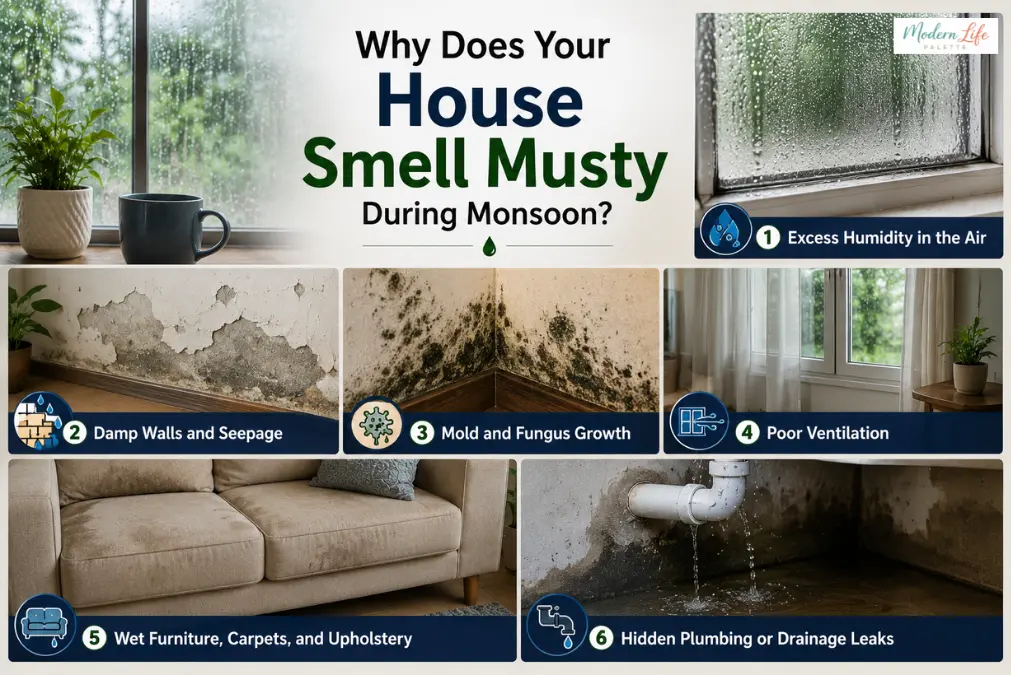
Here are the most common reasons behind a musty odor in house during monsoon:
1. Excess Humidity in the Air
One thing I’ve personally noticed during monsoon is how quickly closed rooms start feeling damp. Even if the house looks clean, trapped humidity slowly creates a moist smell in room spaces like bedrooms, wardrobes, and storerooms.
This becomes even more common in humid or coastal cities where walls and furniture take much longer to dry.
2. Damp Walls and Seepage
In my house, the musty smell actually started before I saw any visible damp patch on the wall. That is why I always tell homeowners not to ignore a corner that smells damp repeatedly during monsoon.
Water from terrace leakage, plumbing issues, wall cracks, or external seepage slowly builds up inside the walls. Understanding these causes of dampness early can help prevent bigger wall damage later.
3. Mold and Fungus Growth
If you notice a strong mold smell in house corners or behind furniture, fungus may already be growing there.
I discovered mold behind a cupboard in my own bedroom because that area had poor airflow and trapped moisture for weeks. Bathrooms, wardrobes, cabinets, and unused corners are usually the first places where fungus appears during monsoon.
4. Poor Ventilation
Many homeowners keep windows and doors closed throughout the rainy season to avoid rainwater and mosquitoes entering the house.
But I’ve noticed that rooms with less airflow develop that stale smell much faster. Even opening windows for a short time daily can make a noticeable difference.
5. Wet Furniture, Carpets, and Upholstery
Curtains, sofas, mattresses, and carpets absorb moisture surprisingly fast during monsoon.
Sometimes homeowners keep searching for wall leakage while the actual musty smell in house spaces is trapped inside damp fabrics. The smell often becomes stronger when you switch on the AC or enter a closed room after several hours.
6. Hidden Plumbing or Drainage Leaks
In many homes, hidden leakage quietly creates moisture buildup for months before anyone notices it.
Leaking pipes below sinks, bathroom drainage problems, or concealed plumbing leaks can all lead to long-term dampness and odor. This is why I always recommend checking for hidden moisture issues as part of regular monsoon home maintenance.
Common Areas Where Musty Smell Starts
One thing I’ve noticed in many homes including my own is that the smell usually starts from one hidden damp spot before spreading across the house. In my case, it began near the wardrobe corner where moisture kept getting trapped behind the furniture.
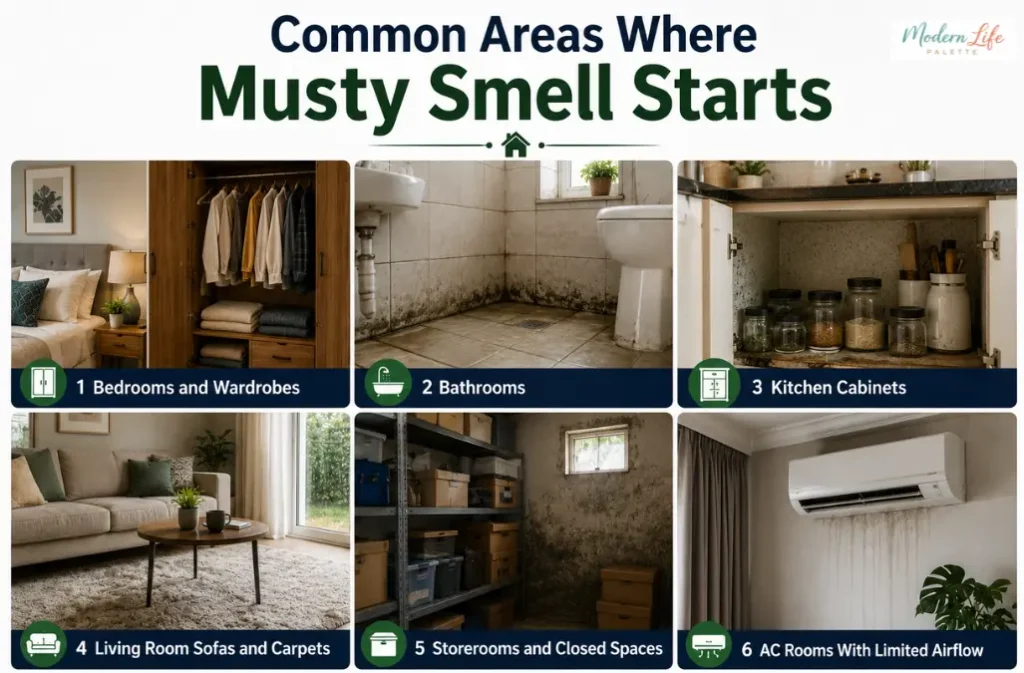
If you want to get rid of musty smell in house spaces permanently, finding the source early is very important.
1. Wardrobes
Wardrobes trap moisture easily because they stay closed for long hours. Clothes, bedsheets, and shoes absorb humidity quickly and create that typical mildew smell in house storage spaces.
2. Bathrooms
Bathrooms remain damp most of the time during monsoon. Poor ventilation, wet tiles, and fungal grout lines often cause a strong mold smell in house bathrooms.
3. Kitchen Cabinets
Cabinets near sinks are prone to hidden moisture buildup. Small leaks and cooking steam can create unpleasant odor inside storage spaces.
4. Living Room Sofas and Carpets
Sofas, curtains, rugs, and carpets absorb moisture very quickly. If they do not dry properly, they start creating a musty smell in house interiors.
5. Storerooms and Closed Spaces
Unused rooms, shoe racks, loft storage, and closed cabinets often develop odor faster because airflow is limited there.
6. AC Rooms With Limited Airflow
Dirty AC filters and poor ventilation can trap humidity indoors and create a moist smell in room spaces.
Step-by-Step Ways to Remove Musty Smell From House During Monsoon
If you have been wondering, “How do I get rid of musty smell effectively?” the real solution is removing both the odor and the trapped moisture causing it.
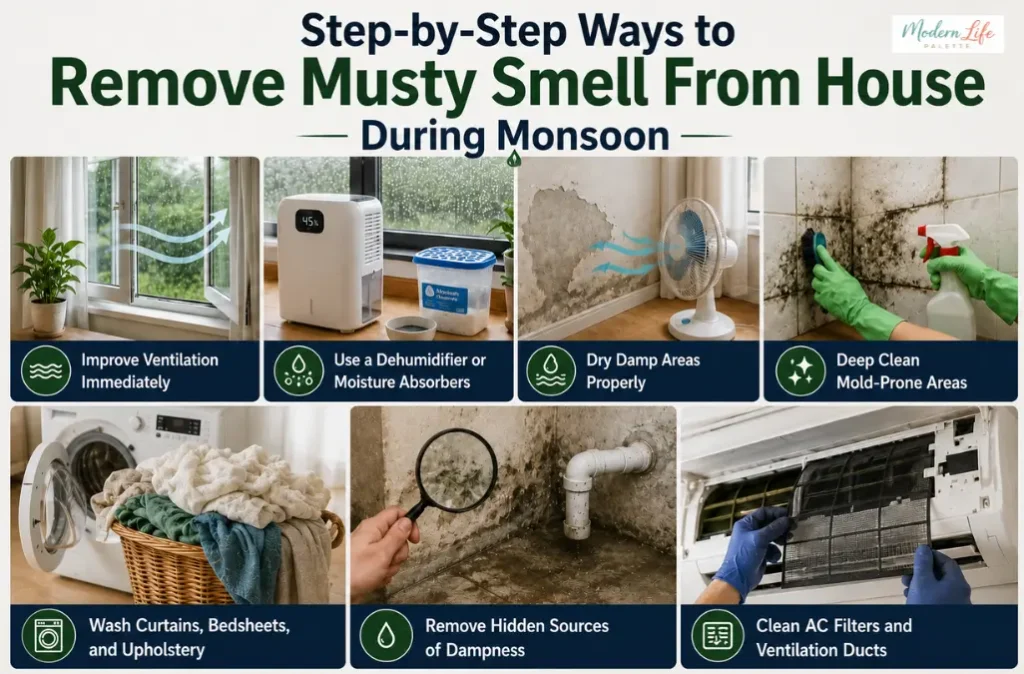
These are the practical things that genuinely helped in my own house during monsoon.
1. Improve Ventilation Immediately
This is the first thing I recommend to homeowners.
In my house, simply opening windows for some time after rainfall made a noticeable difference. Fresh airflow helps remove trapped humidity before the room starts smelling stale.
You can also:
- Use exhaust fans regularly
- Keep internal doors open for airflow
- Allow sunlight into rooms
- Use ceiling or pedestal fans near damp areas
2. Use a Dehumidifier or Moisture Absorbers
If your home feels constantly damp, reducing humidity becomes important.
For wardrobes and cabinets, simple things like:
- Silica gel packs
- Activated charcoal
- Rock salt
- Moisture absorber boxes
can help reduce mildew smell in house storage spaces.
3. Dry Damp Areas Properly
One mistake many homeowners make is cleaning wet areas but not drying them fully afterward.
During monsoon:
- Dry bathroom floors regularly
- Sun-dry cushions and mattresses whenever possible
- Use fans near damp walls
- Avoid drying clothes indoors for long periods
Removing moisture quickly helps prevent mold smell in house interiors.
4. Deep Clean Mold-Prone Areas
When I found mold behind my wardrobe, I realized how quickly fungus spreads during monsoon if ignored.
If you notice fungal spots or damp odor, clean the area early using:
- White vinegar solution
- Baking soda paste
- Mild anti-fungal cleaners
Focus especially on:
- Bathroom corners
- Window edges
- Behind furniture
- Wardrobes
- Damp walls
If fungus keeps returning repeatedly, your home may need proper treatment for wall dampness instead of temporary cleaning.
5. Wash Curtains, Bedsheets, and Upholstery
Curtains, cushions, carpets, and sofa covers absorb moisture very quickly during rainy season.
Sometimes the actual musty smell in house spaces is trapped in fabrics rather than walls.
Wash and dry:
- Curtains
- Cushion covers
- Bedsheets
- Sofa covers
- Rugs and carpets
6. Remove Hidden Sources of Dampness
If the smell keeps coming back despite cleaning, hidden moisture may be the real issue.
Check for:
- Wall seepage
- Roof leakage
- Pipe leaks
- Cracks near windows
- Terrace waterproofing issues
Persistent odor is often linked to hidden dampness problems. You can also inspect common signs of moisture before the damage spreads further.
7. Clean AC Filters and Ventilation Ducts
Dirty AC filters can spread damp odor throughout the room.
Regular AC servicing during monsoon helps reduce:
- Moist smell in room spaces
- Dust buildup
- Fungal growth inside vents
Best Natural Remedies to Remove Monsoon Odor From Home
Before using strong chemical products, I usually prefer trying simple home remedies first – especially for mild musty smell in house spaces. These remedies help absorb moisture naturally and keep closed areas smelling fresher during monsoon.

1. Baking Soda for Cupboards and Shoes
I’ve personally found baking soda very useful for wardrobes and shoe racks during rainy season.
Place small bowls inside cupboards, storage cabinets, or damp corners to absorb odor and excess moisture naturally.
2. Vinegar Spray for Walls
White vinegar works well for mild fungus smell and damp wall odor.
You can spray it lightly on affected corners, bathroom tiles, or areas where early fungal spots are starting to appear.
3. Camphor for Wardrobes
Camphor tablets are one of the easiest monsoon remedies used in many Indian homes.
I usually keep a few inside wardrobes and storage spaces because they help reduce that closed, damp smell quite effectively.
4. Charcoal to Absorb Moisture
Activated charcoal works surprisingly well for reducing musty odor in house cabinets and closed rooms.
It naturally absorbs both moisture and odor without adding any strong fragrance.
5. Neem Leaves for Natural Freshness
Neem leaves help keep wardrobes and storage spaces fresher during humid weather.
They are also useful for reducing moisture-related insects that often appear during monsoon.
How to Remove Musty Smell From Specific Areas
One thing I realized during monsoon is that every area of the house traps moisture differently. In my home, the wardrobe smelled damp first, while the bathroom developed fungus much faster because of constant moisture.
Here are simple ways to remove musty smell from the most common problem areas in the house.
1. How to Remove Musty Smell From Wardrobe
Wardrobes trap humidity very easily during monsoon because they stay closed for long hours.
To keep them fresh:
- Open wardrobe doors occasionally for airflow
- Never store slightly damp clothes
- Use camphor, charcoal, or moisture absorbers inside cupboards
- Sun-dry clothes properly before storing them
If clothes continue smelling damp, excess moisture may already be trapped inside the wardrobe walls.
2. How to Remove Musty Smell From Sofa and Mattress
Sofas and mattresses absorb moisture surprisingly fast during rainy weather.
What helped in my house was:
- Vacuuming fabric surfaces regularly
- Sprinkling baking soda before cleaning
- Sun-drying cushions and pillows whenever sunlight was available
- Keeping sofas slightly away from damp walls
This helps reduce both moisture and mold smell in house interiors.
3. How to Remove Musty Smell From Bathroom
Bathrooms remain damp for longer during monsoon, which makes fungus and odor buildup very common.
To reduce bathroom odor:
- Keep exhaust fans running regularly
- Dry floors after use
- Clean tile grout and corners frequently
- Remove stagnant water near drains or buckets
Good ventilation makes a huge difference here.
4. How to Remove Musty Smell From Carpets
Carpets hold moisture deep inside the fabric, especially during humid weather.
To prevent mildew smell in house carpets:
- Vacuum carpets thoroughly
- Sprinkle baking soda before cleaning
- Dry carpets completely after washing
- Avoid keeping damp carpets indoors for long periods
If the carpet still smells musty after cleaning, it may need deeper drying before reuse.
How Professionals Remove Musty Smell Permanently
In some homes, the smell keeps coming back no matter how much cleaning, spraying, or drying you do. I’ve seen this happen when the actual problem is hidden dampness inside walls or flooring.
In my own case, the odor reduced permanently only after the moisture source behind the wall was treated properly.
Professional dampness treatment usually focuses on fixing the root cause instead of temporarily masking the smell.
Most professionals follow steps like:
- Inspecting walls and moisture-prone areas
- Detecting hidden seepage or leakage
- Identifying the actual causes of dampness
- Treating damp walls and affected surfaces
- Applying waterproofing solutions
- Using anti-fungal treatments and wall drying methods
If you notice repeated fungus growth, peeling paint, or damp patches returning every monsoon, professional treatment for wall dampness may help prevent long-term damage.
Conclusion
A musty smell in home spaces during monsoon is usually your house’s way of signaling excess moisture. While room fresheners may temporarily hide the odor, the real solution lies in removing trapped humidity, improving ventilation, and fixing dampness issues early.
If your room smells musty repeatedly despite cleaning, don’t ignore it. Addressing the root cause now can prevent bigger problems like wall damage, fungus growth, and unhealthy indoor air later.
Frequently Asked Questions (FAQs)
1. Why does my house smell musty only during monsoon?
High humidity during monsoon traps moisture indoors, leading to fungal growth and stale odor.
2. Is musty smell harmful to health?
Long-term exposure to mold and dampness can affect indoor air quality and may trigger allergies or breathing discomfort.
3. Can damp walls cause bad odor?
Yes. Damp walls are one of the most common causes of musty smell in house environments.
4. What absorbs bad smell naturally?
Baking soda, charcoal, vinegar, camphor, and moisture absorbers help reduce odor naturally.
5. Will repainting walls remove musty odor?
Not always. If moisture remains inside the wall, the smell usually returns after some time.
6. Should I use a dehumidifier in monsoon?
Yes. Dehumidifiers help reduce indoor humidity and are especially useful in highly humid regions.

Other Articles

How to Dry Clothes Indoors During Rain Without Smell
How to Remove Fungus from Walls in Rainy Season?