

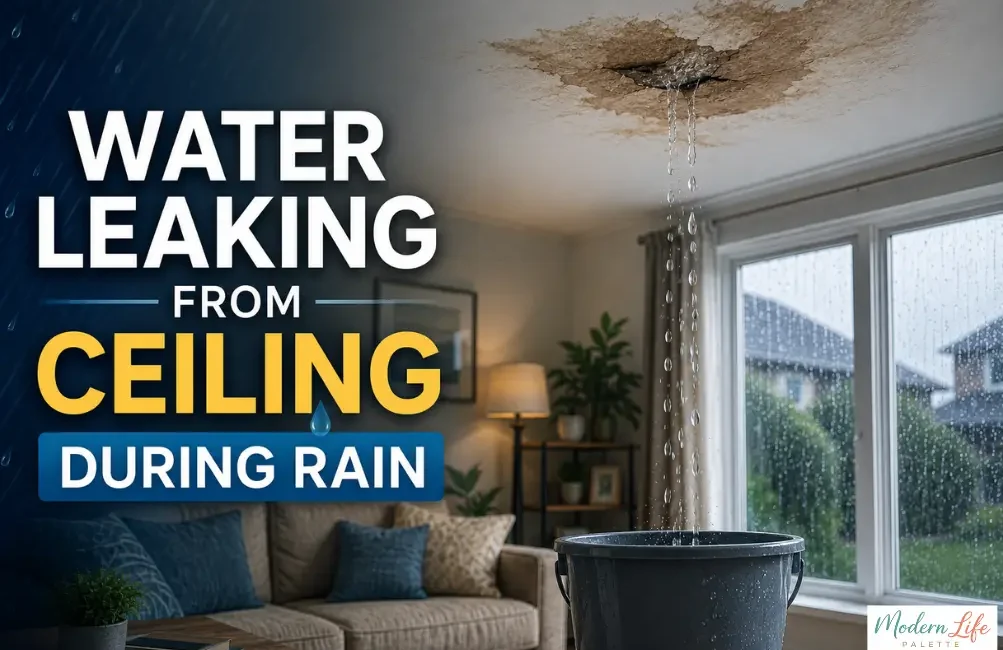
Have you noticed water leakage from ceiling during rain?
One moment you’re enjoying the sound of rainfall outside, and the next you’re staring at a wet patch spreading across your ceiling.
A few hours later, that stain turns into water dripping from the ceiling, and suddenly you’re wondering how serious the problem is and how much it’s going to cost to fix.
If you’re dealing with water leaking from the ceiling when it rains, don’t panic. In most cases, the issue can be traced back to roof damage, blocked drainage, cracks, or failing waterproofing. The key is identifying the cause early before a small leak turns into a major repair project.
In this guide, I’ll help you understand why your ceiling is leaking during rain, what steps to take immediately, and how to prevent the problem from coming back.
What Are The Common Signs Of Water Leakage In The Ceiling?
A ceiling leak doesn’t always begin with water pouring into your home. In many cases, your house gives you warning signs long before the leak becomes obvious.
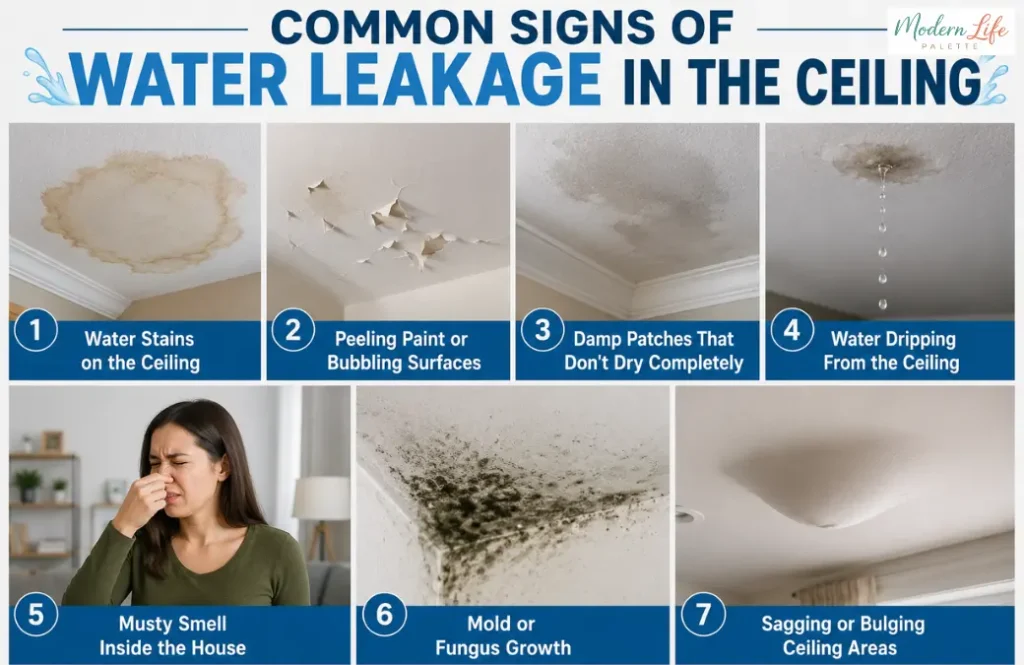
- Water Stains on the Ceiling
One of the earliest signs is a yellow, brown, or dark patch on the ceiling. Many homeowners assume it’s just an old stain, but these marks often indicate moisture trapped inside the structure. If the stain grows larger after every rainstorm, that’s a strong sign that water is still entering your home.
- Peeling Paint or Bubbling Surfaces
Have you noticed paint starting to bubble or peel? This happens when moisture becomes trapped beneath the painted surface. Over time, the paint loses adhesion and begins to lift away from the ceiling.
- Damp Patches That Don’t Dry Completely
A ceiling should never feel damp days after the rain has stopped. Persistent dampness usually means water is continuing to seep into the structure somewhere above.
- Water Dripping From the Ceiling
This is the point where most homeowners start searching for answers. If you’re seeing water dripping from the ceiling, the leak has already progressed beyond the early stages. The source may still be relatively small, but immediate attention is important.
- Musty Smell Inside the House
Sometimes your nose notices the problem before your eyes do. A persistent damp smell often indicates hidden moisture. If you’re dealing with this issue, you may also want to read our guide on removing musty smell from the house during monsoon.
- Mold or Fungus Growth
Moisture and darkness create the perfect environment for mold and fungus. You may notice black, green, or gray patches on ceilings and nearby walls. If that happens, addressing the leak alone won’t be enough – you’ll also need to remove the fungal growth.
- Sagging or Bulging Ceiling Areas
This is one sign you should never ignore. A bulging ceiling often means water has accumulated above the surface. Left unchecked, the affected area could eventually collapse.
Why Is My Ceiling Leaking During Rain?
This is usually the first question homeowners ask.
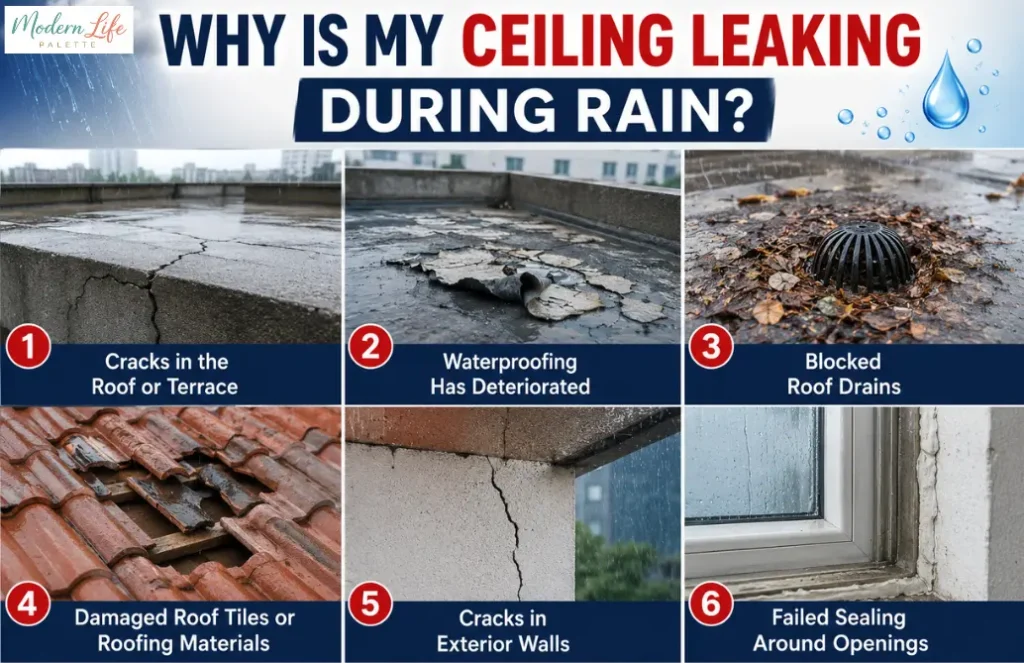
The truth is that a ceiling leak isn’t always caused by the ceiling itself. Water can enter your home through one location and travel through the structure before finally appearing somewhere else. That’s why finding the real source can sometimes be challenging.
Here are the most common reasons for a roof leaking during rain.
- Cracks in the Roof or Terrace
Over time, even strong concrete surfaces develop small cracks. At first, these cracks may seem harmless. However, during monsoon season, rainwater can slowly seep through them and make its way into the structure below.
What makes this tricky is that hairline cracks are often difficult to spot until they start causing visible problems indoors.
- Waterproofing Has Deteriorated
Many homeowners believe waterproofing is a one-time solution. In reality, waterproofing systems age just like any other part of your home.
After years of exposure to sunlight, rain, and temperature changes, waterproofing layers can weaken and lose their effectiveness. Once that happens, water starts finding its way inside.
- Blocked Roof Drains
One of the most overlooked causes of leaks is poor drainage. Leaves, dirt, debris, and even bird nests can block drainage outlets. When rainwater has nowhere to go, it begins pooling on the roof or terrace.
Eventually, that standing water finds a weak point and enters the building.
- Damaged Roof Tiles or Roofing Materials
If your home has roof tiles, sheets, or shingles, a single damaged section can allow water to enter. Strong winds, falling branches, and age-related wear can all contribute to roofing damage.
- Cracks in Exterior Walls
Not every ceiling leak starts on the roof. Water can enter through external wall cracks and travel through the building structure before appearing on the ceiling.
In fact, many of the same issues discussed in our article on the causes of dampness in walls can eventually contribute to ceiling leaks as well.
- Failed Sealing Around Openings
Areas around skylights, vents, pipes, and air-conditioning units are particularly vulnerable. When sealants crack or deteriorate, rainwater can enter through surprisingly small gaps.
What to Do When Water Starts Leaking From the Ceiling?
The moment you notice water leaking from the ceiling, it’s natural to panic a little. Your first thought is probably, “How bad is this going to be?”

While you may not be able to stop the leak immediately, there are a few things you can do to minimize damage and keep your family safe.
- Move Furniture and Valuable Items
Start by moving anything that could be damaged by water. Furniture, electronics, carpets, books, and decorative items should be moved away from the affected area as quickly as possible.
Even a slow drip can cause significant damage if it continues for several hours.
- Place a Bucket Under the Leak
This may sound obvious, but it’s the quickest way to prevent water from spreading across your floors. If the leak is active, place a bucket, container, or large bowl underneath it.
You may also want to put an old towel around the bucket to catch any splashes.
- Check for Electrical Hazards
Water and electricity are never a good combination. If the leak is close to light fixtures, ceiling fans, electrical outlets, or wiring, switch off power to the affected area if it’s safe to do so.
If you’re unsure, contact an electrician immediately.
- Don’t Ignore a Bulging Ceiling
Sometimes water collects above the ceiling and creates a visible bulge. Many homeowners assume it’s safer to leave it alone, but a water-filled ceiling can become surprisingly heavy.
If the bulge continues growing, professional assistance is recommended as soon as possible.
- Take Photos For Claim & Assessments
If the leak causes damage, photos can be useful for insurance claims and contractor assessments. Take pictures of the stain, damaged areas, and any active dripping before beginning repairs.
- Don’t Wait for the Rainy Season to End
One of the biggest mistakes homeowners make is postponing repairs until after the monsoon.
The leak may disappear when the rain stops, but the moisture trapped inside your walls and ceilings remains. Over time, that hidden moisture can lead to mold, fungus, and structural deterioration.
How to Fix Roof Leaks Based on the Cause?
There’s no single solution that works for every leak. The right roof leak repair depends entirely on what’s causing the problem.
Let’s look at some common scenarios.
- If the Roof or Terrace Has Cracks
Small cracks often allow surprising amounts of water to enter. The affected area usually needs to be cleaned, repaired, and treated with suitable waterproofing materials. The sooner cracks are addressed, the easier the repair tends to be.
- If Waterproofing Has Failed
In many homes, especially older properties, failed waterproofing is the real culprit. You may notice recurring leaks every monsoon despite previous patch repairs.
In such cases, a comprehensive waterproofing treatment may be more effective than repeatedly fixing individual leak points.
- If Drainage Is the Problem
I’ve seen many homeowners spend money on repairs only to discover that blocked drainage was causing the issue all along.
If water is pooling on your roof or terrace, clearing drainage outlets can sometimes resolve the problem before major repairs become necessary.
- If Roofing Materials Are Damaged
Broken tiles, damaged sheets, or loose roofing components should be repaired or replaced promptly. A single damaged section can allow enough water inside to create significant interior damage over time.
- If Exterior Walls Are Letting Water In
When water enters through external wall cracks, ceiling repairs alone won’t solve the issue. You’ll need to address the wall damage and any moisture-related problems that have already developed.
If you’ve noticed damp patches spreading across walls, our guide on treatment for wall dampness may help you understand the next steps.
Can You Fix a Roof Leak Yourself?
This is one of the most common questions homeowners ask. The answer depends on the severity of the problem.
If the issue is minor and easily accessible, temporary repairs may help reduce water entry until professional repairs can be arranged. However, climbing onto a wet roof during monsoon season is risky.
If you’re unsure about the source of the leak or if the affected area is difficult to access, professional help is usually the safer option.
Remember, the goal isn’t just to stop the visible leak. It’s to fix the underlying problem so it doesn’t return next season.
How Much Does Roof Leak Repair Cost?
One of the first concerns homeowners have after discovering a leak is the potential repair bill. The truth is that roof leak repair cost varies significantly depending on the cause and extent of the damage.
A simple crack repair may cost far less than replacing damaged waterproofing or restoring water-damaged ceilings.
Factors that affect roof leak repair cost include:
- Size of the affected area
- Type of roof or terrace
- Extent of water damage
- Waterproofing requirements
- Accessibility of the repair area
- Labor costs in your location
The good news is that addressing a leak early is almost always less expensive than waiting until major damage develops. A small repair today can prevent a much larger restoration project later.
How to Prevent Ceiling Leaks During Monsoon
While not every leak can be prevented, regular maintenance dramatically reduces the risk.

- Inspect Your Roof Before the Rainy Season
A simple inspection can reveal cracks, damaged sealants, and drainage issues before they become major problems.
- Clean Roof Drains Regularly
Blocked drains are one of the most common causes of roof leaks in heavy rain. Removing debris regularly can prevent water accumulation.
- Address Small Cracks Immediately
Tiny cracks rarely stay tiny. Repairing them early is usually inexpensive and straightforward.
- Monitor Moisture Problems
If you’ve already noticed signs of moisture in walls, don’t wait for ceiling leaks to appear before taking action.
- Maintain Waterproofing Systems
Like any protective system, waterproofing requires periodic maintenance and inspection.
- Follow a Monsoon Maintenance Routine
Many water-related issues can be prevented through seasonal home maintenance.
Our Monsoon Home Maintenance Guide covers several preventive steps homeowners can take before heavy rainfall arrives.
Final Thoughts
A small ceiling leak today can turn into a major repair tomorrow. If you notice water leakage from the ceiling during rain, identify the cause and address it as early as possible. Timely repairs and regular maintenance can help protect your home from dampness, mold, and costly water damage throughout the monsoon season.
Frequently Asked Questions
1. Why is my ceiling leaking only when it rains?
If the leak appears only during rainfall, the source is usually related to roofing, waterproofing, drainage, or exterior wall issues rather than indoor plumbing.
2. Why do roof leaks happen only during heavy rain?
Roof leaks in heavy rain often occur when drainage systems become overwhelmed or when existing weaknesses are exposed by prolonged water exposure.
3. Is water dripping from the ceiling dangerous?
It can be, especially if water is reaching electrical fixtures or causing structural weakening. Active leaks should always be investigated promptly.
4. How long does ceiling leak repair take?
This depends on the source of the problem. Minor repairs may be completed quickly, while waterproofing and structural repairs can take longer.
5. Will the leak stop on its own?
The visible dripping may stop when the rain ends, but the underlying issue remains. Without proper repairs, the leak will usually return.

Other Articles

How to Prevent Mosquitoes at Home
How to Dry Clothes Indoors During Rain Without Smell