
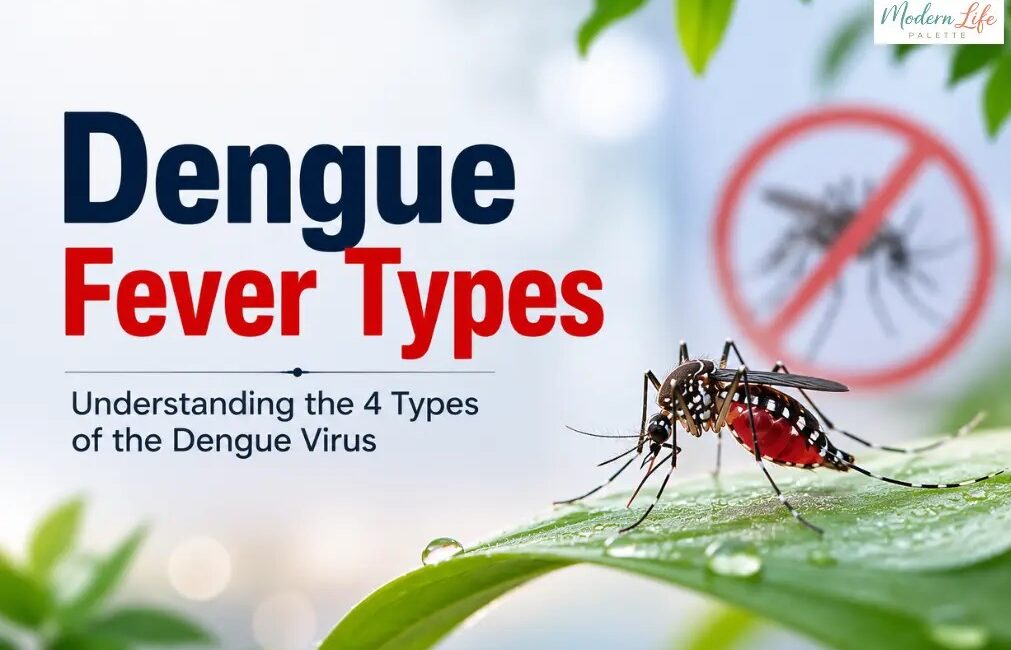
When you hear terms like DENV-1 or DENV-2, it can sound confusing. Are these different diseases, or just different names for dengue? The truth is that dengue fever has four virus types, and each one plays a role in how the disease spreads around the world. In this guide, we’ll break it down in simple, easy-to-understand language.
What Are the Different Types of Dengue Fever?
When people talk about dengue fever types, they’re actually referring to the four types (or serotypes) of the dengue virus. These are:
- DENV-1 (Dengue Virus Type 1)
- DENV-2 (Dengue Virus Type 2)
- DENV-3 (Dengue Virus Type 3)
- DENV-4 (Dengue Virus Type 4)
All four types are spread by infected Aedes mosquitoes and can cause dengue fever. While they belong to the same virus family, each type has slight genetic differences, which is why scientists classify them separately.
The good news is that the symptoms are generally similar across all four types. However, health experts track the circulating serotypes because they help monitor outbreaks and understand how the virus is spreading in different regions.
DENV-1 (Dengue Virus Type 1)
DENV-1 is one of the most common dengue virus types found across the world. It has been reported in many countries across Asia, the Americas, Africa, and the Pacific region.
Like the other serotypes, DENV-1 spreads through the bite of an infected Aedes mosquito. People infected with this serotype may experience the typical symptoms of dengue, such as high fever, headache, body aches, and fatigue.
Interestingly, DENV-1 often becomes the dominant virus type during certain outbreaks, but this can change over time as other serotypes begin circulating more widely.
DENV-2 (Dengue Virus Type 2)
DENV-2 is another widely circulating dengue virus type and is closely monitored by public health authorities around the world. It has been linked to several major dengue outbreaks over the years, making it an important focus of surveillance programs.
You may come across articles suggesting that DENV-2 is the “most dangerous” type. However, it’s important to remember that all four dengue virus types have the potential to cause severe illness, and the severity depends on several factors—not just the virus type itself.
DENV-3 (Dengue Virus Type 3)
DENV-3 has been responsible for numerous dengue outbreaks in tropical and subtropical countries. Like the other serotypes, it continues to circulate in many parts of the world.
Researchers carefully monitor DENV-3 because shifts in the dominant dengue virus type can influence the pattern and scale of outbreaks. This information helps health authorities plan mosquito control measures and monitor disease trends.
DENV-4 (Dengue Virus Type 4)
DENV-4 is the fourth recognized dengue virus serotype. Although it is often reported less frequently in some countries, it is still found in several parts of the world and can cause dengue infection just like the other three serotypes.
Because DENV-4 receives less media attention, many people mistakenly believe it’s rare or harmless. In reality, it remains an important part of global dengue surveillance.
Quick Comparison of the Four Dengue Virus Types
| Dengue Type | Full Name | Key Characteristic |
| DENV-1 | Dengue Virus Type 1 | One of the most widespread serotypes worldwide |
| DENV-2 | Dengue Virus Type 2 | Frequently monitored during major outbreaks |
| DENV-3 | Dengue Virus Type 3 | Has caused outbreaks in many tropical countries |
| DENV-4 | Dengue Virus Type 4 | Less commonly reported in some regions but still widespread |
Related Read: If you’re unsure how dengue begins, check out our detailed guide on dengue symptoms to learn the early warning signs.
Which Dengue Type Is the Most Dangerous?
This is one of the most commonly asked questions—and the answer isn’t as straightforward as many people think.
There isn’t a single dengue virus type that’s considered universally the most dangerous. All four serotypes can cause severe dengue, although some studies have found that DENV-2 and DENV-3 have been associated with more severe outbreaks in certain populations.
The severity of dengue doesn’t depend on the virus type alone. Factors such as a person’s age, overall health, immune response, and access to timely medical care also play an important role.
Instead of focusing on one “dangerous” type, health experts monitor all four dengue virus serotypes to better understand and respond to outbreaks.
How Do Doctors Identify the Dengue Virus Type?
If someone is suspected of having dengue, doctors may recommend laboratory tests to confirm the infection. While some tests can detect dengue itself, not all of them identify the specific virus type.
A specialized test called RT-PCR can determine whether the infection is caused by DENV-1, DENV-2, DENV-3, or DENV-4, especially during the early stage of illness. However, this type of testing is often used for disease surveillance and research rather than routine diagnosis.
Conclusion
The four dengue fever types are different serotypes of the same virus, and each can cause dengue infection. Understanding these virus types can help you better understand dengue outbreaks and why health experts closely monitor them. Stay informed, recognize the symptoms early, and follow preventive measures to reduce your risk.

Other Articles