
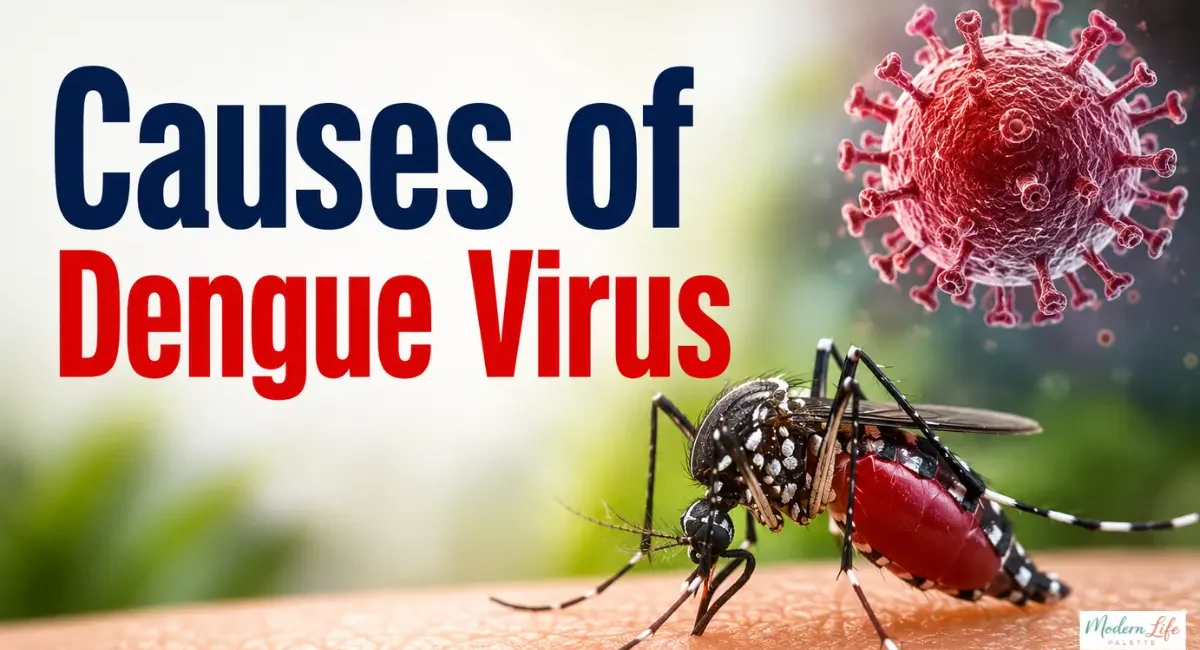
Dengue cases often rise during the monsoon, leading many people to wonder what actually causes dengue virus. Is it dirty water, rainy weather, or mosquito bites? While these factors may contribute to the spread, the real cause is a virus transmitted by infected mosquitoes.
Understanding how dengue infection begins can help you separate facts from myths and take the right steps to stay informed and protect your family.
What is the Dengue Virus?
Dengue is a viral infection caused by the dengue virus (DENV), which belongs to the Flavivirus family. It affects millions of people every year, especially in tropical and subtropical countries.
Scientists have identified four types (serotypes) of the dengue virus:
- DENV-1
- DENV-2
- DENV-3
- DENV-4
Although all four types cause dengue fever, they are slightly different from one another.
What Actually Causes Dengue Infection?
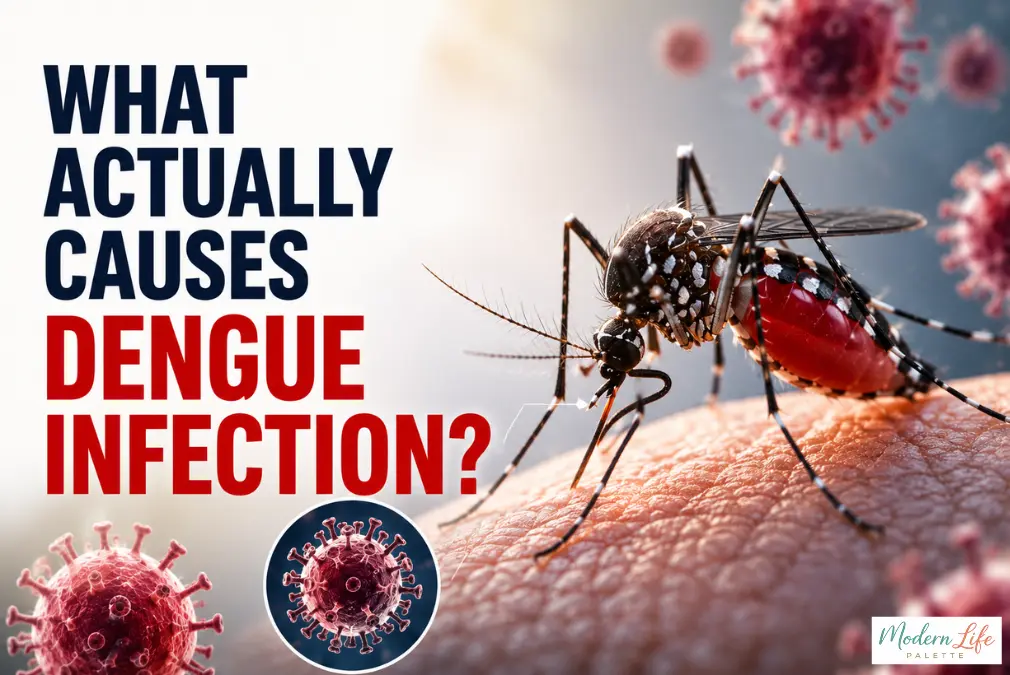
The dengue fever is caused by dengue virus (DENV). It is a microscopic virus that enters the human body through the bite of an infected Aedes mosquito. While the mosquito acts as the carrier, it is the virus – not the mosquito itself that causes the infection.
Once the dengue virus enters your bloodstream, it begins multiplying inside the body’s cells. As the virus spreads, your immune system responds by trying to fight it. This immune response, along with the virus itself, is responsible for the illness and the symptoms associated with dengue.
Unlike bacterial infections, dengue cannot be treated with antibiotics because it is caused by a virus. This is why early diagnosis, proper hydration, and supportive medical care play an important role in recovery.
How Does the Dengue Virus Affect the Body?
After entering the bloodstream, the dengue virus doesn’t make you sick immediately. It first goes through an incubation period, which usually lasts 4 to 10 days.
During this time, the virus:
- Enters the body’s immune cells and begins multiplying.
- Spreads through the bloodstream to different parts of the body.
- Triggers the immune system to release chemicals that fight the infection.
- Causes inflammation, which leads to many of the symptoms associated with dengue.
Although many people recover within a week or two, some may develop severe complications if the infection is not monitored carefully. Paying attention to early dengue symptoms and staying well-hydrated can significantly improve recovery and reduce the risk of severe dengue.
Important Facts About the Cause of Dengue
Here are some key facts that are often misunderstood:
- Dengue is caused by a virus, not bacteria, fungi, or parasites.
- The virus cannot spread through food, drinking water, or air.
- An infected mosquito acts as the carrier, allowing the virus to move from one person to another.
- The mosquito doesn’t naturally carry the virus. It becomes infected after feeding on the blood of a person who already has dengue.
- Symptoms usually appear 4 to 10 days after the virus enters the body, although the exact timing can vary from person to person.
- A healthy immune system helps fight the virus, but anyone can become infected if bitten by an infected mosquito.
If you’re wondering which mosquito spreads dengue, how to identify it, and where it breeds, check out our detailed guide on the dengue fever mosquito.
Why Do Dengue Cases Increase During the Monsoon?
You may have noticed that dengue cases surge every year during the rainy season. While rain itself doesn’t cause dengue, it creates ideal conditions for mosquitoes that carry the dengue virus to multiply rapidly.
Here’s why dengue becomes more common during the monsoon:
- Stagnant rainwater collects in buckets, coolers, flower pots, tyres, and construction sites, creating breeding spots for mosquitoes.
- High humidity helps mosquitoes survive longer, increasing their chances of spreading the virus.
- Warm temperatures speed up the mosquito’s life cycle, leading to a rise in their population.
- Frequent rainfall creates new breeding sites every few days, making it difficult to control mosquito growth.
This combination of weather conditions makes the monsoon the peak season for dengue outbreaks in many parts of India and other tropical countries. Explore our complete dengue prevention guide for practical tips to protect yourself and your family.
Can You Get Dengue More Than Once?
Yes. Having dengue once doesn’t guarantee lifelong protection.
This is because there are four different serotypes of the dengue virus.
Here’s what happens:
- Infection with one serotype usually provides long-term immunity only against that specific type.
- You can still get infected by one of the remaining three serotypes.
- A second infection with a different serotype may increase the risk of developing severe dengue, making early medical attention important.
Although repeat infections are possible, they are not inevitable. Reducing mosquito exposure remains the best way to lower your risk.
Conclusion
Understanding what causes dengue infection is essential for making informed decisions and avoiding common misconceptions. While the virus is responsible for the disease, environmental conditions and mosquito activity play a significant role in increasing the risk of infection, especially during the monsoon season.
Staying informed, recognising the factors that contribute to dengue outbreaks, and taking timely precautions can help reduce the spread of the disease. A little awareness goes a long way in protecting yourself, your family, and your community.