
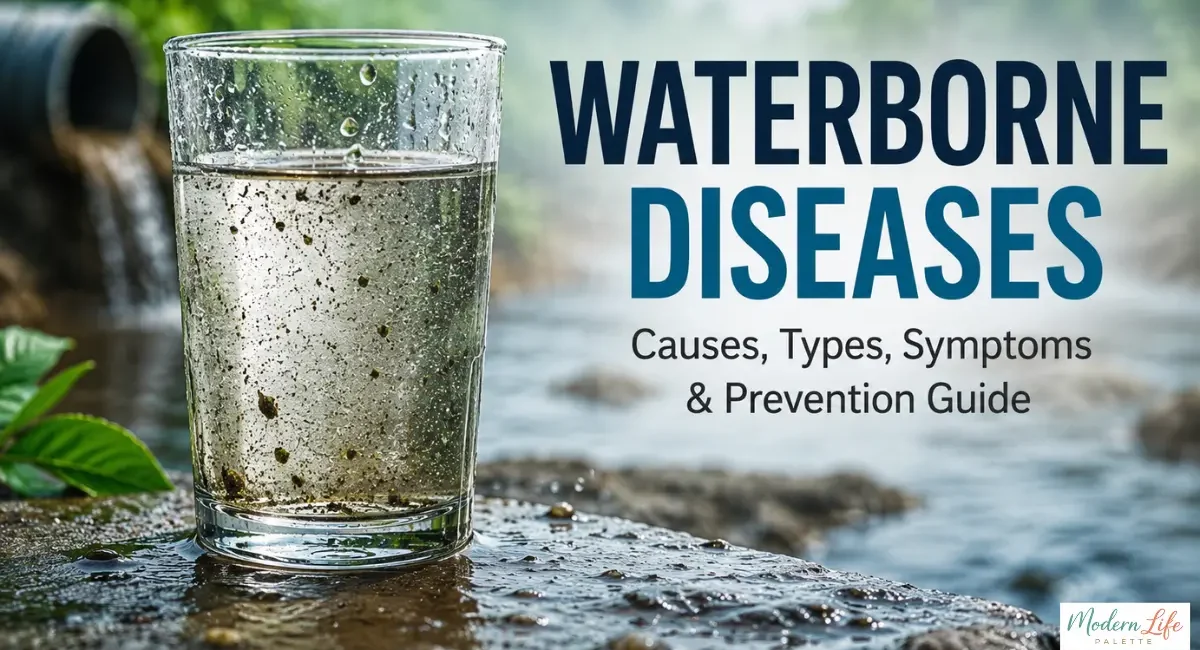
Ever taken a sip of water without giving it a second thought? Most of us do. But when that water is contaminated, it can carry tiny germs that lead to waterborne diseases. During the monsoon, the risk becomes even higher as heavy rains and flooding can contaminate drinking water sources.
The good news is that staying safe isn’t complicated. A few simple habits like drinking clean water, washing your hands, and being mindful of what you eat can go a long way. In this guide, let’s understand what waterborne diseases are, how they spread, the common illnesses they cause, and the easy ways you can protect yourself and your family.
What Are Waterborne Diseases?
Waterborne diseases are illnesses that spread through contaminated water. When water gets polluted with bacteria, viruses, or parasites, it may look perfectly clean but still contain harmful germs that can make you sick.
You don’t have to drink visibly dirty water to be at risk. Sometimes, the water used to wash fruits and vegetables, prepare food, or even make ice can carry these microorganisms.
These diseases are more likely to spread in places where clean drinking water and proper sanitation are a challenge. That’s also why they become more common during the rainy season, when floods and overflowing drains can contaminate water supplies.
Water can become contaminated through:
- Sewage mixing with drinking water
- Floodwater entering wells or water tanks
- Poor sanitation and hygiene
- Storing water in unclean containers
- Using untreated water for cooking or washing food
Here’s the reassuring part: Most waterborne diseases are preventable. Knowing how they spread is the first step towards protecting yourself.
How Do Waterborne Diseases Spread?
You might think that waterborne diseases spread only by drinking unsafe water. While that’s the most common reason, it’s not the only one.
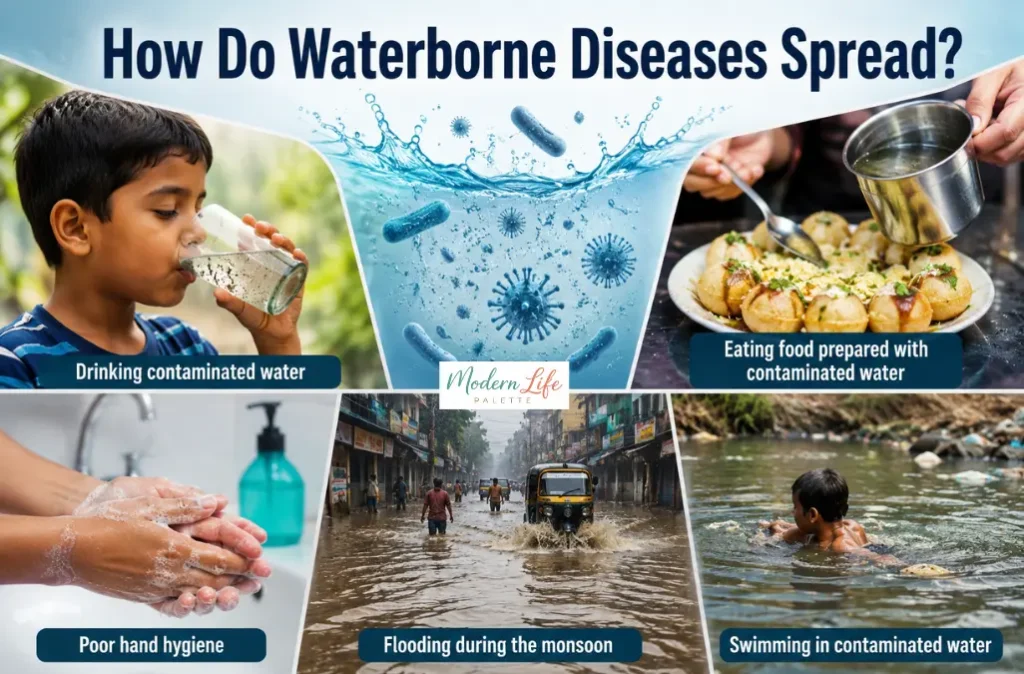
Imagine buying a fresh fruit juice made with contaminated ice or eating a salad washed in unsafe water. Even though the food looks fresh, harmful germs can still find their way into your body.
Here are some of the most common ways these diseases spread:
1. Drinking contaminated water
Water contaminated by sewage, animal waste, or floodwater can carry harmful microorganisms that cause infections.
2. Eating food prepared with unsafe water
Raw vegetables, fruits, juices, and even ice cubes can become a source of infection if they’re prepared using contaminated water.
3. Poor hand hygiene
If someone doesn’t wash their hands properly after using the toilet and then handles food, germs can easily spread to others.
4. Flooding during the monsoon
Heavy rainfall can cause sewage to overflow and mix with drinking water. This is one of the biggest reasons waterborne diseases see a spike during the rainy season.
5. Swimming in contaminated water
Accidentally swallowing water while swimming in polluted rivers, lakes, or pools can also increase the risk of infection.
At its core, the cycle is simple:
Contaminated water → Germs enter the body → Infection develops → Symptoms appear
The encouraging news? This cycle can often be broken with clean drinking water, good hygiene, and safe food practices.
Common Waterborne Diseases You Should Know About
Not every waterborne disease is the same. Some may cause mild stomach discomfort, while others can lead to serious health complications if left untreated. The good news? Most of them are preventable with clean drinking water, good hygiene, and safe food practices.
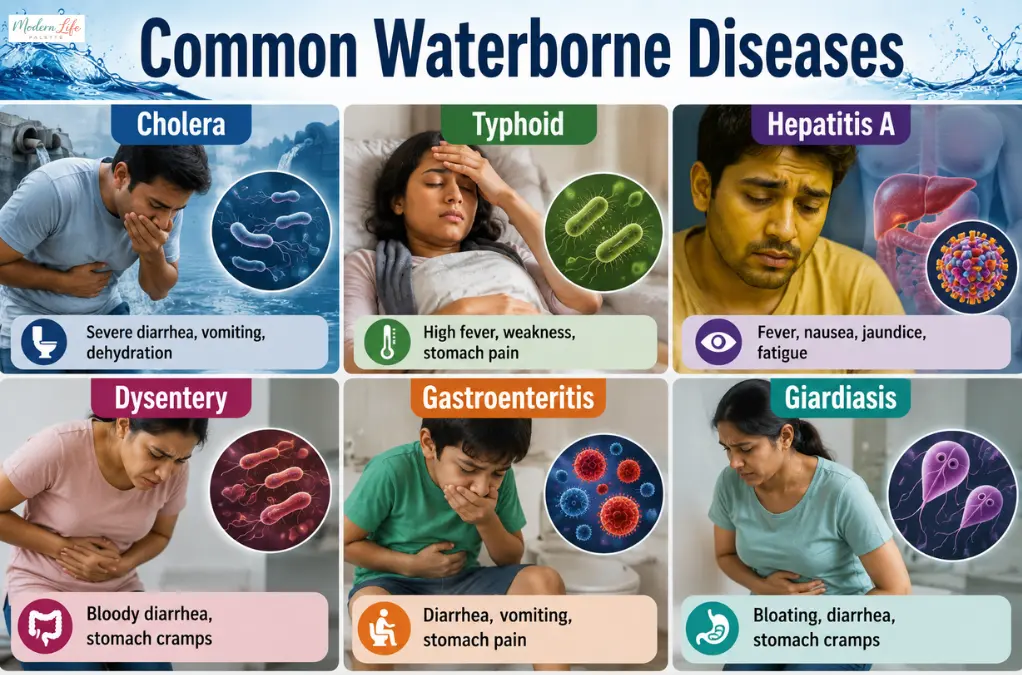
Here’s a quick look at some of the most common waterborne diseases and what you should know about them.
| Disease | Caused By | Common Symptoms |
| Cholera | Bacteria | Severe diarrhea, vomiting, dehydration |
| Typhoid | Bacteria | High fever, weakness, stomach pain |
| Hepatitis A | Virus | Fever, nausea, jaundice, fatigue |
| Dysentery | Bacteria or Parasites | Bloody diarrhea, stomach cramps |
| Gastroenteritis | Viruses, Bacteria or Parasites | Diarrhea, vomiting, stomach pain |
| Giardiasis | Parasite | Bloating, diarrhea, stomach cramps |
Let’s understand each of these a little better.
1. Cholera
Cholera is one of the best-known waterborne diseases and spreads through food or water contaminated with the Vibrio cholerae bacteria. It often causes sudden, severe diarrhea and vomiting, which can quickly lead to dehydration if fluids aren’t replaced.
The easiest way to reduce your risk is by drinking safe water, eating freshly cooked food, and washing your hands regularly.
2. Typhoid
Typhoid spreads through food or water contaminated with the Salmonella Typhi bacteria. It usually develops gradually, with symptoms like persistent fever, headache, weakness, stomach pain, and loss of appetite.
If you’ve ever heard the advice to avoid eating from unhygienic places during the monsoon, typhoid is one of the reasons why.
3. Hepatitis A
Hepatitis A is a viral infection that affects the liver. It spreads when food or water is contaminated with the virus, often because of poor hygiene or sanitation.
You may experience tiredness, nausea, fever, or yellowing of the skin and eyes (jaundice). Thankfully, good hygiene and safe drinking water can go a long way in preventing it.
4. Dysentery
Dysentery is an infection of the intestines that can be caused by bacteria or parasites. It often leads to diarrhea, stomach cramps, and, in some cases, blood or mucus in the stool.
The risk increases when drinking water or food is contaminated, making handwashing and proper food hygiene especially important.
5. Gastroenteritis
You’ve probably heard people say they have a “stomach infection.” In many cases, they’re referring to gastroenteritis.
It can be caused by viruses, bacteria, or parasites and usually results in diarrhea, vomiting, nausea, and stomach cramps. While many cases improve with rest and proper hydration, preventing infection through clean food and water is always the better option.
6. Giardiasis
Giardiasis is caused by a tiny parasite called Giardia. It spreads through contaminated water and can lead to diarrhea, bloating, stomach cramps, and fatigue.
This infection is often linked to untreated water from lakes, rivers, or other natural sources, which is why it’s always safer to drink filtered, boiled, or treated water when you’re unsure about its quality.
Quick Tip: If you’re travelling or visiting a place where you’re unsure about the water quality, stick to bottled water from a trusted source or drink water that has been properly boiled or treated.
What Are the Common Symptoms of Waterborne Diseases?
One tricky thing about waterborne diseases is that they don’t all show the same symptoms. However, many of them start with similar warning signs because they affect the digestive system.
Here are some symptoms you shouldn’t ignore:
- Frequent diarrhea
- Nausea or vomiting
- Stomach pain or cramps
- Fever
- Loss of appetite
- Weakness or tiredness
- Bloating
- Headache
- Signs of dehydration, such as excessive thirst or reduced urination
Some illnesses may also cause symptoms like jaundice or bloody stools, depending on the type of infection.
When should you pay extra attention?
If diarrhea or vomiting continues for more than a day or two, you notice signs of dehydration, or symptoms become severe, it’s important to seek medical advice – especially for young children, older adults, pregnant women, or anyone with a weakened immune system.
The earlier an illness is identified, the easier it is to manage and prevent complications.
Why Are Waterborne Diseases More Common During the Monsoon?
Have you noticed that stomach infections seem to be everywhere during the rainy season? That’s no coincidence. The monsoon creates the perfect conditions for germs to spread, increasing the chances of water getting contaminated.
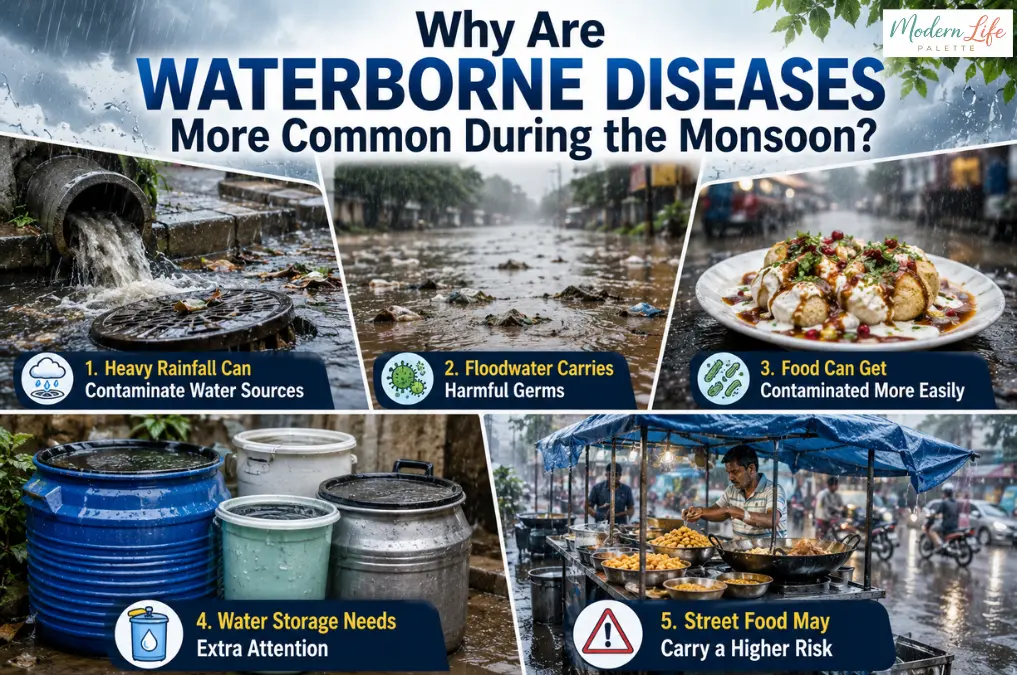
Here’s why the risk goes up during this time of the year.
1. Heavy Rainfall Can Contaminate Water Sources
When it rains heavily, drains and sewage systems can overflow. In some areas, this contaminated water mixes with drinking water pipelines, wells, or storage tanks, making the water unsafe to consume.
That’s why it’s always a good idea to be a little extra careful about the water you drink during the monsoon.
2. Floodwater Carries Harmful Germs
Floodwater may look like muddy rainwater, but it can contain bacteria, viruses, parasites, and other harmful microorganisms picked up from overflowing drains, sewage, and waste.
If this water enters homes or contaminates nearby water sources, it can increase the risk of waterborne diseases.
3. Food Can Get Contaminated More Easily
The rainy season creates a damp environment where germs can multiply quickly. If food is prepared with contaminated water or left uncovered for too long, it can become unsafe to eat.
This is also why freshly cooked meals are usually a better choice than food that’s been sitting out for hours.
4. Water Storage Needs Extra Attention
Many households store drinking water, especially during periods of irregular water supply. If storage containers aren’t cleaned regularly or kept covered, they can become contaminated over time.
A clean, covered container can make a big difference.
5. Street Food May Carry a Higher Risk
Monsoon cravings are real – we all enjoy a plate of hot pakoras or chaat on a rainy day. But it’s worth paying attention to where your food comes from.
Food prepared with unsafe water, uncovered ingredients, or unhygienic cooking practices may increase the risk of infection. Choosing clean and hygienic food outlets is always the safer option.
Quick Tip: During the monsoon, try to drink filtered or boiled water, eat freshly cooked meals, and wash fruits and vegetables thoroughly before eating them. These simple habits can go a long way in keeping you healthy.
Who Is More Likely to Get Waterborne Diseases?
While anyone can catch a waterborne disease, some people are more vulnerable than others. Their bodies may find it harder to fight infections or recover quickly, making prevention even more important.
1. Young Children
Children love to explore, play outdoors, and often forget to wash their hands before eating. Since their immune systems are still developing, they’re more likely to pick up infections from contaminated food or water.
2. Older Adults
As we age, our immune system naturally becomes less effective. Older adults may also become dehydrated more quickly, which can make waterborne illnesses more serious.
3. Pregnant Women
During pregnancy, it’s especially important to avoid contaminated food and water. Staying hydrated and following good food hygiene can help reduce the risk of infections.
4. People with Weakened Immunity
People recovering from an illness or living with conditions that affect the immune system may find it harder to fight infections caused by contaminated water.
5. Travellers
Travelling to a new destination often means trying local food and water. If you’re unsure about the quality of drinking water, it’s safer to choose bottled water from a trusted source or drink water that has been properly boiled or treated.
How Can You Prevent Waterborne Diseases?
Here’s the encouraging part – you don’t need complicated precautions to protect yourself. In most cases, a few everyday habits can make a big difference.
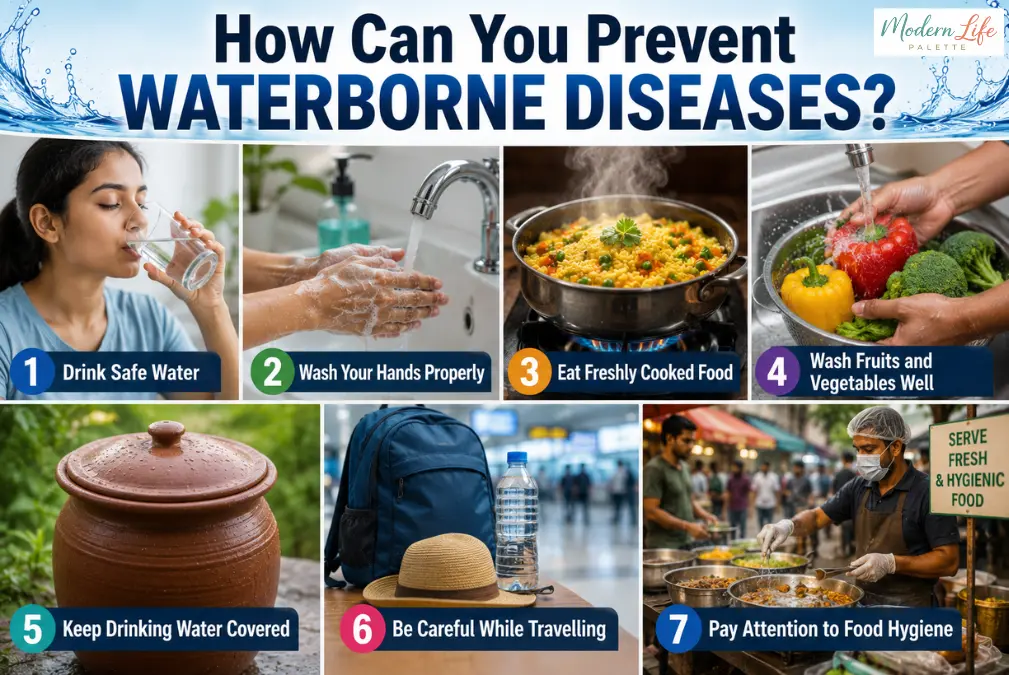
Let’s look at some simple ways to reduce your risk.
1. Drink Safe Water
This might sound obvious, but it’s the most effective step you can take. Always choose clean, filtered, boiled, or properly treated drinking water, especially during the rainy season or while travelling.
If you’re buying bottled water, make sure the seal is intact before opening it.
2. Wash Your Hands Properly
Our hands touch countless surfaces throughout the day. Washing them with soap and clean water before eating, cooking, or after using the toilet helps stop germs from spreading.
It takes less than a minute but can prevent many infections.
3. Eat Freshly Cooked Food
Freshly prepared meals are generally safer than food that’s been left uncovered for long periods. If you’re eating out, choose places that maintain good hygiene.
4. Wash Fruits and Vegetables Well
Even fresh produce can carry germs if it’s washed with contaminated water. Rinse fruits and vegetables thoroughly with clean water before eating or cooking them.
5. Keep Drinking Water Covered
Always store water in clean, covered containers. This helps prevent dust, insects, and other contaminants from getting into your drinking water.
Don’t forget to clean water storage containers regularly too.
6. Be Careful While Travelling
When you’re unsure about the quality of water, it’s better to avoid ice cubes, raw salads, and drinks prepared with untreated water.
A little caution can save you from days of discomfort later.
7. Pay Attention to Food Hygiene
Simple habits like using clean utensils, keeping cooked food covered, and avoiding stale food can significantly lower the chances of infection.
Remember: There’s no single habit that prevents waterborne diseases. It’s the combination of clean drinking water, good hygiene, and safe food practices that offers the best protection.
Waterborne Diseases vs Foodborne Diseases: What’s the Difference?
It’s easy to confuse waterborne and foodborne diseases because both can cause stomach-related illnesses. The key difference lies in how the infection enters your body.
| Waterborne Diseases | Foodborne Diseases |
| Spread through contaminated drinking water | Spread through contaminated food |
| Usually linked to unsafe water, poor sanitation, or flooding | Often caused by improperly cooked, stored, or handled food |
| Examples include cholera, typhoid, hepatitis A, and giardiasis | Examples include salmonella infection, food poisoning, and E. coli infection |
| Prevention focuses on clean drinking water and sanitation | Prevention focuses on safe food handling, cooking, and storage |
The two can sometimes overlap. For example, food washed or prepared with contaminated water can also spread waterborne diseases. That’s why maintaining both food hygiene and water safety is equally important.
Common Myths About Waterborne Diseases
There’s a lot of misinformation about waterborne diseases. Let’s separate the myths from the facts.
| Myth | Fact |
| If the water looks clean, it’s safe to drink. | Harmful germs can’t be seen with the naked eye. Clear water can still be contaminated. |
| Waterborne diseases only spread during the monsoon. | The risk is higher during the rainy season, but contaminated water can cause infections at any time of the year. |
| Only children get waterborne diseases. | Anyone can get infected, although children, older adults, and people with weaker immunity are more vulnerable. |
| Boiling water is unnecessary if it smells fine. | Water can contain harmful microorganisms even if it looks and smells normal. |
| Filtered water never gets contaminated. | Water filters need regular maintenance. A poorly maintained filter may not work effectively. |
Knowing the facts helps you make better decisions and protect your family from avoidable illnesses.
Conclusion
Waterborne diseases are common, but they’re also largely preventable. Drinking safe water, maintaining good hygiene, and following healthy food practices can go a long way in reducing the risk of infection. By staying informed and taking a few simple precautions especially during the monsoon, you can help protect yourself and your family from waterborne diseases.
Frequently Asked Questions
1. How many waterborne diseases are there?
There are more than 100 diseases that can spread through contaminated water. Some of the most common include cholera, typhoid, hepatitis A, dysentery, and giardiasis.
2. Which are the most common waterborne diseases?
Common waterborne diseases include cholera, typhoid, hepatitis A, dysentery, gastroenteritis, and giardiasis.
3. Why do waterborne diseases increase during the monsoon?
Heavy rainfall and flooding can contaminate drinking water sources, making it easier for harmful germs to spread.
4. Can filtered water still cause waterborne diseases?
Yes. If the filter isn’t maintained properly or the water is contaminated after filtration, infections can still occur.
5. How can I reduce the risk of waterborne diseases?
Drink safe water, wash your hands regularly, eat freshly cooked food, and maintain good hygiene.
6. Are waterborne diseases contagious?
Some waterborne diseases can spread from person to person through poor hygiene or contaminated food and water.
7. Is bottled water always safe?
Choose bottled water from trusted brands and make sure the seal is intact before drinking.
8. When should I seek medical help?
Seek medical attention if you experience severe diarrhea, persistent vomiting, signs of dehydration, or a high fever.
9. How to avoid waterborne diseases?
Drink clean or boiled water, wash your hands frequently, eat hygienically prepared food, and store drinking water safely.