
Have you ever noticed your wooden door becoming difficult to open as soon as the monsoon arrives? Excess moisture in the air can make wood expand, causing doors to stick, scrape against the floor, or even develop long-term damage. The good news is that with a few simple monsoon home maintenance tips, you can prevent these issues before they start.
Here’s how to prevent wooden doors from swelling during monsoon and keep them working smoothly all season.
How to Prevent Wooden Doors from Swelling During Monsoon?
The best way to deal with swollen wooden doors is to prevent the problem before the rainy season begins. A few simple maintenance habits can protect your doors from excess moisture and help them last longer. Here are some practical tips to include in your monsoon home maintenance routine.
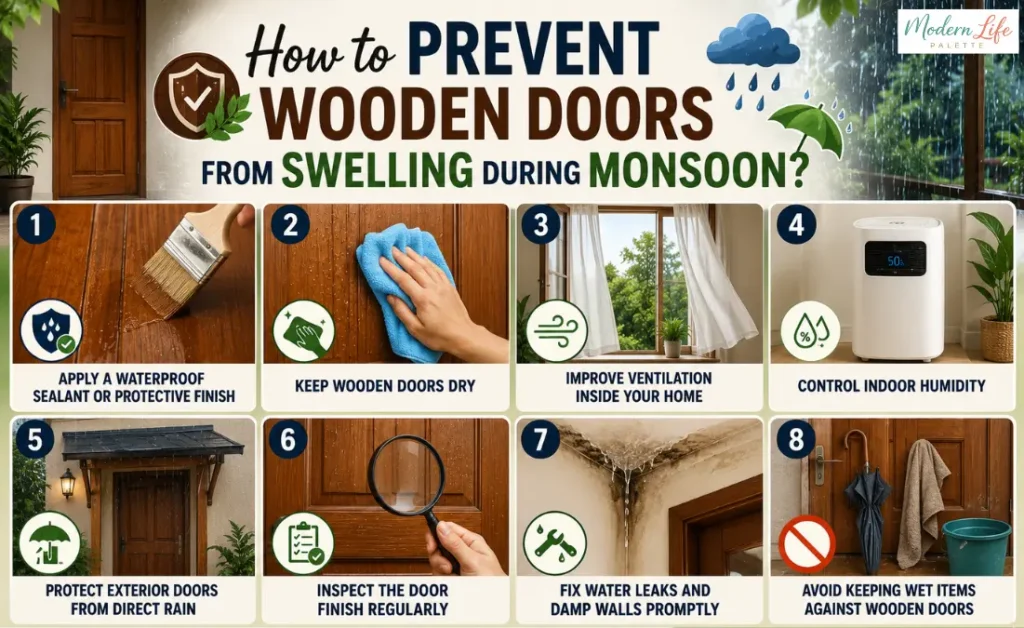
1. Apply a Waterproof Sealant or Protective Finish
A good-quality waterproof sealant or wood finish acts as a protective barrier, reducing the amount of moisture the wood absorbs. This is especially important for main entrance doors that are exposed to humid air and occasional rain.
For the best protection:
- Apply the sealant before the monsoon starts.
- Cover all sides of the door, including the top and bottom edges.
- Reapply the finish whenever it starts to wear off.
2. Keep Wooden Doors Dry
Even a well-finished wooden door can absorb moisture if water is left sitting on its surface. During heavy rains, make it a habit to wipe away any water droplets as soon as possible.
Pay extra attention to:
- Main entrance doors
- Balcony doors
- Garden-facing doors
- Areas around the bottom edge of the door
A dry door is far less likely to swell than one that’s regularly exposed to moisture.
3. Improve Ventilation Inside Your Home
High indoor humidity can cause wooden doors to absorb moisture, even if they never come into direct contact with rainwater. Proper airflow helps keep humidity levels under control.
You can improve ventilation by:
- Opening windows whenever the weather allows.
- Using exhaust fans in kitchens and bathrooms.
- Creating cross ventilation between rooms.
- Avoiding blocked air vents.
Good ventilation is one of the simplest yet most effective monsoon home care practices.
4. Control Indoor Humidity
During prolonged rainy spells, humidity can remain high for days. Reducing excess moisture indoors helps protect not only wooden doors but also furniture and cabinets.
Some easy ways to control humidity include:
- Using a dehumidifier in damp rooms.
- Running your air conditioner in Dry Mode.
- Placing moisture absorbers in wardrobes and enclosed spaces.
- Avoiding drying clothes indoors whenever possible.
5. Protect Exterior Doors from Direct Rain
Doors that are regularly exposed to rain are more likely to swell. Adding a little protection can significantly reduce water exposure.
Consider installing:
- A door canopy or awning.
- Weather strips around the frame.
- A bottom door seal to prevent water from entering.
- Proper drainage near the entrance to avoid water accumulation.
6. Inspect the Door Finish Regularly
Small cracks or peeling paint can allow moisture to seep into the wood. Inspect your doors every few weeks during the monsoon and repair damaged areas before they worsen.
Look for:
- Peeling paint
- Faded polish
- Cracked sealant
- Exposed wood
Touching up these areas early can prevent costly repairs later.
7. Fix Water Leaks and Damp Walls Promptly
Sometimes, the moisture affecting your wooden doors comes from leaking roofs, damp walls, or water seepage rather than rain itself. Ignoring these issues allows moisture to spread to the door frame over time.
If you notice damp patches near your doors, address the source as soon as possible.
8. Avoid Keeping Wet Items Against Wooden Doors
Many people unknowingly increase moisture exposure by placing wet items against wooden doors.
Avoid:
- Leaning wet umbrellas against the door.
- Hanging damp towels on door handles.
- Keeping wet doormats touching the bottom of the door.
- Placing water-filled buckets close to wooden door frames.
These simple habits can help keep excess moisture away from the wood.
Pro Tip: If your wooden door has already swollen despite these preventive measures, check out our detailed guide on How to Fix a Swollen Wooden Door for step-by-step repair solutions.
Conclusion
Preventing wooden doors from swelling during monsoon doesn’t require a lot of effort—just a little care at the right time. By following these simple monsoon home maintenance tips, you can protect your doors from moisture, avoid costly repairs, and keep them looking and functioning their best throughout the rainy season.
Frequently Asked Questions
1. How do I prevent wooden doors from swelling during monsoon?
Apply a waterproof sealant, keep the door dry, improve ventilation, and control indoor humidity.
2. Why do wooden doors swell during the rainy season?
Wood absorbs excess moisture from humid air, causing it to expand and swell.
3. Can a swollen wooden door return to its original shape?
Yes, minor swelling often reduces once the wood dries, but severe damage may require repairs.
4. Which wood is best for doors in humid weather?
Teak and Sal are the best choices because they naturally resist moisture.
5. Does polishing a wooden door prevent swelling?
Yes, regular polishing or sealing helps reduce moisture absorption and protects the wood.
6. How often should I maintain wooden doors during monsoon?
Inspect and clean your wooden doors at least once a month during the rainy season.
7. Can damp walls cause wooden doors to swell?
Yes, moisture from damp walls or water seepage can spread to nearby wooden doors and frames.
8. Should I sand a swollen wooden door immediately?
No, allow the door to dry completely before considering sanding or other repairs.
9. Is a dehumidifier useful for protecting wooden doors?
Yes, a dehumidifier helps reduce indoor humidity, minimizing the risk of wood swelling.
10. Can exterior wooden doors be protected from rain?
Yes, using weather strips, a door canopy, and a waterproof finish can help protect exterior doors from rain and moisture.