
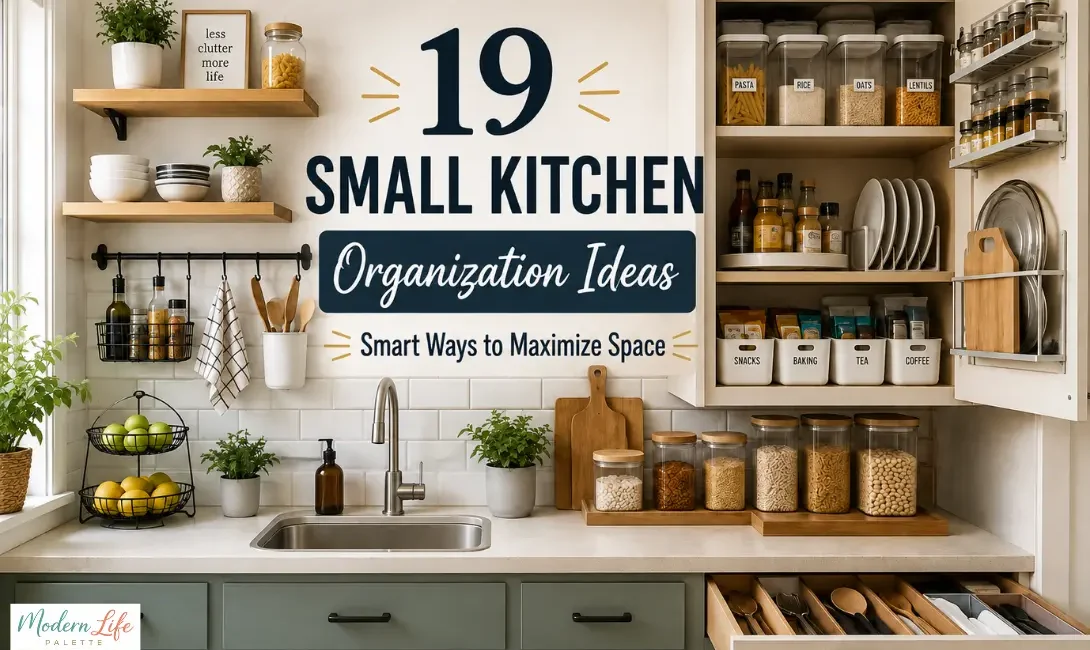
A small kitchen can feel crowded surprisingly fast. Between cookware, appliances, food containers, and everyday essentials, it doesn’t take much to run out of space. These ideas for organizing a small kitchen will help you make better use of your cabinets, drawers, counters, and overlooked corners – without making your kitchen feel like a storage room.
1. Start by Decluttering Your Kitchen
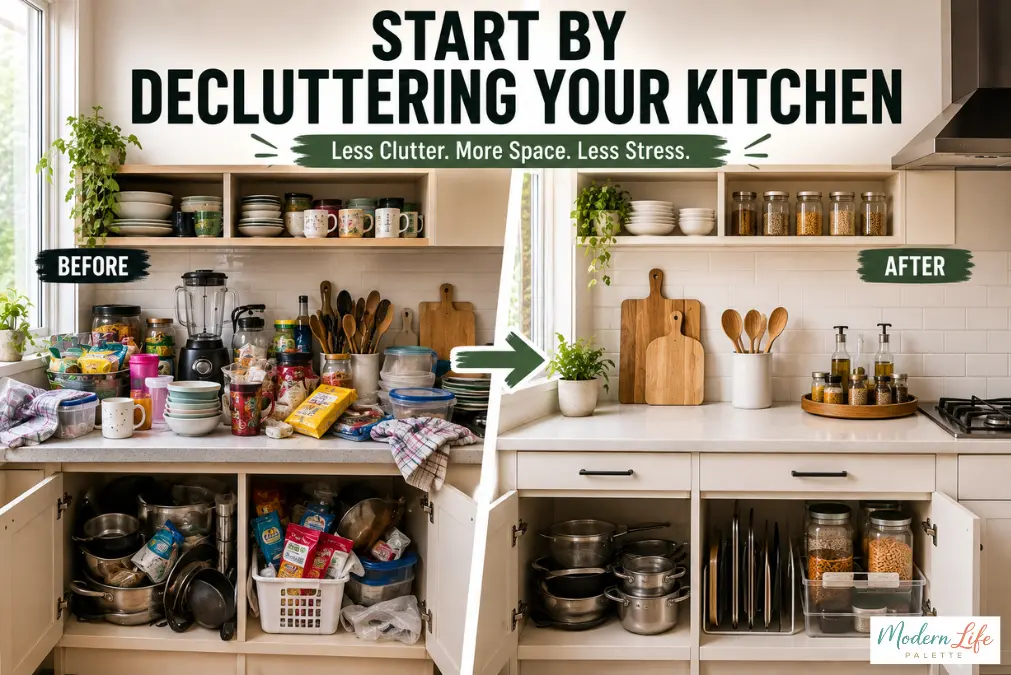
Before buying organizers, take a good look at what is actually taking up space.
Do you really need three can openers? Are you still using that bulky appliance you bought two years ago? And how many mismatched food containers are hiding in the back of a cabinet?
Start by removing duplicates, broken items, things you never use, and anything that doesn’t belong in the kitchen. You’ll often create more usable space simply by owning less.
2. Give Everything a Designated Home
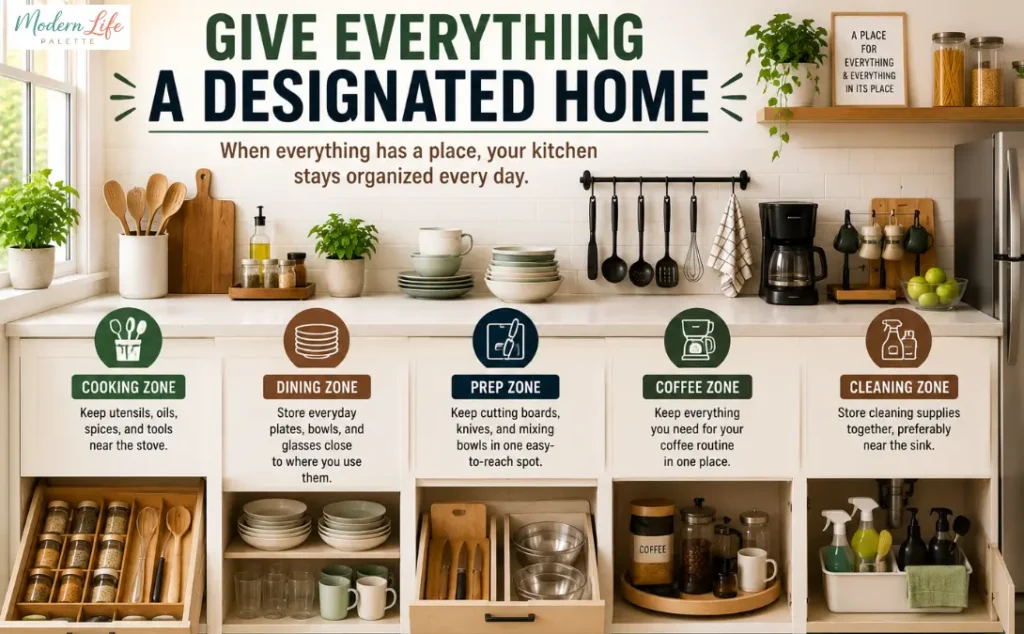
A small kitchen becomes much easier to manage when everything has a place.
Instead of putting things wherever there is an empty spot, decide where each category belongs. Keep cooking utensils near the stove, glasses close to the refrigerator or sink, and everyday dishes somewhere that’s easy to reach.
When you know exactly where something belongs, putting it away takes seconds.
3. Make Use of Vertical Space
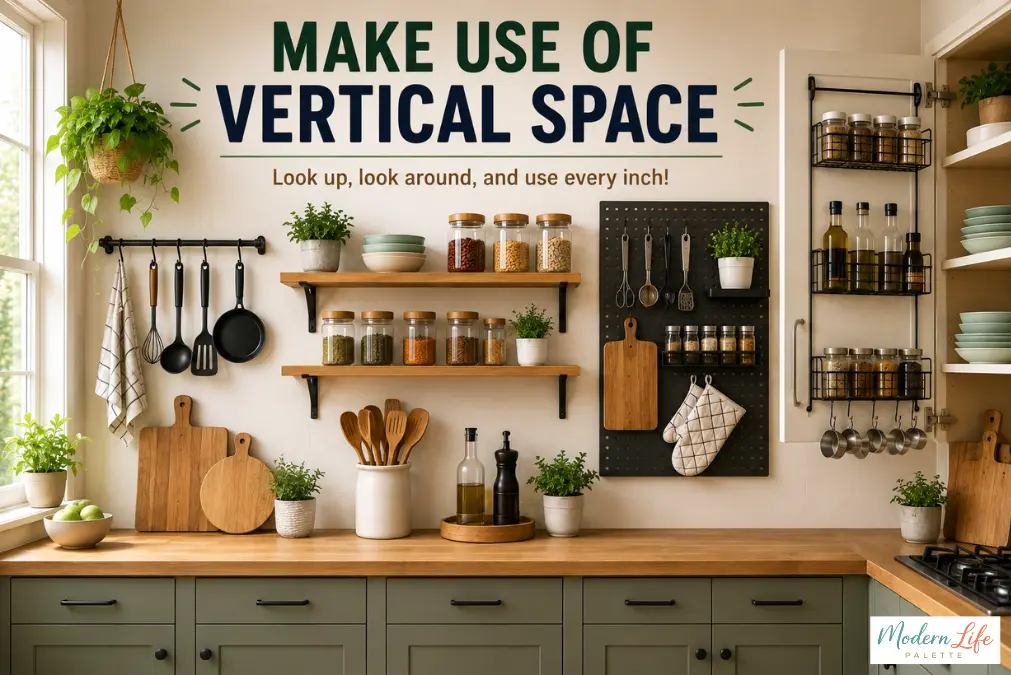
When you’re short on floor and cabinet space, look up.
A small wall shelf, pegboard, hooks, or a magnetic storage strip can turn an unused wall into useful storage. Even the inside of a cabinet door can hold smaller items.
Vertical storage is particularly useful because it adds storage without taking up valuable counter space.
4. Add Shelf Risers Inside Cabinets
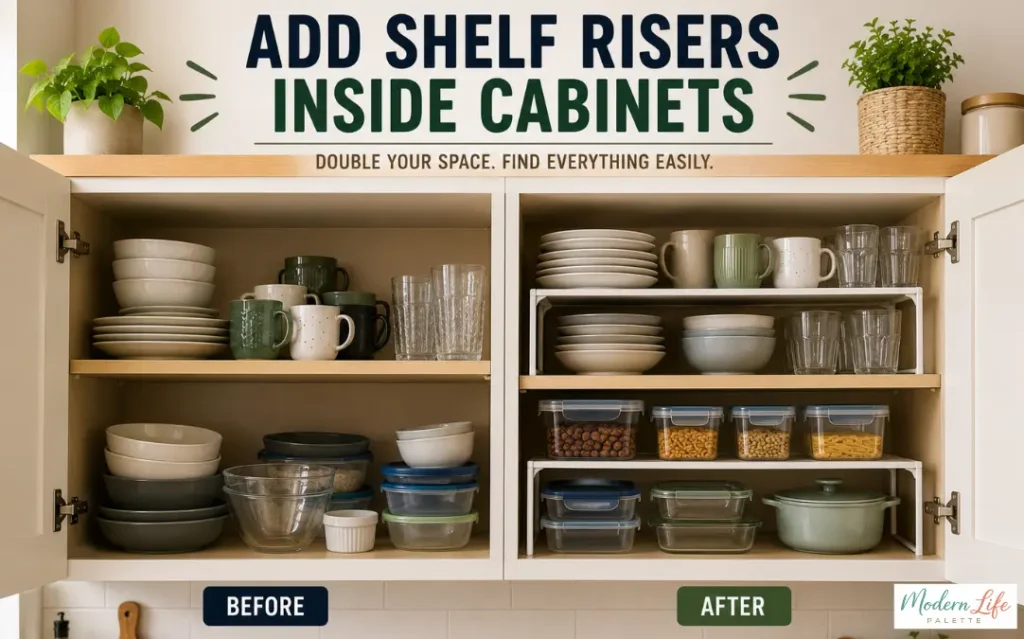
If your cabinets have tall shelves with plenty of empty space above your plates or bowls, you’re probably not using all that space.
Shelf risers create a second level, allowing you to stack items without having to dig through a pile every time you need something.
They’re especially useful for:
- Plates and bowls
- Mugs
- Canned goods
- Small serving dishes
- Food storage containers
5. Use Cabinet Doors for Extra Storage
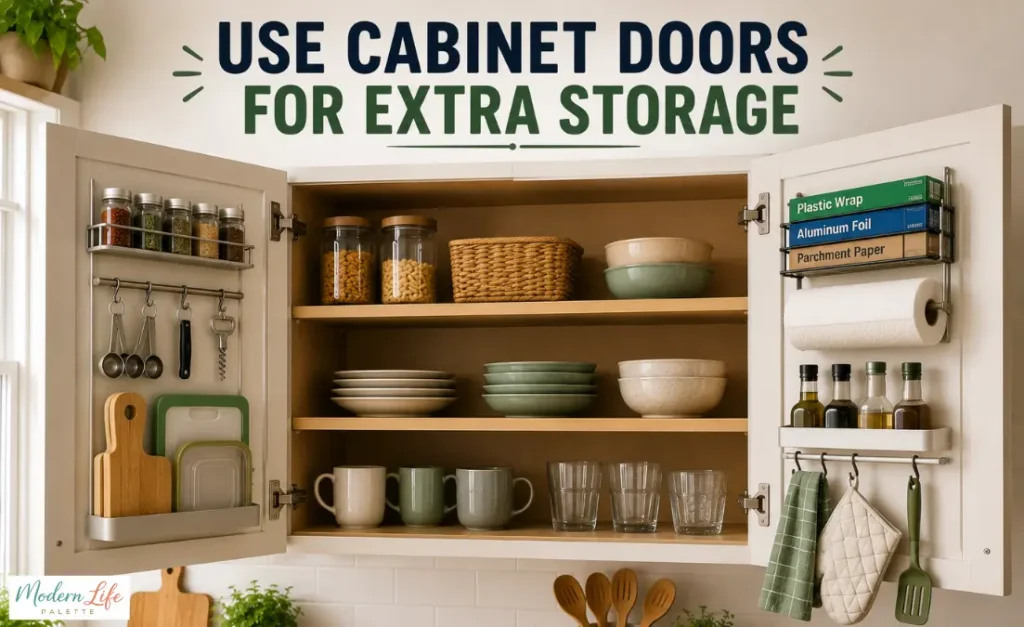
The inside of a cabinet door is easy to overlook, but it can become valuable storage in a small kitchen.
Depending on the cabinet, you can use it for measuring spoons, cutting boards, spices, cleaning supplies, or wraps and bags.
Just make sure the organizer doesn’t prevent the door from closing properly.
6. Organize Deep Cabinets With Easy-to-Reach Storage
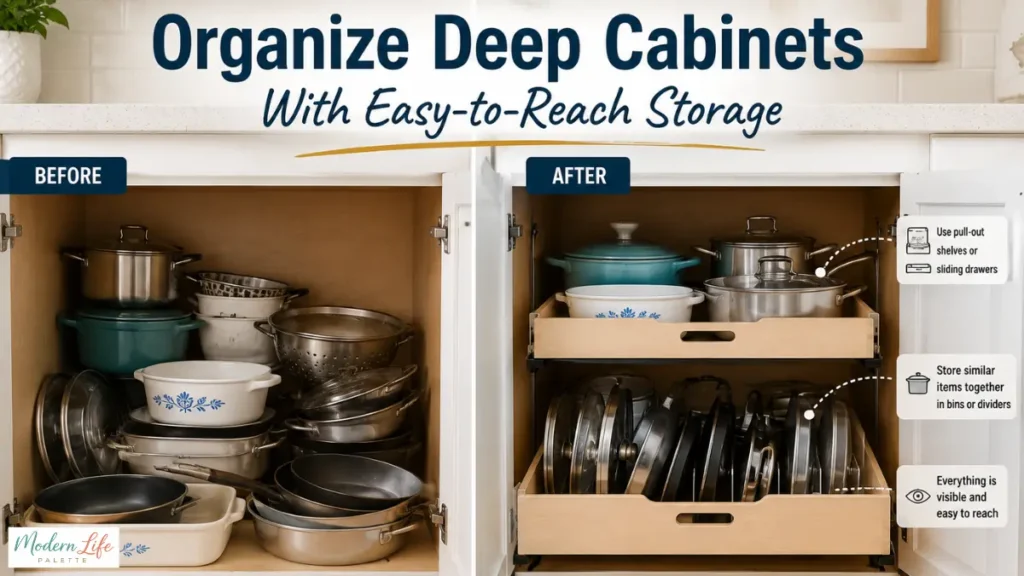
Deep cabinets can hold a surprising amount, but that doesn’t mean they’re convenient.
If you have to remove five things to reach the item at the back, you’ll probably stop using that space efficiently.
Try using pull-out bins, baskets, or turntables so you can see and reach everything without emptying the entire cabinet.
7. Give Your Kitchen Drawers a Purpose
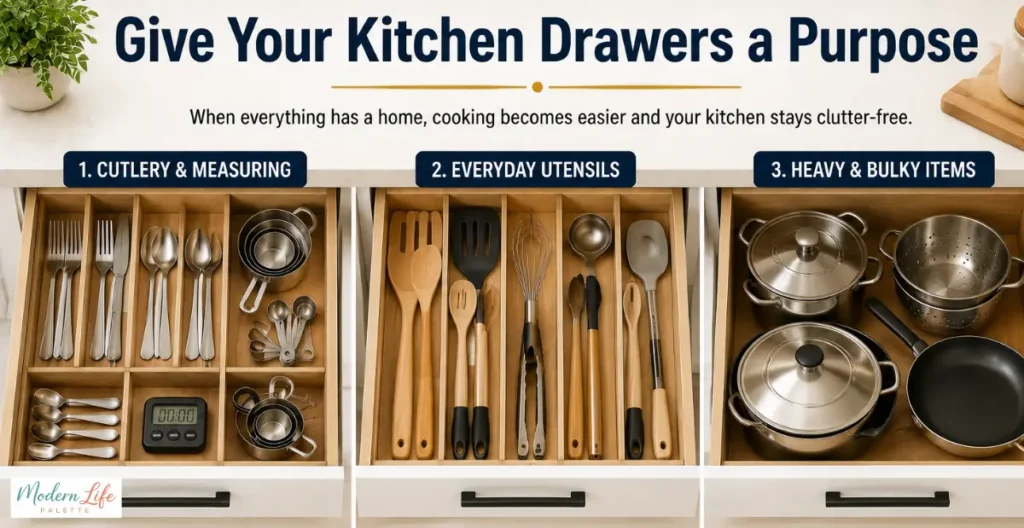
Randomly tossing utensils into every available drawer creates clutter quickly.
Instead, give each drawer a job. For example:
- One drawer for everyday utensils
- One for cooking tools
- One for measuring tools
- One for food storage accessories
This simple system makes a small kitchen feel much more organized without adding more storage.
8. Create an Appliance Zone
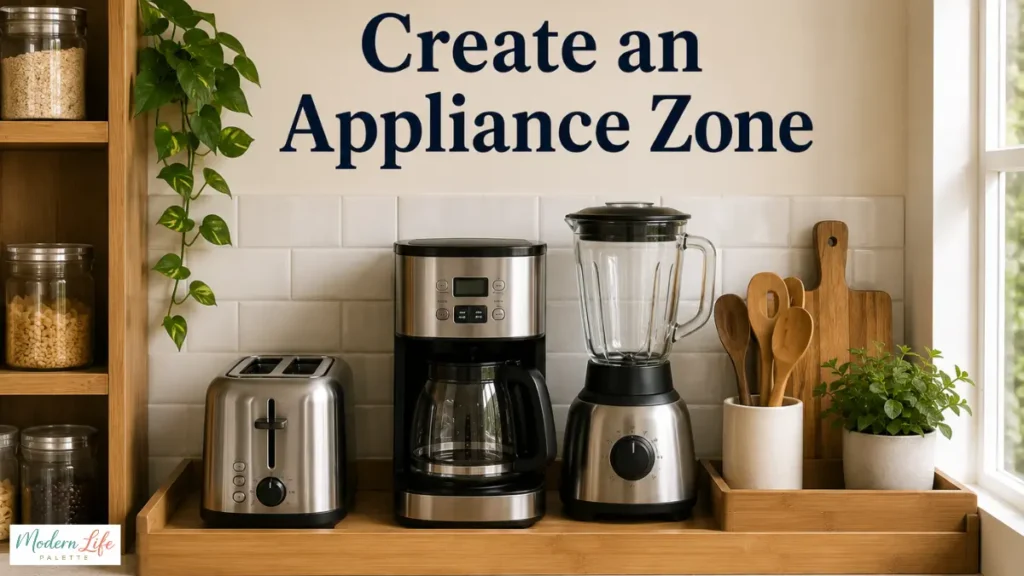
If you use several small appliances every day, give them a dedicated area.
For example, you might keep your coffee maker and grinder together, or your toaster and air fryer in the same general zone.
For appliances you use only occasionally, consider storing them in a cabinet or another nearby area instead of giving them permanent counter space.
9. Use a Rolling Cart in an Empty Corner
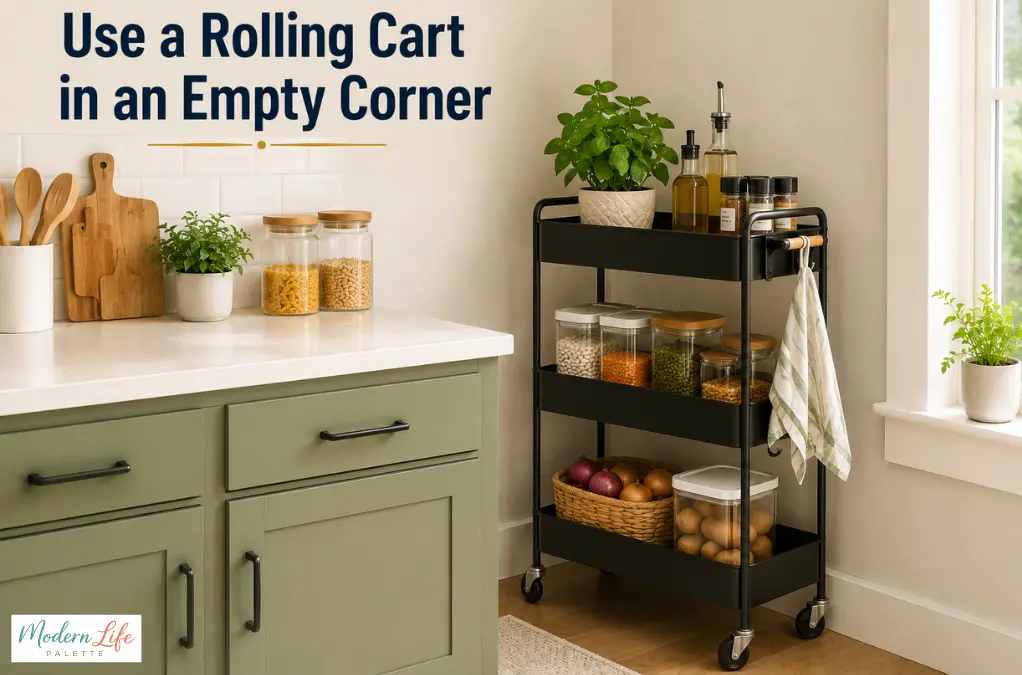
A narrow rolling cart can be surprisingly useful when cabinet space is limited.
You can use one for pantry items, coffee supplies, baking ingredients, or frequently used appliances. Because it can be moved when necessary, it works particularly well in small apartments and rental kitchens.
10. Make the Most of Narrow Gaps
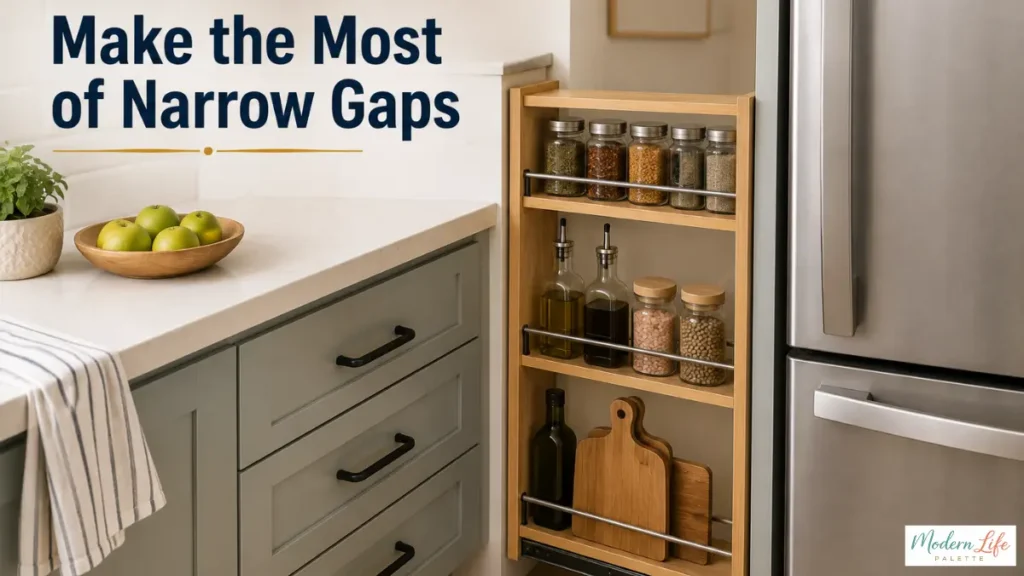
That small space between your refrigerator and a cabinet doesn’t have to be wasted.
If there’s enough room, a slim rolling storage cart can turn the gap into a place for spices, canned foods, bottles, or other narrow items.
Measure carefully before buying anything. A storage solution is only helpful if you can actually pull it out and use it.
11. Keep Your Countertop Clutter-Free
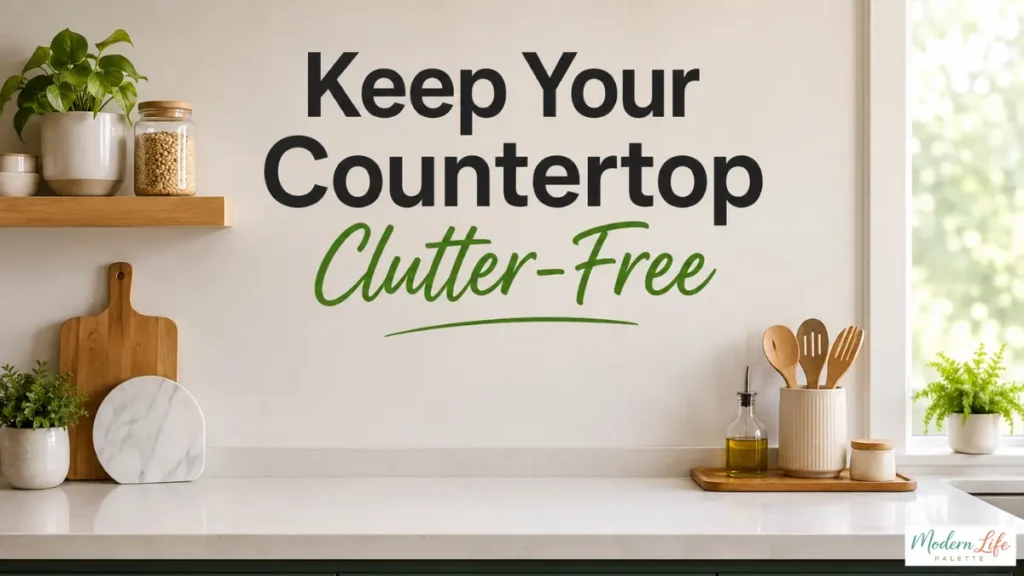
One of the easiest ways to make a small kitchen feel even smaller is to cover the counter with everything you own.
Try keeping only the appliances and items you use regularly on the countertop.
Everything else should have a home inside a cabinet, drawer, pantry, or another storage area.
A clear stretch of counter can make even a tiny kitchen feel more spacious.
12. Use Drawer Dividers
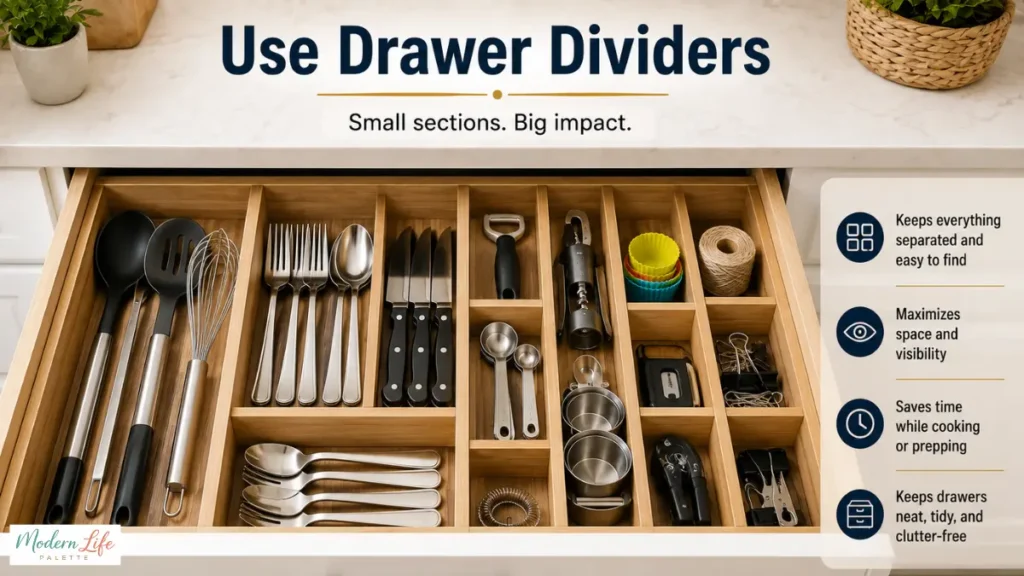
A drawer divider can make a huge difference, particularly in a narrow kitchen.
Use separate sections for forks, spoons, knives, measuring spoons, peelers, and other small tools. Adjustable dividers are useful because you can change the layout as your storage needs change.
13. Use a Tray to Group Countertop Items
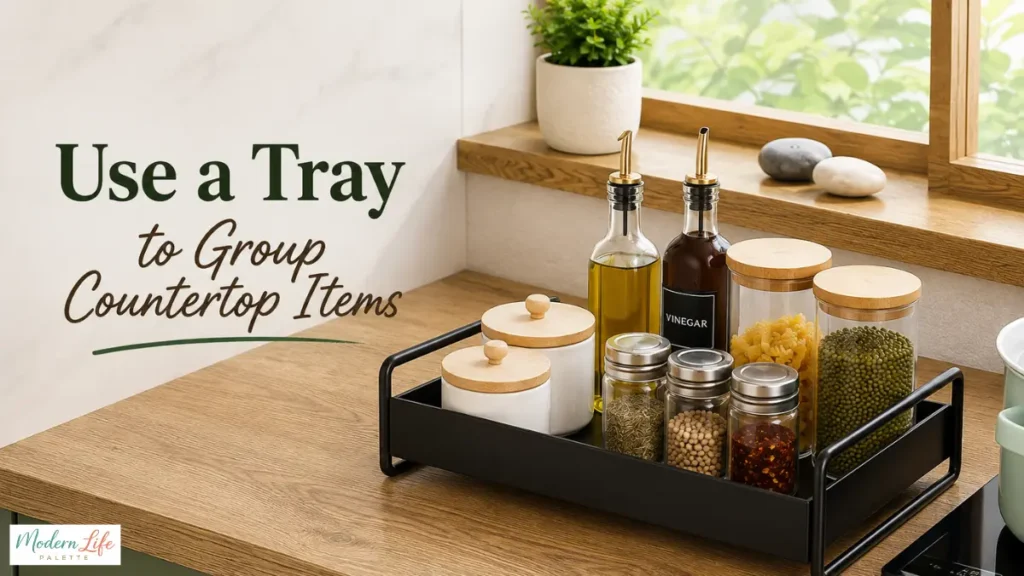
If several items need to stay on your counter, group them together on a tray.
A coffee maker, sugar container, mugs, and coffee accessories can become one compact coffee station instead of several scattered objects.
The same approach works for cooking oils, salt, pepper, or frequently used condiments.
14. Use a Lazy Susan To Organize Hard To Reach Cabinets
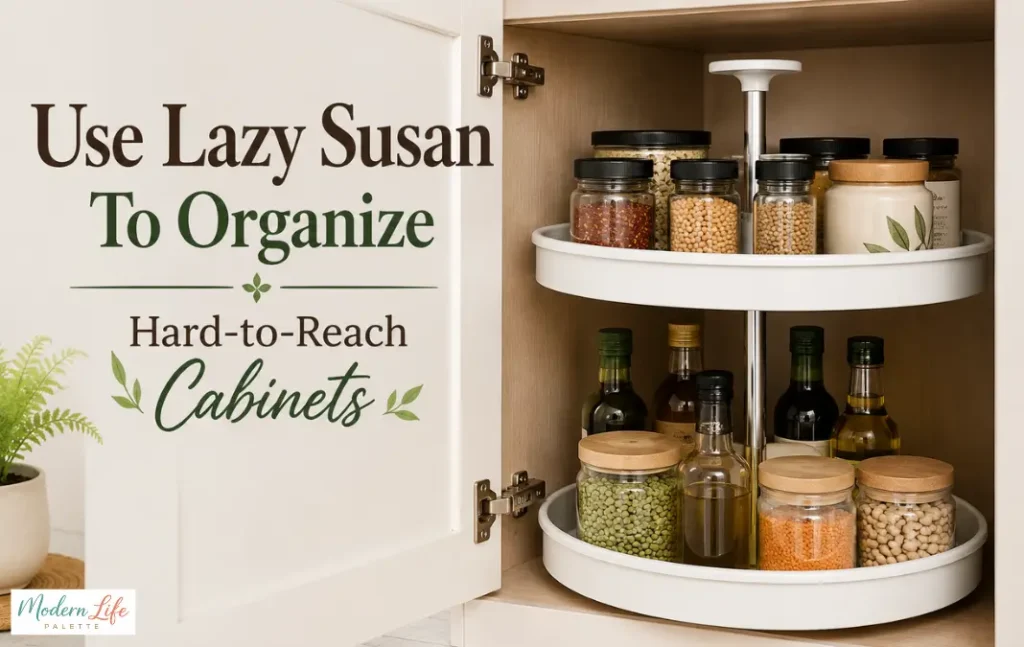
Corner cabinets and deep shelves can be difficult to organize because items disappear toward the back.
A Lazy Susan lets you rotate the contents toward you, making the entire space easier to access. It’s particularly useful for:
- Spices
- Sauces
- Oils
- Canned goods
- Condiments
15. Turn Under-Sink Space Into Useful Storage
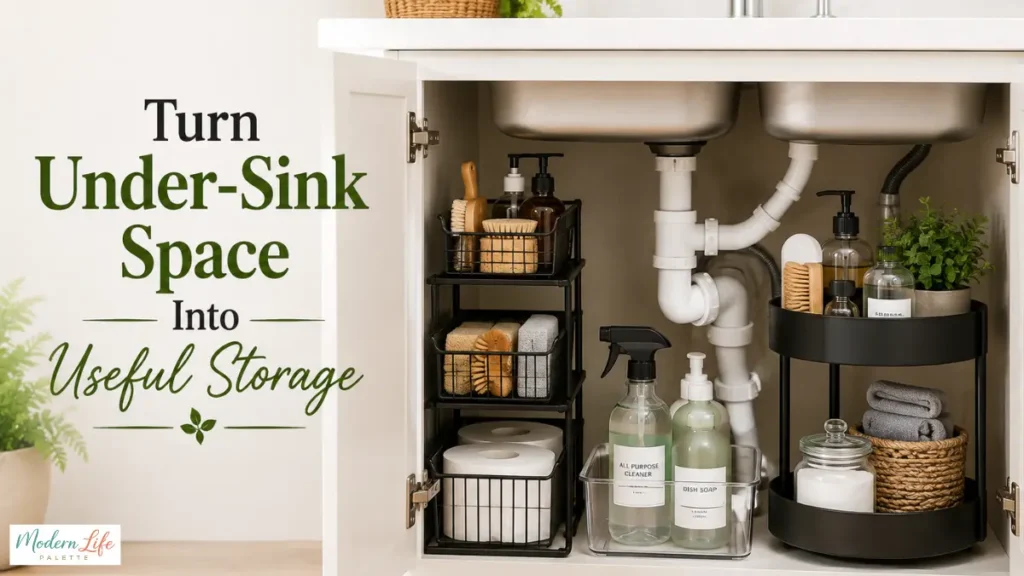
The area beneath your sink is awkward because of the plumbing, but it doesn’t have to be wasted.
Use stackable bins, small baskets, or pull-out storage to separate dishwashing supplies, cleaning products, trash bags, and other essentials.
Avoid filling the entire cabinet with random bottles. Grouping items by purpose makes the space much easier to maintain.
16. Use the Side of Your Refrigerator
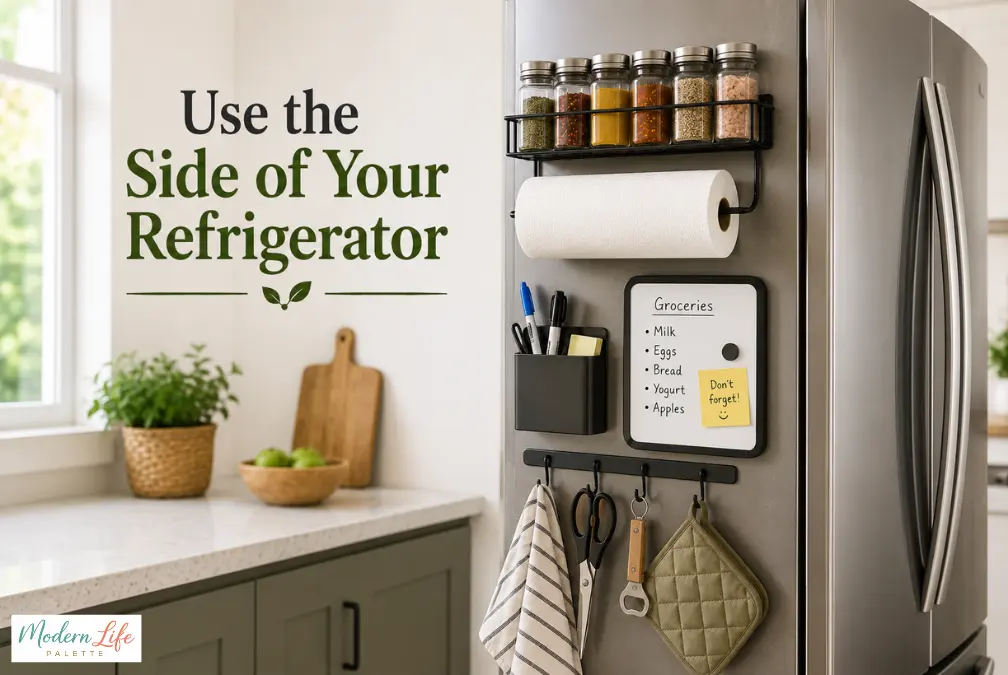
The side of the refrigerator can sometimes provide additional vertical storage.
Depending on your kitchen layout, you can use it for a magnetic grocery list, lightweight organizers, or frequently used items.
Just avoid covering ventilation areas or placing anything where it could interfere with the refrigerator door.
17. Use Clear Bins to Keep Items Visible
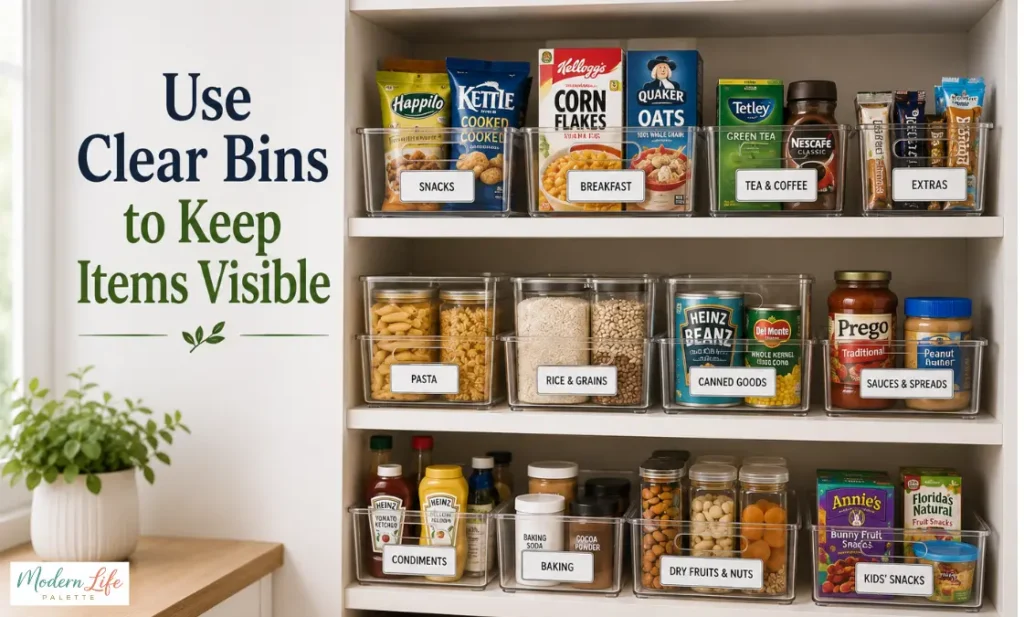
Clear bins can be useful for grouping small pantry items, snacks, or cleaning supplies. But you don’t need to put everything into matching containers.
Use bins where they solve a real problem, rather than buying organizers simply because they look good in photos.
18. Store Items Where You Actually Use Them
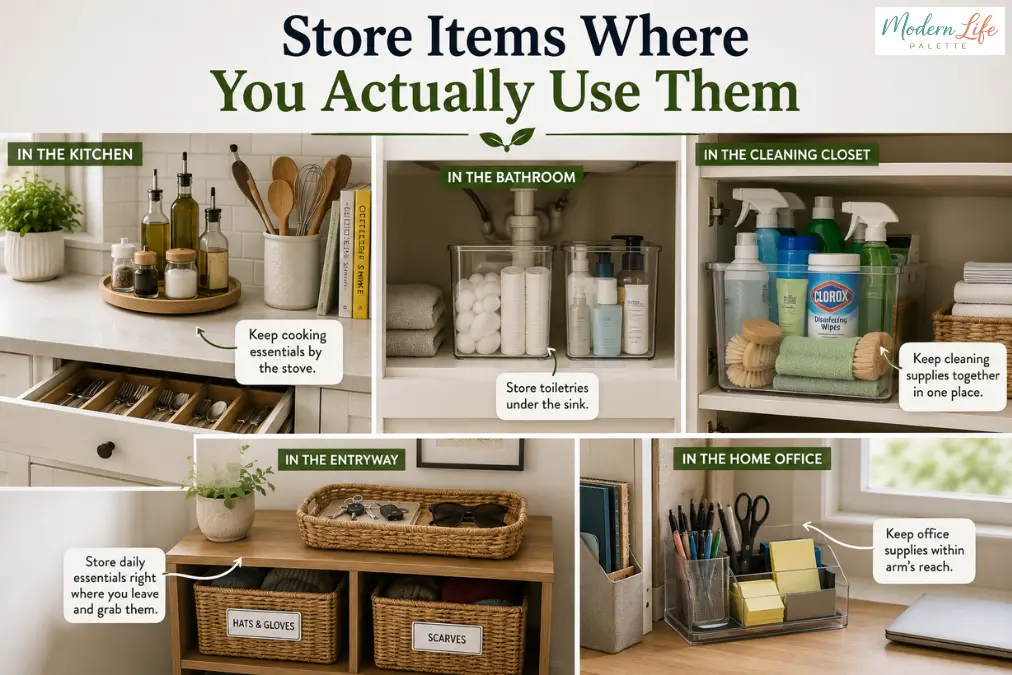
This sounds obvious, but it’s one of the most effective organization rules. If you always make coffee in one corner of the kitchen, keep the coffee supplies there. And if you bake near the oven, keep your baking tools and ingredients nearby.
The fewer steps you have to take, the easier it is to keep your small kitchen organized.
19. Do a Quick Kitchen Reset Every Day
You don’t need to spend an entire weekend reorganizing your kitchen every few weeks. Spend a few minutes each evening putting things back where they belong.
Clear the counters, return appliances to their storage areas, put away dishes, and deal with anything that has accumulated during the day.
A small daily reset prevents a small kitchen from becoming overwhelming again.
Where Should Everything Go in a Small Kitchen?
One of the easiest ways to organize a small kitchen is to stop thinking about storage as simply “where will this fit?” Instead, think about where will I use this?
| Kitchen item | A practical storage area |
| Everyday plates and bowls | Easy-to-reach cabinet |
| Pots and pans | Lower cabinet or deep drawer |
| Cooking utensils | Drawer or container near the stove |
| Spices and oils | Close to the cooking zone |
| Cutting boards | Vertical cabinet storage |
| Food containers | Deep drawer or cabinet |
| Cleaning supplies | Under the sink |
| Coffee supplies | Near the coffee maker |
| Baking supplies | Cabinet or pantry zone |
| Rarely used appliances | Higher or less accessible storage |
The goal isn’t to create a picture-perfect kitchen. It’s to reduce the number of steps between where you need something and where you store it.
What Small Kitchen Organization Mistakes Should You Avoid?
Even a well-organized kitchen can become frustrating when storage choices don’t match the way you actually use the space. Avoid these common mistakes to keep your kitchen practical and easy to maintain.
- Buying organizers before decluttering: Remove unused items first; otherwise, you’re just organizing clutter.
- Keeping everything on the countertop: Store rarely used appliances and items to protect valuable workspace.
- Choosing appearance over function: Prioritize easy access and everyday convenience over perfectly matching containers.
- Storing everyday items out of reach: Keep frequently used items in easy-to-access drawers and cabinets.
- Filling every inch of storage: Leave some breathing room so items are easier to find and put away.
- Creating complicated storage systems: Keep categories simple so your organization is easy to maintain.
Don’t Buy Kitchen Organizers Until You Do This
It’s easy to see a drawer divider, Lazy Susan, storage bin, or rolling cart online and think it will instantly solve your kitchen problems.
Before buying anything, ask yourself three questions:
- What exactly is the problem?
Is the cabinet too deep? Is there unused vertical space? Are lids getting mixed up? Is the counter too crowded?
- What space do I actually have?
Measure the cabinet, drawer, shelf, or gap before buying an organizer. A product that looks perfect online may not fit your kitchen.
- Will I use it every day?
An organizer is worthwhile when it makes something easier to store or access. If it simply creates another thing you need to maintain, skip it.
Start with the problem, then find the solution.
Small Kitchen Organization Checklist
Use this quick checklist when you’re ready to reorganize your kitchen:
☐ Remove broken and unused items
☐ Get rid of duplicates
☐ Group similar items together
☐ Create cooking, prep, cleaning, and coffee zones
☐ Use vertical wall space
☐ Add shelf risers where needed
☐ Organize deep cabinets
☐ Divide messy drawers
☐ Store food-container lids vertically
☐ Create a pantry zone if you don’t have a pantry
☐ Clear unnecessary items from the countertop
☐ Organize under the sink
☐ Store cutting boards vertically
☐ Move rarely used appliances
☐ Give frequently used items easy-to-reach storage
☐ Create a simple daily reset routine
You don’t have to complete the entire checklist at once. Start with the three areas that bother you most.
Conclusion
A small kitchen doesn’t need more space – it needs a smarter setup. Declutter what you don’t use, organize items based on how you cook, and make every cabinet, drawer, and corner work harder. Start with one problem area at a time, and you’ll quickly notice the difference.
Frequently Asked Questions
1. What is the best way to organize a very small kitchen?
Declutter first, then group similar items and use vertical, cabinet, drawer, and hidden storage to maximize available space.
2. How do you maximize storage in a small kitchen?
Use shelf risers, vertical dividers, cabinet-door organizers, hooks, rolling carts, and under-sink storage to create more usable space.
3. How do you organize a small kitchen with no pantry?
Use a cabinet, rolling cart, narrow shelf, or designated cabinet section to create a pantry zone for dry foods and snacks.
4. How do you keep kitchen counters clear in a small kitchen?
Keep only frequently used items on the counter and store occasional-use appliances and supplies inside cabinets or other designated spaces.
5. What should you store under the kitchen sink?
Use the space for cleaning supplies, dishwashing essentials, trash bags, sponges, and brushes, preferably grouped in small bins.
6. How do you organize deep kitchen cabinets?
Use shelf risers, turntables, pull-out baskets, or dividers so items at the back remain visible and easy to reach.
7. How can you organize a small kitchen without buying anything?
Declutter, rearrange existing storage, nest similar items, and repurpose boxes or containers as simple dividers before buying organizers.
8. How often should you reorganize a small kitchen?
Do a quick reset daily and declutter every few months to prevent unused items and clutter from taking over your limited space.
9. Is it better to store appliances on the counter or in cabinets?
Keep frequently used appliances on the counter and store appliances you use occasionally to free up valuable counter space.
10. How do you organize a small kitchen on a tight budget?
Start with decluttering and rearranging, then use items you already have before investing in organizers for specific storage problems.