
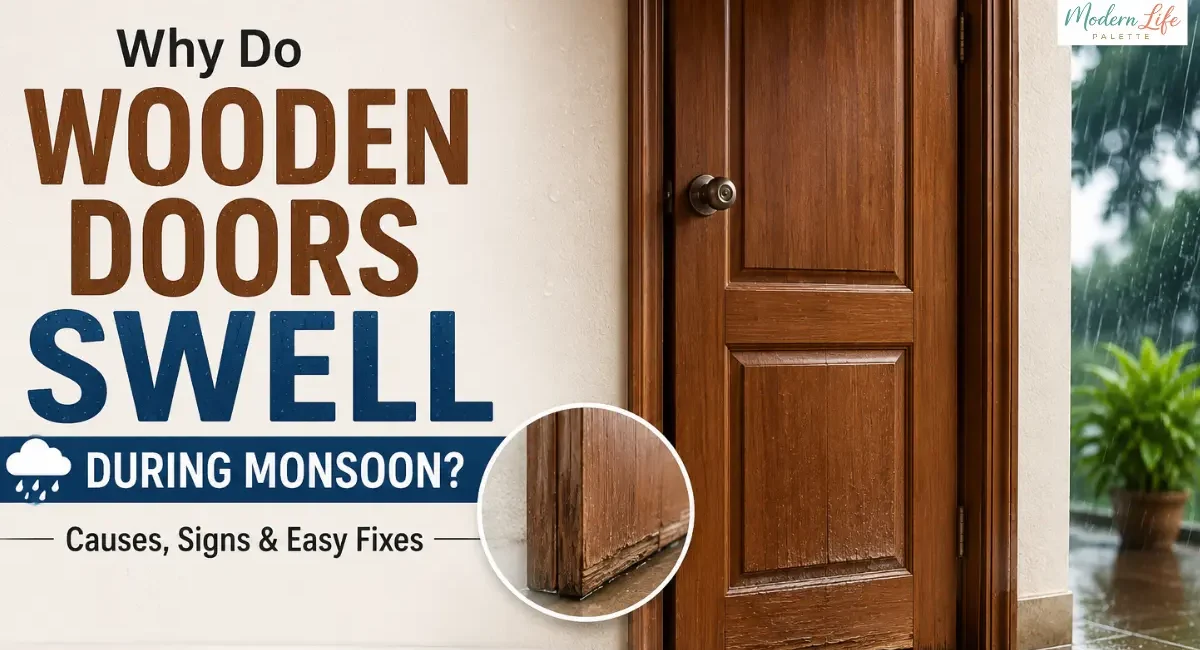
Have you noticed your wooden door becoming difficult to open or close during the monsoon? It may scrape against the frame, refuse to lock properly, or even get stuck. This happens because wood naturally absorbs moisture from the humid air, causing it to expand.
In this guide, you’ll learn why wooden doors swell during monsoon, the common causes, simple ways to fix the problem, and practical tips to prevent it from happening every rainy season.
Why Do Wooden Doors Swell During Monsoon?
The simple answer is moisture.
During monsoon, humidity levels rise significantly. Even if your door doesn’t come into direct contact with rainwater, it absorbs moisture from the surrounding air. As the wood absorbs this moisture, its fibers expand, causing the door to become slightly larger than its original size.
Even a few millimeters of expansion are enough for the door to rub against the frame, making it difficult to open, close, or lock.
What Causes Wooden Doors to Swell?
Several factors can cause wooden doors to absorb excess moisture and expand during the monsoon.

1. High Humidity
Wood naturally absorbs moisture from humid air. As humidity rises during the monsoon, the wood expands, making the door difficult to open or close.
2. Direct Exposure to Rainwater
Rainwater splashing on exterior doors or entering through gaps allows the wood to absorb more moisture, increasing the chances of swelling.
3. Poor Ventilation
Rooms with limited airflow stay damp for longer, preventing wooden doors from drying properly and leading to moisture buildup.
4. Worn-Out Paint or Polish
Peeling paint or an old protective coating leaves the wood exposed, allowing it to absorb moisture more easily.
5. Low-Quality or Untreated Wood
Untreated or lower-quality wood is generally more porous, making it more likely to swell when exposed to humid conditions.
Signs Your Wooden Door Has Swollen
Not sure whether your door has swollen? Look out for these common signs.
| Sign | What It Indicates |
| Door sticks while opening or closing | Wood has expanded due to moisture |
| Door scrapes against the frame | Swelling has increased the door’s size |
| Lock becomes difficult to use | Door alignment has shifted |
| Edges appear slightly raised | Moisture absorption |
| Paint or polish starts peeling | Moisture has entered the wood |
| Door closes with extra force | Door no longer fits properly |
Sometimes these symptoms appear only during monsoon and disappear once the weather becomes dry.
Can a Swollen Wooden Door Shrink Back?
Yes, in many cases it can. If the swelling is caused only by seasonal humidity, the door often returns close to its original size once the weather becomes dry. This is why it’s usually best to avoid making permanent changes immediately after noticing the problem.
However, if the door has absorbed excessive water or has been exposed to moisture for a long time, it may not return completely to its original shape. In such cases, repairs may be necessary.
How to Fix a Swollen Wooden Door?
If your wooden door has swollen during the monsoon, don’t rush to replace it. In most cases, a few simple steps can solve the problem.
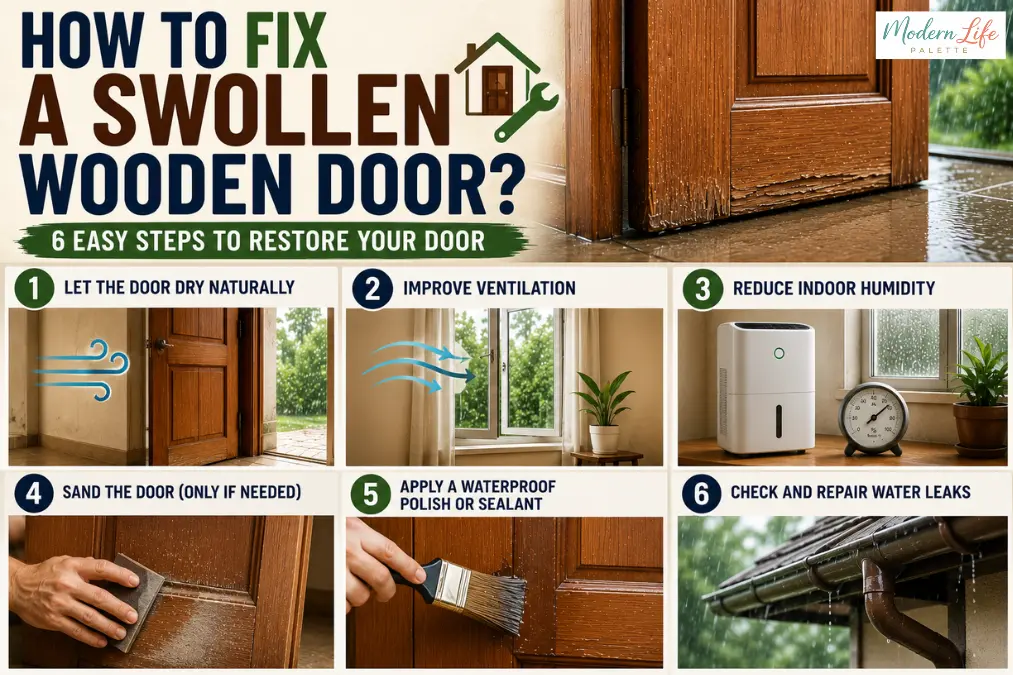
1. Let the Door Dry Naturally
If the swelling is caused by humidity, the door may return to its original size once the weather becomes drier.
- Keep doors and windows open whenever possible.
- Allow fresh air to circulate through the room.
- Avoid forcing the door open or shut.
2. Improve Ventilation
Good airflow helps reduce indoor moisture and prevents the wood from absorbing more humidity.
You can:
- Use exhaust fans in kitchens and bathrooms.
- Switch on ceiling or pedestal fans.
- Open windows during dry spells to improve air circulation.
3. Reduce Indoor Humidity
If your home feels damp throughout the rainy season, lowering humidity can help protect wooden doors and furniture.
Consider:
- Using a dehumidifier.
- Running your air conditioner in Dry Mode, if available.
- Keeping wet clothes out of enclosed rooms.
4. Sand the Door (Only if Needed)
If the door continues to stick even after it has completely dried, light sanding can help.
- Identify the areas rubbing against the frame.
- Sand only those sections.
- Apply polish or paint afterward to protect the exposed wood.
Avoid sanding a damp door, as it may shrink once the humidity drops, leaving unwanted gaps.
5. Apply a Waterproof Polish or Sealant
A waterproof polish or sealant helps protect the wood by reducing moisture absorption.
- Apply a fresh coat before the monsoon if the old finish is faded or peeling.
- Reapply the protective coating as recommended by the manufacturer.
- Include this in your annual monsoon home maintenance routine.
6. Check and Repair Water Leaks
Water leaks around the door can cause repeated swelling and long-term damage.
- Inspect the door frame after heavy rainfall.
- Repair leaks from nearby windows, walls, roof, or plumbing.
- Prevent standing water from collecting near wooden doors.
While these solutions can help fix a swollen wooden door, preventing the problem is always easier. Check out our guide on How to Prevent Wooden Doors from Swelling During Monsoon for simple tips to protect your doors throughout the rainy season.
When Should You Replace a Swollen Wooden Door?
Most swollen wooden doors can be repaired, especially if the swelling is caused by seasonal humidity. However, in some cases, replacing the door may be the better option.
Consider replacing your wooden door if:
- The door remains swollen throughout the year, even after the monsoon ends.
- The wood has started to rot due to prolonged moisture exposure.
- Large cracks or warping have affected the door’s strength.
- Termite damage has weakened the wood.
- The door no longer fits properly even after repairs or sanding.
- Frequent repairs are becoming expensive, making replacement a more practical choice.
If you’re unsure whether your door can be repaired, consult a carpenter before making a decision. They can assess the condition of the wood and recommend the most cost-effective solution.
What Mistakes Should You Avoid When Fixing a Swollen Wooden Door?
Avoiding these simple mistakes can prevent further damage and help your wooden door last longer.
- Don’t force the door open or shut, as it can damage the hinges, frame, or lock.
- Don’t sand the door while it’s still damp, as it may shrink once the weather becomes dry.
- Don’t paint or polish wet wood, as the finish won’t adhere properly and can trap moisture.
- Don’t ignore peeling paint or worn-out polish, as exposed wood absorbs moisture more easily.
- Don’t delay fixing water leaks around the door, as repeated exposure to moisture can lead to swelling, warping, or rot.
A little extra care during the rainy season can go a long way in preventing swelling and extending the life of your wooden doors.
Conclusion
Wooden doors often swell during the monsoon because they absorb moisture from the humid air. In most cases, the problem is temporary and can be managed with simple repairs and timely maintenance. By taking the right preventive measures, you can protect your wooden doors, extend their lifespan, and keep them functioning smoothly throughout the rainy season.
Frequently Asked Questions
1. Why do wooden doors swell during monsoon?
Wooden doors swell during the monsoon because wood absorbs moisture from the humid air. As the moisture content increases, the wood expands, making the door difficult to open or close.
2. Will a swollen wooden door return to its original size?
Yes, if the swelling is caused by seasonal humidity, the door often shrinks back as humidity levels decrease after the monsoon. However, prolonged water exposure may cause permanent damage.
3. Can I sand a swollen wooden door immediately?
It’s best to wait until the door has dried completely. Sanding a damp door may leave unwanted gaps once the wood shrinks back in dry weather.
4. Should I replace a swollen wooden door?
Not always. Most swollen wooden doors can be repaired. Replacement is usually necessary only if the door has severe warping, rot, termite damage, or remains swollen throughout the year.
5. Are solid wood doors more likely to swell than engineered wood doors?
Yes. Solid wood naturally absorbs more moisture than engineered wood, making it more prone to swelling during periods of high humidity.