
Baby weight gain month by month is one of the biggest concerns for new parents. One month your baby gains plenty of weight, and the next month the weighing scale barely moves. Naturally, you start wondering, “Is my baby growing properly?”
If you’ve ever compared your baby’s weight with another baby’s or worried because the numbers didn’t increase as expected, you’re not alone. Almost every parent goes through this phase during the first year.
The reassuring part is that babies don’t gain weight at the same pace every month. Some months bring rapid growth, while others are much slower – and that’s often completely normal. Let’s understand what you can expect during each stage of your baby’s first year.
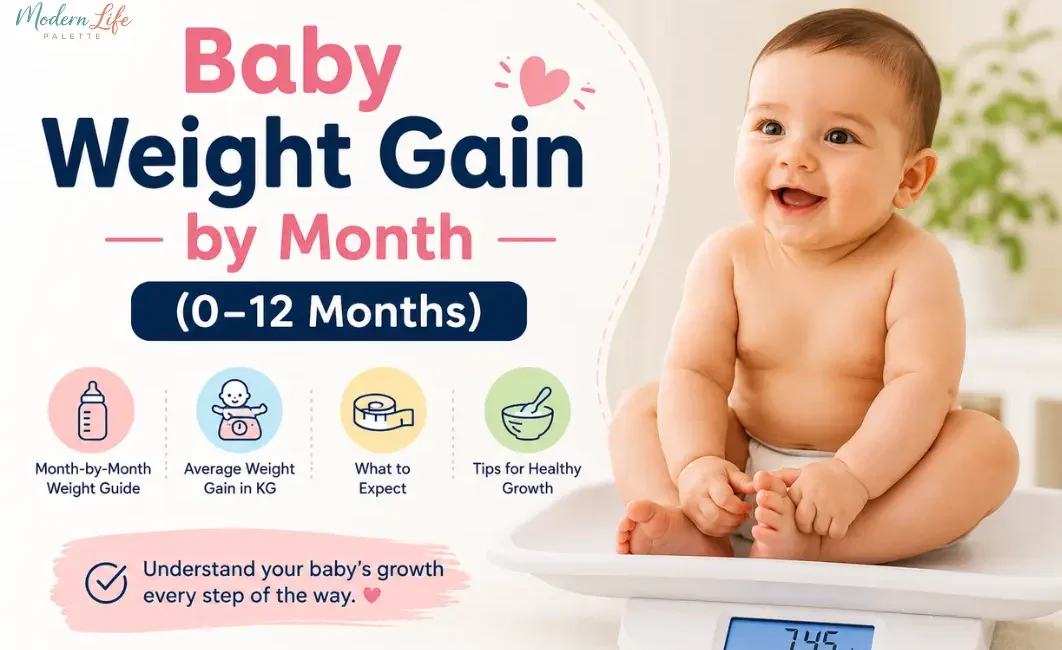
Baby Weight Gain by Month (0 – 12 Months)
Wondering how much weight your baby should gain each month? While every baby grows at their own pace, there are some general patterns that most healthy babies follow during the first year. Let’s take a month-by-month look at what you can expect.
Birth to 1 Month: The First Few Weeks Are All About Catch-Up Growth
Typical weight gain: After regaining the small amount of weight lost after birth, many babies gain around 0.6 – 0.9 kg during the first month.
If your baby loses a little weight in the first few days after birth, don’t panic – this is completely normal. Once feeding is established, most babies regain their birth weight within 10 – 14 days and then begin gaining weight steadily.
What you can expect:
- A small weight loss during the first few days after birth.
- Birth weight is usually regained within 10 – 14 days.
- Feeding every 2 – 3 hours or on demand.
- Plenty of wet diapers, showing your baby is feeding well.
1-2 Months: One of the Fastest Growth Phases
Typical weight gain: Around 0.7 – 0.9 kg.
This is one of the fastest growth periods in your baby’s first year. Your little one spends most of the day feeding and sleeping, and that’s exactly what helps them grow so quickly.
Don’t be surprised if those adorable newborn outfits suddenly become too small!
What you can expect:
- Steady weekly weight gain.
- Feeding 8 – 12 times a day if breastfed (some babies may feed even more often).
- Longer periods of alertness.
- Plenty of wet and dirty diapers.
2-3 Months: Growth Continues at a Healthy Pace
Typical weight gain: Around 0.7 – 0.9 kg, although some babies may gain slightly more or less.
Around this stage, many parents start checking the weighing scale more often. If your baby gains a little less than last month, try not to worry. Healthy babies don’t all gain the exact same amount every month.
Factors like feeding, birth weight, genetics, and growth spurts all influence how much weight a baby gains.
What you can expect:
- Healthy, steady weight gain.
- Feeding becomes more efficient.
- Longer wake windows.
- More smiles and interaction.
3-4 Months: Growth Is Still Healthy, Just a Little Slower
Typical weight gain: Around 0.6 – 0.8 kg.
If you’ve noticed your baby’s weight gain slowing slightly, that’s completely expected. As babies become more active, they naturally burn more calories than they did during the sleepy newborn stage.
What you can expect:
- Weight gain continues but at a slower pace.
- More tummy time and active kicking.
- Beginning to roll over (some babies).
- Longer play sessions.
4-5 Months: “My Baby Looks Chubbier Than Last Month!”
Typical weight gain: Around 0.6 – 0.8 kg.
Have you noticed your baby’s cheeks getting fuller or those adorable thigh rolls becoming more noticeable? It’s one of those stages where you can actually see your little one growing!
Many babies are also getting close to doubling their birth weight around this age. While weight gain is still steady, your baby is becoming more active and curious about the world.
What you can expect:
- Healthy and steady weight gain.
- More tummy time and stronger muscles.
- Rolling from tummy to back or back to tummy (many babies, but not all).
- Reaching for toys and bringing hands to their mouth.
5-6 Months: Starting Solids Doesn’t Mean Faster Weight Gain
Typical weight gain: Around 0.6 – 0.8 kg.
Around six months, many babies are introduced to solid foods. If you’re expecting a sudden jump in weight because of those first spoonfuls of puree, don’t be disappointed!
At this stage, solids are mainly for learning new tastes and textures. Breast milk or formula still provides most of your baby’s nutrition, so weight gain naturally becomes a little slower than it was during the newborn months.
What you can expect:
- Steady but slower weight gain.
- Sitting with support or independently (for some babies).
- Showing interest in family meals.
- Better hand-to-mouth coordination
6-7 Months: More Activity, Slower Weight Gain
Typical weight gain: Around 0.3 – 0.5 kg.
If the weighing scale isn’t moving as quickly as before, don’t panic. Your baby is now much more active – rolling, sitting, and reaching for everything within sight.
All this movement burns more calories, which is why baby weight gain by month naturally slows during the second half of the first year.
What you can expect:
- Slower but healthy weight gain.
- Sitting independently (many babies).
- Rolling both ways.
- More curiosity and exploration.
7-8 Months: Crawling Burns More Calories
Typical weight gain: Around 0.3 – 0.5 kg.
Life gets much busier once your baby starts crawling or scooting around the house. They’re constantly exploring, which means they’re also burning more energy than ever before.
Although monthly weight gain becomes more gradual, your baby is still growing beautifully.
What you can expect:
- Gradual weight gain.
- Crawling or attempting to crawl.
- Enjoying a wider variety of foods.
- Better hand-eye coordination.
8-9 Months: Appetite May Change from One Day to the Next
Typical weight gain: Around 0.3 – 0.4 kg.
One day your baby finishes every bite, and the next day they barely eat a few spoonfuls. Sound familiar?
Changes in appetite are common at this age. Teething, growth spurts, or simply being distracted by all the exciting things around them can affect how much they eat.
What you can expect:
- Continued but slower weight gain.
- Enjoying finger foods.
- Better chewing skills.
- Pulling up to stand (many babies).
9-10 Months: Growing Well While Always on the Move
Typical weight gain: Around 0.2 – 0.4 kg.
By now, your baby is probably crawling confidently, pulling up on furniture, or even cruising along the sofa. All this activity uses plenty of energy, so don’t be surprised if weight gain is slower than it was a few months ago.
As long as your baby is feeding well and following their own growth curve, gradual weight gain is completely expected.
What you can expect:
- Slow but steady weight gain.
- Crawling confidently or cruising.
- Eating a variety of soft family foods.
- Improved balance and coordination.
10-11 Months: Every Baby Grows at Their Own Pace
Typical weight gain: Around 0.2 – 0.4 kg.
Some babies become little food lovers at this age, while others seem too busy playing to finish their meals. Both can be perfectly normal.
Although weight gain is slower now, your little one is still growing steadily while becoming more independent each day.
What you can expect:
- Continued gradual weight gain.
- Three small meals along with breast milk or formula.
- Better pincer grasp for picking up food.
- Standing while holding onto furniture.
11-12 Months: A Year of Amazing Growth
Typical weight gain: Around 0.2 – 0.3 kg.
It’s hard to believe your tiny newborn is almost one year old!
By their first birthday, many babies have tripled their birth weight, although reaching this milestone a little earlier or later is completely normal. Your baby is now enjoying a wider variety of foods while becoming more confident with movement.
What you can expect:
- Steady weight gain continues.
- Many babies have tripled their birth weight.
- Pulling up, cruising, or taking first independent steps.
- Eating a wider range of family foods.
Why Does Baby Weight Gain Slow Down After 6 Months?
If your baby’s weight gain has slowed down after six months, don’t worry – this is completely normal.
In the first few months, babies spend most of their time feeding and sleeping, which helps them gain weight quickly. But as they start rolling, sitting, crawling, and exploring, they burn more energy throughout the day. At the same time, solid foods are introduced, and growth naturally becomes more gradual.
Instead of focusing on how much weight your baby gains each month, your pediatrician looks at whether they’re following a healthy growth curve over time.
Why it happens:
- More activity: Crawling, rolling, and sitting burn more calories.
- Starting solids: Babies begin exploring foods, but breast milk or formula is still their main source of nutrition.
- Natural growth pattern: Rapid newborn growth gradually slows during the second half of the first year.
Tip: Every baby’s growth journey is different. A slower rate of weight gain after six months is usually a normal part of development, as long as your baby is feeding well, active, and growing consistently.
Tips to Support Healthy Baby Weight Gain
Every baby grows at their own pace, so don’t worry if your little one doesn’t look exactly like another baby of the same age. Instead of trying to increase the number on the weighing scale, focus on building healthy feeding habits and supporting your baby’s overall growth.
Here are a few simple ways to encourage healthy weight gain:
- Feed your baby when they show hunger cues, especially during the first few months, rather than following a strict feeding schedule.
- If you’re breastfeeding, make sure your baby has a good latch so they can feed effectively and get enough milk.
- Continue offering breast milk or formula as the primary source of nutrition during the first year, even after introducing solid foods.
- Introduce a variety of age-appropriate, nutrient-rich solid foods from around 6 months, as recommended by your pediatrician.
- Attend regular well-baby check-ups so your pediatrician can monitor your baby’s growth and development over time.
Tip:
Healthy weight gain isn’t about feeding more – it’s about feeding well. A baby who is eating well, active, and following their own growth curve is usually growing just as they should.
Conclusion
Baby weight gain by month can vary from one baby to another, and that’s perfectly normal. As long as your baby is growing steadily and following their own growth curve, small differences in monthly weight gain are usually nothing to worry about.
Want to compare your baby’s weight with age-based averages? Read our Baby Weight Chart by Age (0–24 Months) for WHO-based average weight ranges for boys and girls.
Frequently Asked Questions
1. How much weight should a baby gain each month?
During the first three months, many babies gain around 150 – 200 grams per week. After that, weight gain gradually slows as they become more active.
2. Is it normal for babies to gain weight at different rates?
Yes. Every baby has a unique growth pattern influenced by factors such as genetics, feeding, birth weight, and activity level.
3. Why did my baby’s weight gain suddenly slow down?
Weight gain naturally slows after six months because babies become more active by rolling, sitting, crawling, and eventually standing. This increased activity burns more calories.
4. Can breastfed babies gain weight more slowly?
Yes. Breastfed babies may gain weight differently from formula-fed babies, especially after the first few months. As long as they’re feeding well and following their growth curve, this is usually normal.
5. When do babies usually double their birth weight?
Many babies double their birth weight by around 4 to 6 months, although this can vary.
6. When do babies usually triple their birth weight?
Many babies triple their birth weight by their first birthday, though some may do so a little earlier or later.
7. Can teething affect my baby’s weight gain?
Teething may temporarily reduce your baby’s appetite, but it usually doesn’t affect long-term weight gain.
8. Should I weigh my baby every week?
Not necessarily. Most babies are weighed during routine pediatric check-ups. Tracking your baby’s growth over time is more helpful than focusing on frequent weight checks at home.
Disclaimer: The weight gain figures shared in this article are approximate and based on general growth patterns for healthy, full-term babies. Every baby grows at their own pace, and monthly weight gain can vary depending on factors such as birth weight, feeding, genetics, and overall health. Always consult your pediatrician if you have concerns about your baby’s growth or weight gain.