


If your baby’s diaper rash seems to flare up every rainy season, you’re definitely not alone. Many parents notice that despite regular diaper changes and good hygiene, the redness just doesn’t seem to go away during monsoon. The good news is that there’s a reason behind it – and once you understand why, it’s much easier to keep your little one’s skin comfortable.
Disclaimer: This article is for educational purposes only and should not be considered medical advice. Every baby is different. If your baby’s diaper rash is severe, keeps getting worse, or doesn’t improve after a few days, consult your pediatrician for proper diagnosis and treatment.
Why Does My Baby’s Diaper Rash Become Worse During Monsoon?
The biggest reason is humidity. During monsoon, the air contains more moisture, making it difficult for your baby’s skin to stay dry. The diaper area becomes warm, damp, and enclosed – creating the perfect environment for skin irritation.

Let’s look at the common reasons in more detail.
1. High Humidity
Unlike dry weather, moisture doesn’t evaporate quickly during monsoon. Even after cleaning and drying your baby’s diaper area, the skin can remain slightly damp.
When the skin stays moist for a long time:
- It becomes softer and more delicate.
- The protective skin barrier weakens.
- Friction from the diaper increases.
- Redness and irritation develop more easily.
Think of how your own fingers wrinkle after staying in water for too long. A baby’s skin is much more delicate, so it reacts even faster.
2. Damp Skin
During humid weather, diapers don’t dry out as quickly. Even a small amount of urine can keep the diaper area damp for a longer time. This means your baby’s skin stays in contact with moisture for extended periods, increasing the chance of irritation.
To reduce the risk:
- Change diapers every 2–3 hours, or sooner if they’re wet or soiled.
- Don’t wait until the diaper feels completely full.
- Check the diaper more frequently during humid days.
Small changes in your diaper-changing routine can make a noticeable difference.
3. Trapped Sweat
Many parents associate sweating with hot summer days, but babies can sweat during monsoon too.
The diaper covers one of the warmest areas of the body. When sweat mixes with urine and heat, the skin becomes even more vulnerable to irritation.
Your baby may sweat more if they:
- Are overdressed.
- Sleep in a warm room.
- Spend long hours in the same diaper.
- Are very active and crawling or walking.
The combination of sweat, moisture, and friction can quickly trigger diaper rash, even if you’re changing diapers regularly.
4. Fungal Growth
Monsoon weather doesn’t just affect the skin – it also encourages the growth of fungi, especially Candida, a common yeast that can cause diaper rash.
A fungal diaper rash often looks different from a regular diaper rash.
| Regular Diaper Rash | Fungal (Yeast) Diaper Rash |
| Mild to moderate redness | Bright red rash |
| Usually affects exposed skin | Often spreads into skin folds |
| Improves with regular diaper care | May continue to worsen without treatment |
| Skin looks irritated | Small red spots may appear around the main rash |
If you’ve been following good diaper care but the rash continues to spread or doesn’t improve after a few days, it’s best to have your pediatrician examine it.
5. Damp Cloth Diapers
Many parents prefer cloth diapers because they’re reusable and gentle on the skin. However, during monsoon, drying them completely can be challenging.
A cloth diaper that feels “almost dry” may still contain moisture.
This can lead to:
- Prolonged dampness against the skin.
- Irritation from trapped moisture.
- Growth of bacteria or fungi if diapers aren’t dried properly.
If you’re using cloth diapers during the rainy season:
- Wash them thoroughly after every use.
- Rinse well to remove detergent residue.
- Dry them completely before reuse.
- If sunlight isn’t available, dry them indoors with good ventilation and iron them before use to remove any remaining moisture.
These simple precautions can help reduce the risk of diaper rash.
Signs Your Baby’s Diaper Rash Is Becoming Severe
Most diaper rashes improve within a few days with regular diaper changes, keeping the area dry, and using a barrier cream. However, some rashes need medical attention.
Keep an eye out for these warning signs:
- Bright red or deep red skin
- Swelling around the diaper area
- Blisters or open sores
- Bleeding or cracked skin
- Pus-filled bumps
- Rash spreading beyond the diaper area
- Your baby cries every time you clean or change the diaper
- Fever along with the rash
- The rash doesn’t improve after 2–3 days of home care
If you notice any of these symptoms, it’s best to contact your pediatrician instead of trying new home remedies.
How to Prevent Diaper Rash During Monsoon
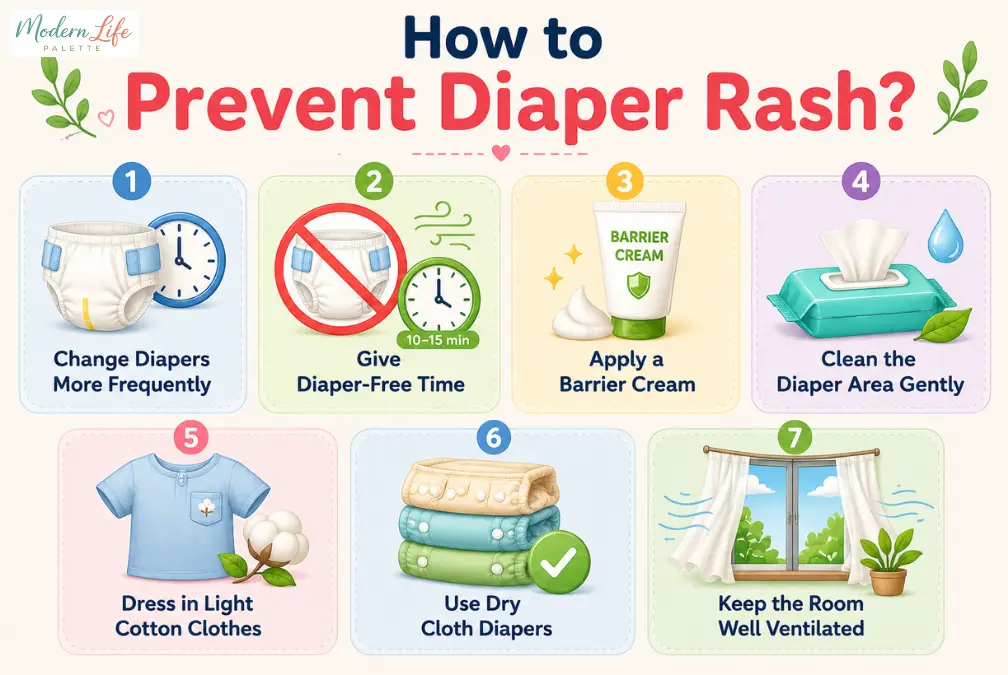
The good news is that a few simple habits can go a long way in keeping your baby’s skin healthy during the rainy season.
1. Change Diapers More Frequently
One of the easiest ways to prevent diaper rash is by changing diapers before they become too wet.
During monsoon, try to:
- Check the diaper every 2–3 hours.
- Change it immediately after your baby poops.
- Avoid leaving your baby in a wet diaper, even if it doesn’t seem very full.
Remember, it’s not just the amount of urine that matters – it’s how long the skin stays damp.
2. Give Your Baby Some Diaper-Free Time
Your baby’s skin needs fresh air too! Allowing your little one to stay without a diaper for a few minutes every day helps the skin dry naturally and reduces trapped moisture.
Even 10–15 minutes, two or three times a day, can make a difference.
A waterproof mat or towel underneath can save you from unexpected messes!
3. Apply a Barrier Cream
A good barrier cream creates a protective layer between your baby’s skin and moisture.
Many pediatricians recommend creams containing ingredients like zinc oxide for helping protect irritated skin.
Apply a thin layer:
- After every diaper change if your baby is prone to rashes.
- Especially before bedtime when diapers are worn for longer.
If you’re unsure which product is suitable for your baby, ask your pediatrician for guidance.
4. Clean the Diaper Area Gently
It’s tempting to scrub away every bit of dirt, but gentle cleaning is much kinder to your baby’s delicate skin.
Instead:
- Use lukewarm water whenever possible.
- Pat the skin dry instead of rubbing.
- Use fragrance-free wipes if you’re outside the house.
Rubbing the skin can make irritation worse.
5. Dress Your Baby in Breathable Cotton Clothes
During monsoon, babies don’t just need protection from rain – they also need clothes that allow their skin to breathe.
Choose:
- Soft cotton clothing
- Loose-fitting outfits
- Lightweight fabrics
Avoid tight plastic pants or thick synthetic fabrics that trap heat and sweat.
6. Make Sure Cloth Diapers Are Completely Dry
If you’re using reusable cloth diapers, drying them properly becomes even more important during the rainy season.
Before using them again:
✔ Wash thoroughly
✔ Rinse out detergent completely
✔ Dry fully
✔ Store in a clean, dry place
If there’s no sunshine, drying indoors with good airflow and lightly ironing the diaper before use can help remove leftover moisture. You can also check out our guide on How to Dry Clothes Indoors During Rain for more practical tips.
7. Keep the Room Well Ventilated
Humidity doesn’t just stay outdoors – it can also build up inside your home.
Try to:
- Open windows when weather allows.
- Use a fan for better airflow.
- Avoid overdressing your baby indoors.
A cooler, well-ventilated room helps reduce sweating.
Should You Use Baby Powder for Diaper Rash?
Many of us grew up seeing baby powder used after every diaper change. But current medical advice is a little different.
Baby powder doesn’t treat diaper rash, and in some cases, it may not be the best choice.
Why?
- It doesn’t protect the skin from urine or stool.
- Powder can clump together when mixed with moisture.
- Fine powder particles may accidentally be inhaled by babies.
Instead of relying on powder, keeping the diaper area clean, dry, and protected with a barrier cream is usually a better approach.
If you’re considering using any powder or medicated product, it’s always safer to check with your pediatrician first.
Can Monsoon Cause a Yeast Diaper Rash?
Yes, it can increase the risk. Warm, damp conditions allow Candida (a common yeast) to grow more easily. That’s why some diaper rashes become stubborn during the rainy season.
A yeast diaper rash may be more likely if:
- Your baby has recently taken antibiotics.
- The rash stays for several days despite good diaper care.
- The rash spreads into the skin folds.
- Small red spots appear around the main rash.
Unlike a regular diaper rash, a yeast infection usually needs antifungal treatment prescribed by a doctor.
When Should You See a Doctor?
While mild diaper rash is common, don’t wait too long if the symptoms are getting worse.
Consult your pediatrician if:
- The rash lasts longer than 2–3 days.
- It becomes very painful.
- You notice blisters, pus, or bleeding.
- The rash spreads outside the diaper area.
- Your baby develops a fever.
- Your baby seems unusually uncomfortable or refuses feeds.
- You suspect a fungal infection.
Early treatment can help your baby feel comfortable much sooner.
Conclusion
Monsoon brings cooler weather, but it also brings extra humidity – and your baby’s delicate skin can definitely feel the difference. The combination of moisture, sweat, friction, and longer drying times makes diaper rash more likely during this season.
The good news is that most diaper rashes can be prevented with frequent diaper changes, gentle skin care, diaper-free time, and keeping the diaper area as dry as possible. And if the rash doesn’t improve or starts looking severe, don’t hesitate to consult your pediatrician. A little extra care during the rainy season can go a long way in keeping your little one happy and comfortable.
Frequently Asked Questions
1. Does diaper rash become more common during monsoon?
Yes. High humidity keeps the diaper area moist for longer, increasing friction and creating conditions where bacteria and fungi can grow more easily.
2. How often should I change my baby’s diaper during monsoon?
A good rule is every 2–3 hours, or immediately after your baby passes stool. Frequent diaper changes help reduce prolonged exposure to moisture.
3. Is a cloth diaper better than a disposable diaper during the rainy season?
Both can work well if used correctly. The key is ensuring that cloth diapers are washed thoroughly and dried completely before reuse, while disposable diapers should be changed before they become too wet.
4. Can sweat alone cause diaper rash?
Sweat by itself may not cause diaper rash, but when it gets trapped inside a diaper and mixes with moisture and friction, it can irritate your baby’s skin and increase the risk of a rash.
5. Is diaper rash contagious?
No. A regular diaper rash isn’t contagious. However, if the rash is caused by a fungal infection, it should be treated appropriately to prevent it from worsening.
6. How do you cure diaper rash fast?
Change diapers frequently, keep the area clean and dry, allow diaper-free time, and apply a barrier cream. If it doesn’t improve within 2–3 days, consult your pediatrician.
7. What is the main reason for diaper rash?
The most common cause is prolonged exposure to moisture from urine or stool, which irritates a baby’s delicate skin.
8. Can coconut oil heal diaper rash?
Coconut oil may soothe mild irritation, but there’s limited evidence that it treats diaper rash. Barrier creams are generally recommended.
9. How can you tell if a diaper rash is serious?
A diaper rash may be serious if it spreads, bleeds, develops blisters or pus, or doesn’t improve after 2–3 days of home care.
10. How long will a diaper rash take to heal?
Most mild diaper rashes improve within 2–3 days and heal completely within a few days with proper care.
11. Is diaper rash harmful?
Most diaper rashes are harmless and temporary, but untreated rashes can sometimes lead to fungal or bacterial infections.
12. Is breast milk good for diaper rash?
Some studies suggest breast milk may help soothe mild diaper rash, but it shouldn’t replace recommended diaper rash treatments.
13. Can wipes cause diaper rash?
Yes. Fragranced or alcohol-based wipes can irritate sensitive skin and may worsen diaper rash in some babies.
14. What age is diaper rash most common?
Diaper rash is most common in babies between 9 and 12 months of age, but it can occur anytime during the diaper-wearing years.
15. Should my baby sleep with diaper rash cream on?
Yes. Applying a thin layer of barrier cream before bedtime can help protect your baby’s skin overnight.
16. What are common diaper rash mistakes?
Common mistakes include leaving wet diapers on too long, rubbing the skin, using scented wipes, and not letting the diaper area dry properly.

Other Articles

Why Does My Baby Sweat During Rainy Season?