


If there’s one thing I struggled with as a parent, it was creating a daily routine for kids that actually worked in real life.
Mornings felt rushed, evenings turned into screen time battles, and no matter how many “perfect schedules” I tried to follow, something always fell apart.
Over time, I realized something important – kids don’t need a perfect routine, they need a consistent and flexible routine.
In this guide, I’m sharing what actually worked for me – a kids daily routine that is practical, realistic, and easy to follow (even on chaotic days).
Why a Daily Routine is Important for Kids
When I first introduced a routine to my child, I didn’t expect dramatic results. But within a few weeks, I noticed small but meaningful changes.
Children are more comfortable when they know what’s coming next. It reduces resistance, makes transitions smoother, and brings a sense of calm to the day.
I saw fewer arguments around simple things like homework or bedtime – because they were no longer surprises.
A daily schedule for kids is not about control – it’s about creating a sense of comfort and stability.
Benefits of Setting up Daily Routine for Kids

The shift wasn’t dramatic overnight, but it was steady – and honestly, very reassuring.
Here’s what I started noticing over time:
- Sleep became more consistent
Once we fixed a general bedtime, mornings stopped feeling like a struggle. My child woke up with more energy, and the day didn’t start with resistance.
- Screen time reduced naturally
Earlier, screens would quietly take over any free moment in the day, and I was constantly trying to figure out how to reduce screen time without turning it into a daily battle. But once the day had a flow, there were fewer empty gaps – and I didn’t have to constantly intervene.
- Focus improved without pressure
Homework stopped feeling like a daily battle. It became just another part of the day, like brushing teeth or having dinner.
- Little responsibilities were handled without reminders
I didn’t have to remind my child about every little thing. That sense of independence slowly started building.
A well-planned daily routine for kids helps build long-term habits, not just short-term discipline.
How to Create a Daily Routine for Kids (Step-by-Step)
This is where most parents get stuck. I’ve been there too – trying to create a perfect plan and then feeling frustrated when it didn’t work.
What worked eventually was simplifying things and focusing on what really mattered:
- I started with sleep and wake-up time
Once mornings became predictable, everything else naturally started falling into place.
- I built the day around essentials
School, meals, and rest became the base. I stopped trying to over-plan beyond that.
- I stopped filling every hour
Earlier, I thought a “good routine” meant being productive all the time. Now I leave space for breaks, mood swings, and just doing nothing.
- I added buffer time between activities
This made a huge difference. If something got delayed, the entire day didn’t collapse.
- I focused on consistency, not perfection
Some days went exactly as planned, and some didn’t work at all. What helped was simply getting back to it the next day.
Sample Daily Routine for Kids (Real-Life Example)

Here’s a rough flow that worked well in our home – not something we followed perfectly every day, but a structure we kept coming back to
Weekdays looked something like this:
- Wake up around 7
- Breakfast and getting ready
- School time
- Snack and some downtime after coming home
- Homework or study time
- Outdoor play (this made a big difference)
- Dinner
- Relax time before bed
- Sleep by around 9
A simple morning routine for kids helped our day start without chaos, and having a calm bedtime routine made sleep much smoother.
Weekends were a lot more relaxed. I stopped trying to “control” those days and instead focused on keeping just a few things consistent – like sleep and meals.
Age-Wise Daily Routine for Kids
Not every routine works for every age. I had to adjust as my child grew.
Toddlers (2 – 4 years)
- Focus on play and naps
- Flexible routine
Preschoolers (4 – 6 years)
- Introduce basic structure
- Fixed meal and sleep times
School-Going Kids (7 – 12 years)
- Add study time
- Encourage independence
Creating a routine for preschoolers is very different from sc hool kids, so keep expectations realistic.
Real-Life Adjustments (Because Perfect Routines Don’t Work)
There were days when nothing went according to plan.
Late nights, skipped routines, unexpected outings – and earlier, I used to feel like I was doing something wrong.
But over time, I changed my approach:
- Weekends became more relaxed
I stopped following a strict weekday routine and allowed the day to flow more freely.
- I allowed flexibility during sickness or travel
I paused the routine when needed, knowing we could return to it later without stress.
- On busy days, I focused only on essentials
I prioritized basic needs and let go of the pressure to follow everything perfectly.
That shift – from perfection to consistency – made routines actually sustainable.
Common Mistakes Parents Make While Making Kids Daily Routine
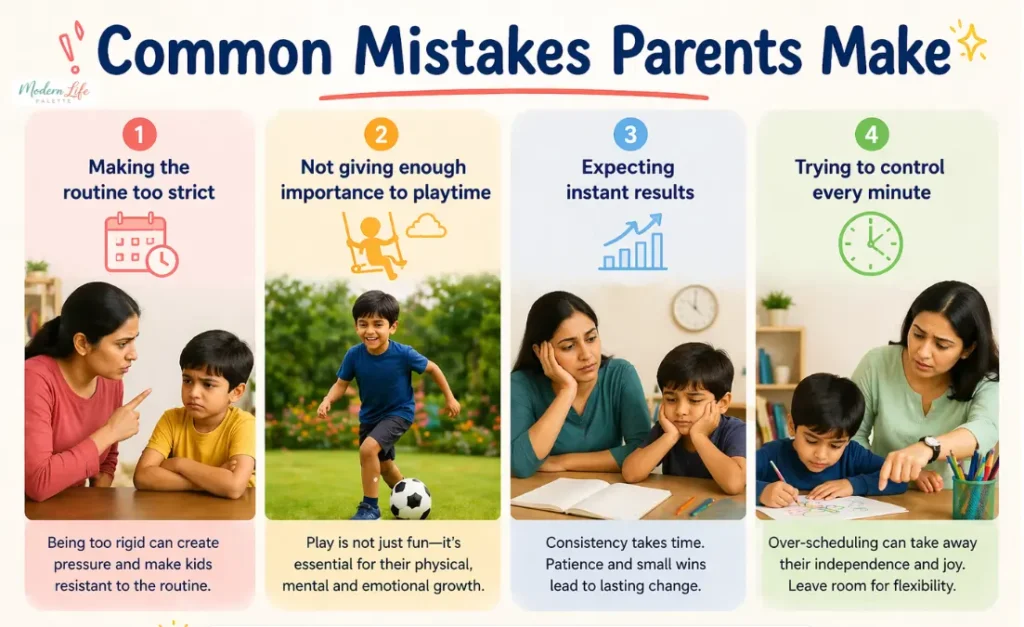
I made quite a few of these in the beginning:
- Making the routine too strict
I realized that being too rigid only led to resistance instead of building consistency.
- Not giving enough importance to playtime
Once I started prioritizing play, everything else in the routine became much easier to manage.
- Expecting instant results
It took time for the routine to settle, and expecting quick changes only added pressure.
- Trying to control every minute
I learned that kids need some freedom in their day, not constant structure.
As soon as I stopped focusing on these, things started improving naturally.
What Helped My Child Actually Follow the Routine

Getting a child to follow a routine isn’t easy – and I had to experiment a bit.
Here’s what genuinely worked for me:
- Giving small choices
Instead of forcing things, I started offering simple choices like “homework now or after a snack?”, and it made a big difference.
- Using simple visual cues
Visual charts really helped in the beginning, especially in making the routine easier for younger kids to follow.
- Being patient with the process
Some days worked and some didn’t, and I learned to be okay with that instead of expecting consistency overnight.
- Appreciating effort instead of expecting perfection
Focusing on small wins instead of perfect days made the routine feel much more achievable.Over time, following kids routine became more natural than forced.
How Routine Helps Reduce Screen Time?
One of the biggest changes I noticed was around screen time. Earlier, I kept wondering what the “right” amount of screen time even is.
But once the day had some structure:
- There were fewer empty moments to fill
- Playtime and activities became more engaging
- Screens stopped being the default option
I didn’t have to constantly say “no” anymore – and that, honestly, was a huge relief.
Conclusion
If there’s one thing I’ve learned through this process, it’s that routines don’t have to be rigid to work.
Some days will go smoothly, and some won’t. And honestly, both are part of parenting.
What matters is having a simple structure to come back to – something that makes the day feel a little more predictable and a lot less stressful.
Because in the end, a simple and realistic kids daily routine is what truly works.
FAQs
1. What is a good daily routine for kids?
A good routine includes consistent sleep, meal times, study time, and play, while still leaving room for flexibility.
2. How strict should a routine be?
It shouldn’t feel rigid – think of it as a guide that supports your child, not something that creates pressure.
3. At what age should kids follow a routine?
You can start with simple routines as early as the toddler stage and build gradually as they grow.
4. How do I make my child follow a routine?
Start small, stay consistent, and involve your child in decisions so they feel more willing to follow it.

Other Articles

10 Indoor Activities For Kids That Actually Work