


There are days when you don’t want to hand over the phone, but you also don’t know what else to do.
I’ve been there.
Some days, I’ve planned beautiful “screen-free time”… and it lasted for 5-6 minutes before my child said, “I’m bored.”
And honestly, I realised something over time – kids don’t leave screens because we take them away. They move away when something else feels more interesting.
So instead of giving you a long, overwhelming list, here are 10 indoor activities for kids that actually work at home – the kind that don’t feel forced and don’t require perfect planning.
Quick Indoor Activities Ideas
If you’re in a hurry, here are some best indoor activities for kids at home:
- Build a tent using bedsheets
- Creative drawing challenges
- Storytelling
- Pretend play (shop game)
- Puzzle or activity corner
- Kitchen helper tasks
- Floor is lava
- Indoor treasure hunt
- Sensory play
- Helping with daily chores
Why Indoor Activities Matter (And Help Reduce Screen Time)
When children spend too much time on screens, you may start noticing small changes like:
- getting irritated without devices
- losing interest in offline play
- shorter attention spans
These can sometimes be early signs of screen addiction in kids.
That’s why simple indoor activities at home are not just about keeping them busy – they help:
- improve focus
- build creativity
- encourage independent play
Even if you’re following a screen time limit for kids by age, what truly makes a difference is what replaces that screen time.
10 Best Indoor Activities for Kids at Home (Real & Practical)
If you’re not sure what to try, it helps to think about what your child actually needs in that moment – something creative, something active, something calming, or something that feels like real-life involvement.
You don’t need to try everything – just pick one based on their mood.
Creative Activities for Kids at Home
These are perfect when your child wants to imagine, build, or create something on their own.
1. Build a Tent (The One That Never Fails)

There’s something about tents that kids just love.
All you need are some bedsheets, cushions, maybe a couple of chairs… and suddenly your living room turns into a secret world.
What I’ve noticed is that children don’t just play in it – they own it. They decide what it becomes. Sometimes it’s a castle, sometimes a spaceship, sometimes just a quiet reading corner.
And the best part is, once they’re inside that little setup, they tend to stay there much longer than expected.
This is one of those free indoor activities for kids at home that works almost every time.
How it helps your child:
It encourages imaginative play, problem-solving, and spatial thinking while also giving kids a sense of independence.
Real-life tip:
Don’t try to make it perfect. The more they build it themselves, the longer they stay engaged.
2. Creative Drawing (Without Rules)

If you’ve ever said “go draw something,” you already know how quickly that ends.
What works better is giving them a small idea instead of instructions.
Like:
- draw your dream house
- design your own superhero
- make a comic about your day
This small shift changes everything. They stop asking “what should I draw?” and start actually creating.
These kids creative activities at home work better because they give direction without pressure.
How it helps your child:
Boosts creativity, imagination, and emotional expression.
Real-life tip:
Sit with them for 5 minutes – it often leads to longer independent play.
3. Storytelling Together (No Prep Needed)

This is one of my favourites because it needs absolutely nothing.
You just start a story – something like “Once there was a boy who found a hidden door…” – and then take turns adding to it.
What makes this special is that it doesn’t feel like an “activity.” It feels like bonding.
And you can do it anywhere – while lying down, while travelling, or even during bedtime.
Perfect for low-energy days when you still want screen-free activities.
How it helps your child:
Improves language skills, imagination, and emotional bonding.
Real-life tip:
Use funny twists – kids stay engaged longer when it feels playful.
Educational Activities for Kids
These activities feel like play, but they quietly build important skills like focus, problem-solving, and independence.
4. Kitchen Helper Time (Messy but Worth It)

I’ll be honest – this one used to feel like extra work to me.
But over time, I realised something. If I say “come help me,” even for the smallest thing, like mixing batter or arranging vegetables, they instantly feel included.
And when kids feel included, they stay engaged. This works really well when you’re trying to reduce screen time for kids without resistance.
How it helps your child:
Builds fine motor skills, responsibility, and confidence while also improving focus.
Real-life tip:
Give them one small task instead of the whole process – it keeps things manageable for both of you.
5. The Shop Game (Imagination + Learning Combined)

If your child enjoys pretend play, this one can easily take up a good chunk of time.
Just set up a small “shop” at home using whatever you already have – snacks, toys, even empty boxes.
Give them some pretend money and let them take charge.
What usually happens is that they don’t just “play shop.” They start creating rules, changing prices, organising items… and suddenly they’re fully absorbed.
It’s also the kind of play that builds patience and focus, which is something many parents start thinking about when they notice early signs of screen addiction in kids – like very short attention spans or constant switching between activities.
How it helps your child:This is one of those learning activities that quietly builds focus, patience, communication skills, basic math understanding, and decision-making.
Real-life tip:
Let them make the rules. The more free they feel, the longer they stay involved.
6. Puzzle or Activity Corner (Set It Once, Use Daily)
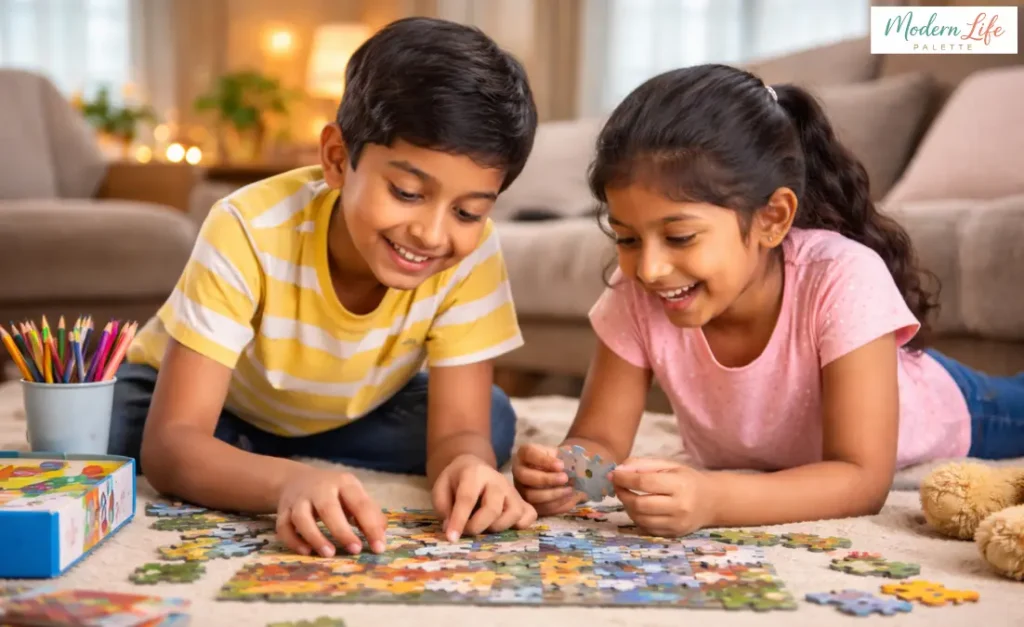
Instead of figuring out new ideas every day, I’ve found it easier to keep a small corner ready with puzzles, blocks, and simple games.
The trick is rotation. If you keep everything out all the time, they lose interest quickly. But if you change it every few days, it feels new again.
This reduces the “I’m bored” moment and supports consistent activities for kids at home.
And if you’re already trying to follow screen time limits by age, this kind of setup makes it easier – because kids slowly start choosing these activities on their own
How it helps your child:
Builds focus, patience, and problem-solving skills.
Real-life tip:
Rotate items every few days to keep interest alive.
Active Indoor Games
On days when kids are restless and nothing calm works, these help release energy in a fun way.
7. Indoor Treasure Hunt (Instant Engagement)
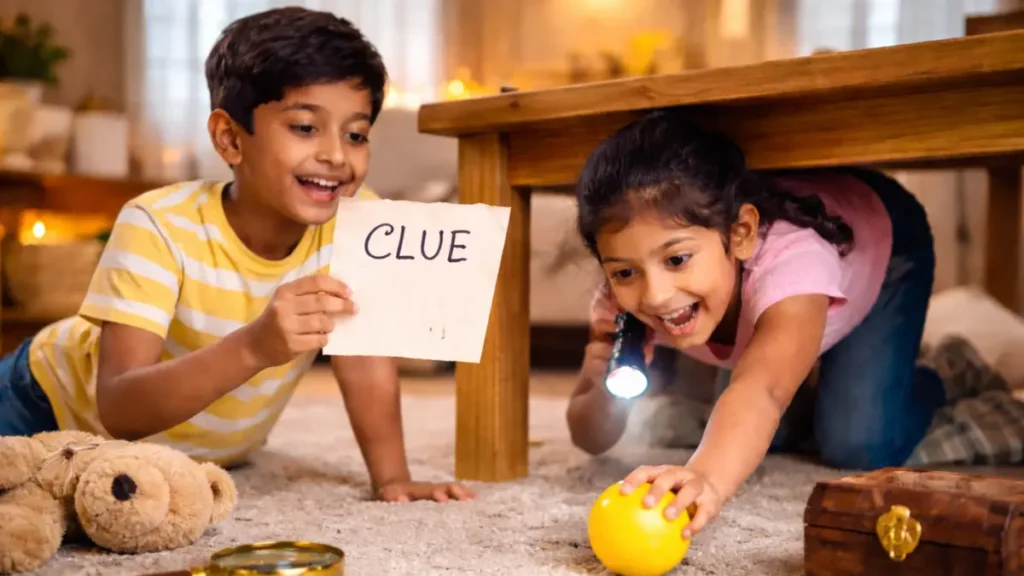
Some activities need setup. This one doesn’t really.
You just hide a few things around the house and give simple clues like “look near something cold” or “check where your shoes are.”
What makes this work is the excitement of searching. Kids don’t sit and think about it – they move, explore, and stay engaged without even realising it.
It’s one of those easy wins for days when you need quick indoor activities for kids at home without planning.
How it helps your child:
Encourages problem-solving, memory, and physical movement.
Real-life tip:
Reuse clues – kids enjoy the game more than the novelty.
8. Floor is Lava (For High-Energy Kids)

There are evenings when calm activities simply don’t work. That’s usually when I bring this in.
We turn the floor into “lava” and cushions into safe spots. Suddenly, walking from one place to another becomes a game.
It’s simple, but it helps release all that restless energy that often leads kids back to screens just because they don’t know what else to do.
How it helps your child:
Develops coordination, balance, and physical strength.
Real-life tip:
Perfect for evenings when kids are restless and screens feel tempting.
Calm & Real-Life Activities
These are great for slower moments when you need something simple, calming, or easy to manage.
9. Sensory Play (Calm and Focused Time)
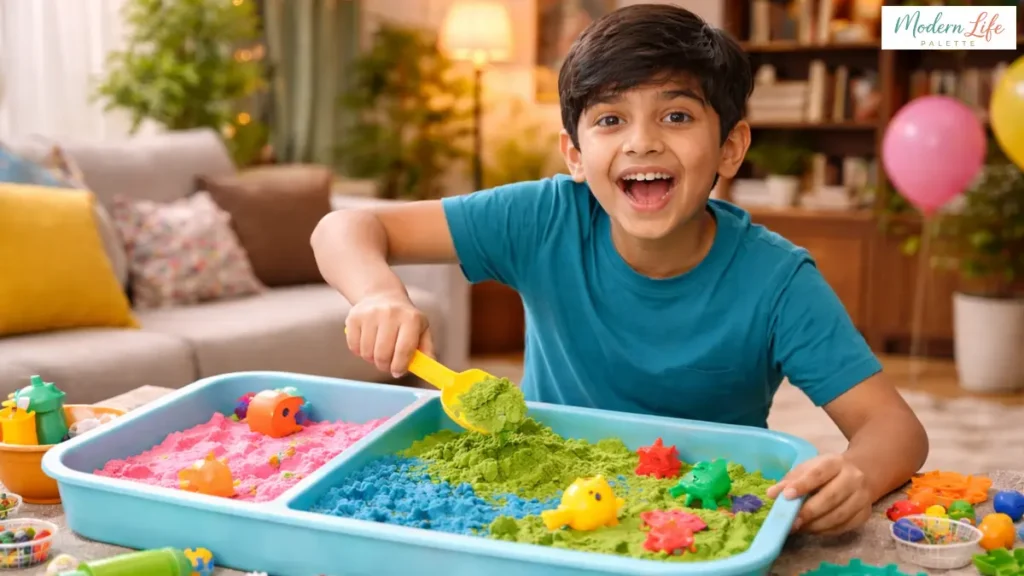
This one depends on the child, of course. Some kids love it. Some don’t.
But things like rice, atta, water, cups, or simple containers can keep them quietly engaged for a while.
It’s not always neat, and it’s not always predictable, but on calmer days, it works beautifully.
How it helps your child:
Enhances sensory development, concentration, and calming behavior.
Real-life tip:
Keep a tray underneath – makes cleanup easier and less stressful.
10. The “Help Me” Trick (The Easiest Win)

This is one of the most underrated fun activities at home that actually works.
Instead of saying “go play,” try saying “can you help me with this?” It could be folding clothes, arranging books, or setting the table.
For some reason, children respond much better when they feel needed rather than directed.
And while they’re helping you, they’re also naturally staying away from screens without it feeling like a restriction.
How it helps your child:
Develops responsibility, confidence, and real-world skills.
Real-life tip:
Use this especially when they’re resisting activities – it works surprisingly well.
Real-Life Tip (This Changes Everything)
You don’t need 20 activities.
You just need 3–4 that your child actually enjoys.
Because consistency matters more than variety – especially when you’re trying to:
- reduce screen time
- build better habits
- avoid daily struggles
Conclusion
You don’t need dozens of ideas to reduce screen time for kids – just a few activities that your child genuinely enjoys. Start small, stay flexible, and pick what fits their mood. Over time, these simple indoor activities for kids at home naturally replace screens – without daily struggles.
FAQs
1. What are the best indoor activities for kids at home?
Simple activities like forts, treasure hunts, drawing, and pretend play work best because they feel fun and engaging.
2. Are indoor activities enough for kids’ development?
Yes, especially creative and movement-based activities that build focus, imagination, and problem-solving skills.
3. What can I do on days when nothing works?
Keep it simple and flexible – some screen time is okay; consistency over time matters more.
4. What are low-effort activities for busy parents?
Storytelling, drawing, helping with chores, or building a fort require minimal prep but work well.

Other Articles

15 Signs Your Child Is Getting Too Attached to Screens