
You’ve probably already noticed peeling paint, damp patches, or a musty smell on your walls and assumed it was just a seasonal issue. But many homeowners don’t realize that untreated moisture can slowly weaken walls, damage interiors, and create recurring mold problems.
In this guide, we’ll explain the best treatment for wall dampness, practical waterproofing solutions, repair methods, costs, and prevention tips to help you protect your home long-term.
Key Takeaways
- Waterproof paint alone cannot permanently solve wall dampness if the leakage source remains untreated.
- Exterior wall cracks are one of the most overlooked reasons behind recurring damp patches indoors.
- Professional dampness treatment usually lasts longer because it combines waterproofing with source repair.
- Monsoon moisture problems often become worse when terrace drainage systems are blocked.
- Repainting damp walls before proper drying can trap moisture and restart seepage problems.
- Different dampness issues require different treatments, including PU grouting, crack sealing, or chemical waterproofing.
How to Identify If Your Wall Needs Dampness Treatment?
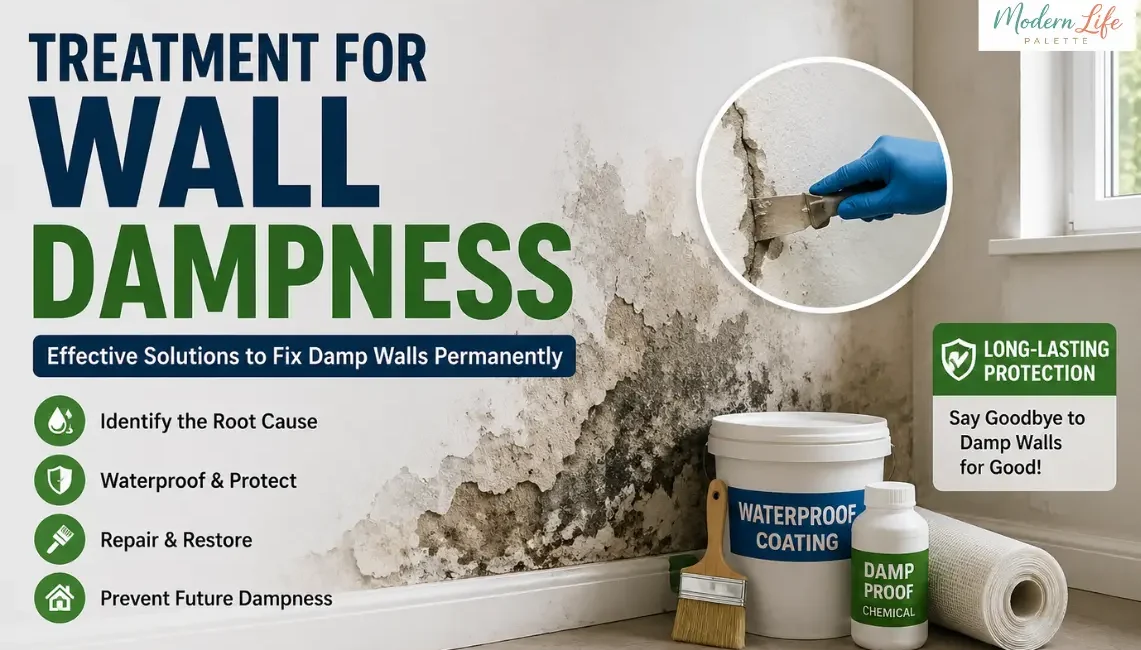
Wall dampness usually becomes visible through peeling paint, wet patches, mold growth, and musty odor. However, identifying the exact source of moisture is important before starting any repair work.
Common warning signs include:
- Bubbling paint
- Damp patches on walls
- Black mold spots
- Cracks with moisture marks
If you want a detailed breakdown of all early warning signs, read our guide on signs of moisture in walls.
Why Understanding the Root Cause of Dampness Matters
The best treatment for wall dampness depends entirely on what is causing the moisture problem. Applying waterproof paint without fixing the actual leakage source usually leads to recurring damage.
Wall dampness may happen because of:
- Rainwater seepage
- Plumbing leaks
- Poor waterproofing
- Exterior wall cracks
- Terrace leakage
For a detailed explanation of each issue, check our complete guide on causes of wall dampness.
Which Are the Best Treatments for Wall Dampness?
The best treatment for wall dampness depends on the source of moisture, wall condition, and severity of damage. Different problems require different waterproofing methods.
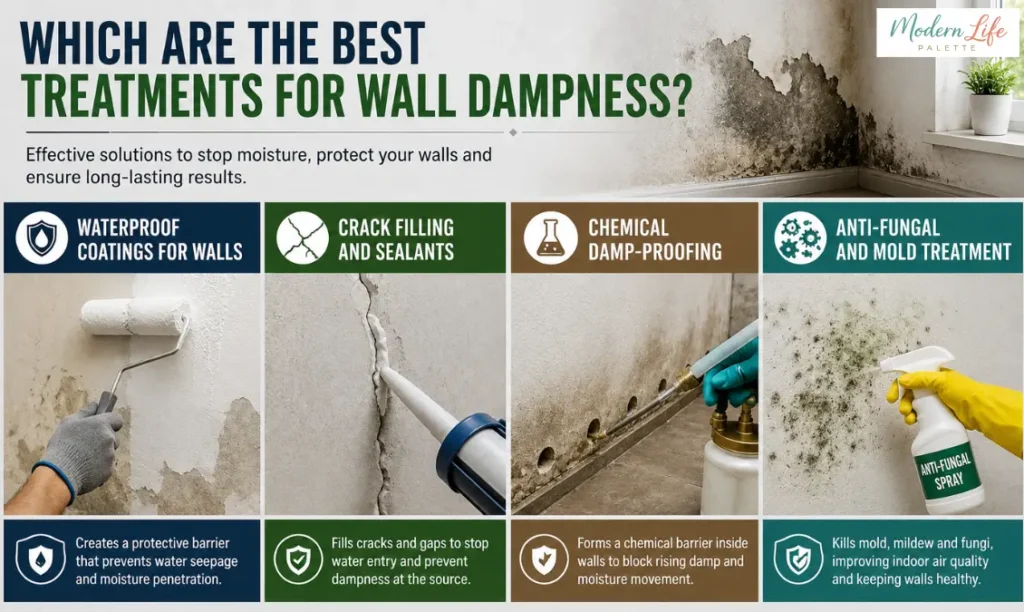
1. Waterproof Coatings for Walls
First, waterproof coatings create a protective barrier that prevents water penetration.
These coatings are commonly used on:
- Exterior walls
- Bathroom walls
- Terrace surfaces
- Basement walls
Waterproofing involves sealing surfaces and preventing water penetration through specialized coatings, membranes, or chemical treatments.
2. Crack Filling and Sealants
Second, cracks allow rainwater and moisture to enter walls easily. Crack fillers and sealants block these entry points.
For example, acrylic sealants are commonly used for minor cracks, while epoxy fillers work better for deeper structural cracks.
3. Chemical Damp-Proofing
Additionally, chemical damp-proofing solutions help stop rising dampness from lower walls.
This process usually involves injecting waterproof chemicals into affected wall sections to block moisture movement.
4. Anti-Fungal and Mold Treatment
Moreover, anti-fungal treatment removes existing mold and prevents future growth.
For example, professionals often combine anti-fungal solutions with waterproof coatings for long-term protection.
What Is the Step-by-Step Process for Treating Damp Walls?
The wall dampness repair process involves inspection, moisture source identification, repair work, waterproofing, and final finishing. Permanent treatment always starts with proper diagnosis.
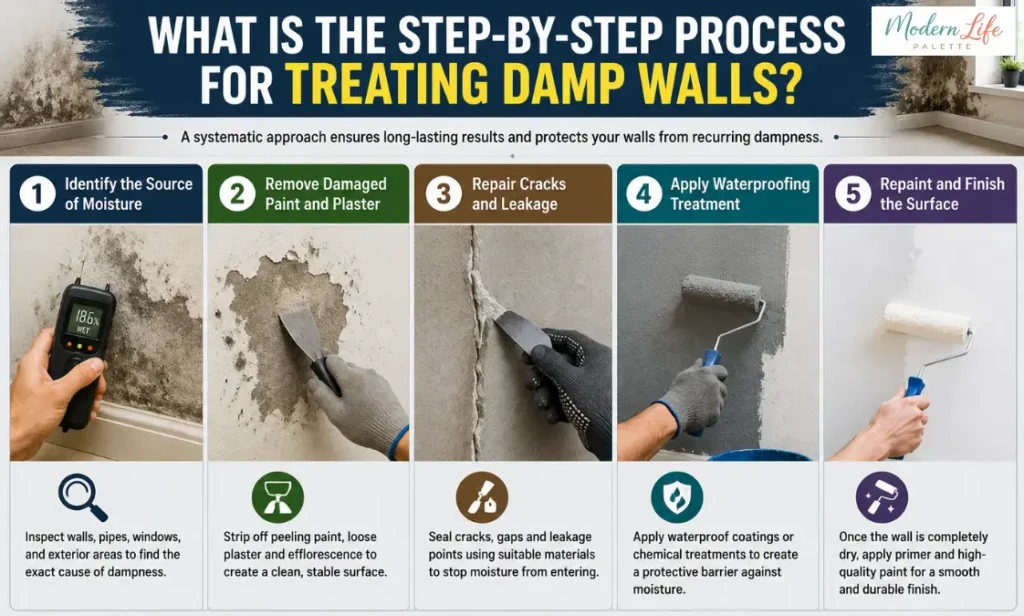
Step 1: Identify the Source of Moisture
First, inspect whether the dampness comes from seepage, plumbing leakage, condensation, or cracks.
Professional waterproofing experts may use moisture meters or thermal inspection tools.
Step 2: Remove Damaged Paint and Plaster
Second, damaged wall sections must be scraped and cleaned properly before treatment.
This process removes loose plaster, mold, and trapped moisture.
Step 3: Repair Cracks and Leakage
Third, all cracks and leakage points should be sealed.
For example, terrace seepage problems may require waterproof membranes or chemical coating applications.
Step 4: Apply Waterproofing Treatment
Next, professionals apply suitable waterproofing solutions depending on the problem severity.
Common options include:
- Waterproof cement slurry
- Elastomeric coatings
- Chemical injections
- Damp-proof paints
Step 5: Repaint and Finish the Surface
Finally, repaint the wall only after complete drying. Painting wet walls traps moisture inside and causes recurring dampness.
Professional dampness treatment provides longer-lasting protection because it addresses the root cause instead of covering visible damage.
How Much Does Wall Dampness Treatment Cost?
Wall dampness treatment costs vary based on the moisture source, damage severity, waterproofing method, and affected wall area. Minor crack repairs usually cost less than full seepage treatment or exterior waterproofing work.
Common factors that affect pricing include:
- Type of dampness
- Interior vs exterior wall
- Crack severity
- Waterproofing material quality
- Labor charges
- Property size
| Treatment Type | Estimated Cost Range |
| Crack filling | Moderate |
| Interior waterproof coating | Moderate |
| Exterior waterproofing | Higher |
| Chemical damp-proofing | Higher |
| Full seepage repair | Premium |
The global waterproofing market is projected to grow significantly due to increasing urban infrastructure demand — Source: Fortune Business Insights, 2024.
Should You Choose DIY Dampness Repair or Professional Waterproofing?
DIY dampness repair works for minor cosmetic issues, while professional waterproofing is better for long-term moisture control. Choosing the wrong approach often leads to repeated repairs.
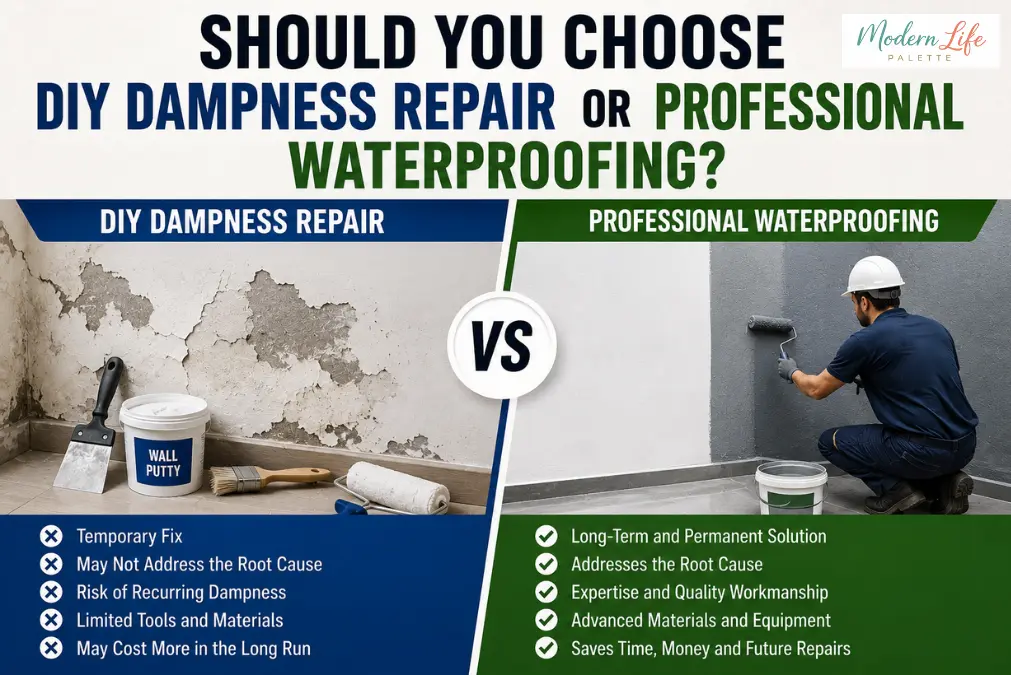
When DIY Solutions Can Help
First, homeowners can manage small moisture issues using:
- Waterproof putty
- Damp-proof paint
- Silicone sealants
- Improved ventilation
For example, condensation-related dampness in kitchens may improve with exhaust fans and anti-mold coatings.
When Professional Waterproofing Is Necessary
Second, recurring seepage, structural cracks, or hidden leakage usually require professional expertise.
Professionals can identify hidden moisture sources and apply advanced waterproofing methods.
DIY vs Professional Dampness Treatment
| Feature | DIY Repair | Professional Waterproofing |
| Cost | Lower upfront | Higher upfront |
| Long-term effectiveness | Limited | Better |
| Root cause identification | Difficult | Accurate |
| Suitable for severe dampness | No | Yes |
| Warranty availability | Rare | Often included |
Which Waterproofing Chemicals and Coatings Work Best for Damp Walls?
Waterproof chemicals and coatings create moisture-resistant barriers that protect walls from seepage and leakage. Choosing the right product depends on wall condition and moisture exposure.
Popular Waterproofing Materials
Commonly used materials include:
- Acrylic waterproof coatings
- Elastomeric coatings
- Cementitious waterproofing
- Bituminous coatings
- Polyurethane sealants
Professional Inspection Tools
Additionally, waterproofing professionals often use:
- Moisture meters
- Infrared thermal scanners
- Crack depth measurement tools
- Surface moisture detectors
Real-Life Practical Example
For example, a homeowner experiencing terrace seepage may require exterior elastomeric waterproof coating instead of simple interior repainting. Treating only the interior wall would not stop the actual water entry point.
How Can Homeowners Prevent Dampness During Monsoon Season?
Preventing wall dampness during monsoon season requires regular inspection, drainage maintenance, and timely waterproofing repairs. Prevention is always cheaper than repeated restoration work.
1. Monsoon Dampness Prevention Checklist
Before rainy season begins:
- Inspect exterior wall cracks
- Clean terrace drainage outlets
- Check plumbing leakage
- Repair damaged sealants
- Reapply waterproof coatings if necessary
2. Improve Indoor Ventilation
Additionally, proper airflow reduces condensation buildup indoors.
For example, exhaust fans and open ventilation help bathrooms dry faster after use.
3. Schedule Waterproofing Inspections
Moreover, yearly inspections can identify early seepage signs before they become expensive problems.
What Should You Do Next If Your Walls Already Show Dampness?
Homeowners should inspect the moisture source immediately and avoid covering dampness with fresh paint alone. Early action helps reduce long-term structural damage.
Questions to Ask Before Hiring a Waterproofing Contractor
Before hiring professionals, ask:
- What is causing the dampness?
- Which waterproofing method is recommended?
- Will the treatment include crack repair?
- Is there a warranty on waterproofing work?
- How long will the treatment last?
Practical Next Steps for Homeowners
Additionally, you can take these actions immediately:
- Move furniture away from damp walls
- Improve ventilation
- Avoid repainting wet surfaces
- Monitor damp patch expansion
- Schedule a waterproofing inspection
Conclusion
Treatment for wall dampness is essential for protecting your home from long-term structural and interior damage. Damp patches, peeling paint, and musty smells may seem minor initially, but they often indicate deeper moisture problems that worsen over time.
Moreover, permanent waterproofing solutions work best when you identify the root cause early instead of repeatedly covering visible symptoms. By inspecting your home regularly, especially during monsoon season, you can prevent expensive repairs and maintain a healthier indoor environment.
If your walls are already showing signs of moisture, take action now instead of waiting for the damage to spread further. Small repairs today can save you significant time, stress, and renovation costs later.

Other Articles