

You step outside and the weather feels cool. The fan is on, the windows are open, and it’s raining. Yet when you pick up your baby, you notice a sweaty neck, damp hair, or even wet clothes. Naturally, your first thought is, “Why is my baby sweating when it’s not even hot?”
If you’ve been wondering the same thing, you’re not alone. Many parents notice their babies sweating more during the monsoon and worry if it’s a sign of illness. The good news is that, in most cases, it’s completely normal. Let’s understand why it happens, when it’s nothing to worry about, and when it’s a good idea to check with your baby’s doctor.
Educational Disclaimer: This article is for educational and informational purposes only. It is not a substitute for professional medical advice, diagnosis, or treatment. If you’re concerned about your baby’s health or notice unusual symptoms, consult your pediatrician.
Quick Answer
Yes, babies can sweat even during cold weather because their body’s temperature regulation system is still developing. Mild sweating during sleep, feeding or when wearing too many layers is usually normal. However, excessive sweating with breathing problems, poor feeding or fever should be evaluated by a pediatrician.
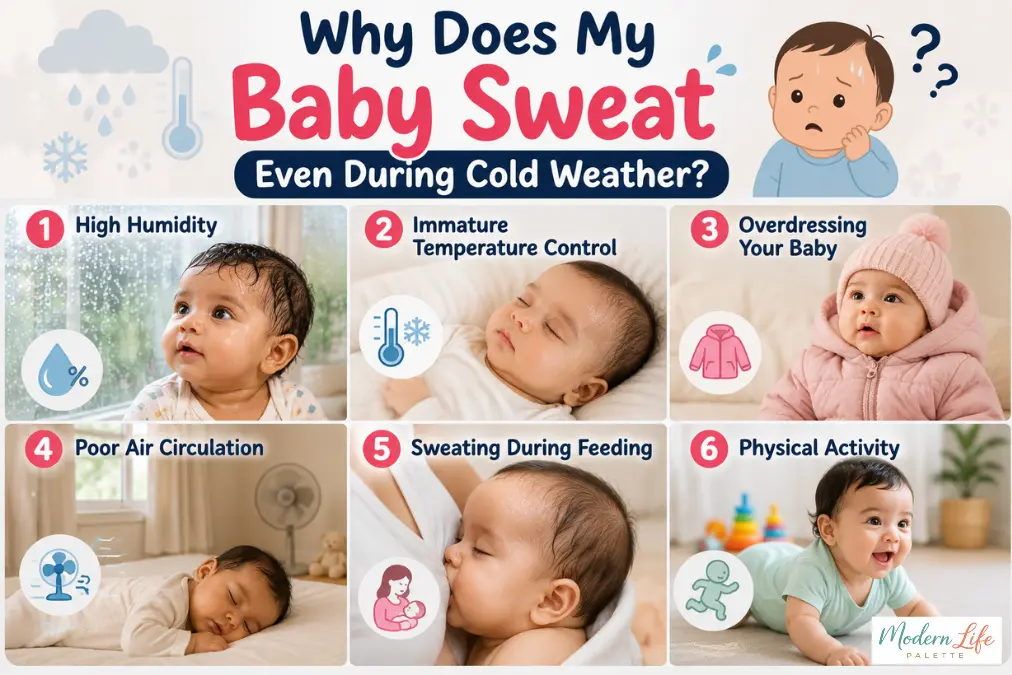
Why Does My Baby Sweat Even During Cold Weather?
There isn’t just one reason. In fact, several everyday factors can make your baby sweat even when it’s cloudy or raining outside.
1. High Humidity
One of the biggest reasons is humidity, not heat.
During the rainy season, the air contains more moisture. When your baby sweats, that sweat doesn’t evaporate quickly. Instead, it stays on the skin, making your baby feel much sweatier than they actually are.
You may notice:
- Damp hair
- Sweaty neck
- Moist back
- Sticky skin
This doesn’t necessarily mean your baby is overheating.
2. Immature Temperature Control
Babies have a developing nervous system, which means their bodies aren’t as efficient at controlling temperature.
Even small changes can make them sweat, such as:
- Being held for a long time
- Feeding
- Sleeping deeply
- Being wrapped in a blanket
As your baby grows, their body becomes better at maintaining a comfortable temperature.
3. Overdressing Your Baby
Let’s be honest – we’ve all done it. Because the weather feels cooler during monsoon, many parents worry that their baby might catch a cold and end up dressing them in multiple layers.
You might add:
- A full-sleeved outfit
- Socks
- Mittens
- A cap
- A blanket
The result? Your baby becomes warmer than necessary and starts sweating.
A simple rule many pediatricians recommend is dressing your baby in one light layer more than what you’re comfortable wearing.
4. Poor Air Circulation
Even if the weather is pleasant, your baby may still sweat indoors. Sometimes, the issue isn’t the temperature – it’s the lack of airflow.
This can happen if the room has:
- Poor ventilation
- Closed windows
- Thick bedding or blankets
- Limited air circulation
As a result, heat can get trapped around your baby, especially during sleep. Keeping the room well-ventilated and dressing your baby in breathable cotton clothes can help.
5. Sweating During Feeding
If your baby’s head gets sweaty during breastfeeding or bottle feeding, it’s usually nothing to worry about.
During feeding, babies:
- Use energy to suck, swallow, and breathe
- Stay in close skin-to-skin contact with you
- Generate extra body heat
As long as your baby is feeding well, gaining weight, and seems comfortable, occasional sweating during feeds is generally normal.
6. Physical Activity
As babies grow, they become more active – and naturally produce more body heat.
Your baby may sweat after:
- Rolling over
- Crawling
- Standing
- Walking or playing
Just like adults sweat after physical activity, babies can also become sweaty while exploring their surroundings, even during the rainy season.
How to Check If Your Baby Is Too Warm?
Many parents check their baby’s hands or feet to see if they’re warm enough. However, hands and feet are often naturally cooler than the rest of the body, especially in young babies, so they aren’t the best indicator of your baby’s comfort.
Instead, gently touch the back of your baby’s neck or chest.
| What You Feel | What It Usually Means | What You Can Do |
|---|---|---|
| Warm and dry | Your baby is comfortable. | No changes needed. |
| Slightly warm | This is usually normal, especially after feeding, sleeping, or playing. | Continue to monitor your baby. |
| Sweaty, hot, or damp | Your baby may be too warm or overdressed. | Remove one layer of clothing, improve airflow, and check again after a few minutes. |
| Cool (but your baby is feeding well and comfortable) | Your baby may simply be comfortable in the current environment. | Monitor your baby’s overall comfort before adding extra clothing. If the room feels cold, consider adding one light layer. |
Tip: Focus on your baby’s overall behaviour rather than skin temperature alone. If your baby is feeding well, breathing comfortably, and seems content, occasional sweating or slightly cool hands and feet is usually normal. However, if your baby feels unusually hot or cold, has a fever, seems lethargic, or shows signs of illness, contact your pediatrician promptly.
My Baby Is Sweating. What Should I Do?
If you notice your baby sweating, there’s usually no need to panic. In most cases, it’s simply your baby’s way of regulating body temperature. Before worrying, go through this quick checklist.
Step 1: Check How Your Baby Is Acting
Ask yourself:
- Is your baby feeding well?
- Is your baby active, alert, and responding normally?
- Is your baby breathing comfortably?
Yes: Continue to the next step.
No: If your baby seems unusually sleepy, refuses feeds, or has trouble breathing, contact your pediatrician promptly.
Step 2: Check for Fever or Other Symptoms
Take your baby’s temperature if they feel unusually warm.
No fever or other symptoms: Sweating is likely related to humidity, sleep, feeding, or extra clothing.
Fever, vomiting, persistent cough, or breathing difficulties: Seek medical advice, as sweating may be associated with an underlying illness.
Step 3: Check Your Baby’s Clothing
Think about what your baby is wearing.
Ask yourself:
- Is your baby wearing several layers?
- Does your baby have a cap or socks on indoors?
- Is your baby covered with a thick blanket?
Yes: Remove one layer of clothing and wait 10–15 minutes to see if the sweating improves.
No: Continue to the next step.
Step 4: Check the Room Environment
Sometimes the room, not your baby, is the reason for sweating.
Look for:
- Poor ventilation
- High humidity
- Heavy bedding
- Limited airflow
If needed, improve air circulation, use breathable cotton bedding, and keep the room comfortably cool.
Step 5: Monitor Your Baby
If your baby remains:
- Happy and playful
- Feeding well
- Gaining weight normally
- Comfortable after adjusting clothing or the room
then occasional sweating is usually nothing to worry about. However, if excessive sweating happens frequently, even in a comfortable environment, or is accompanied by poor feeding, breathing difficulties, fever, bluish lips, or poor weight gain, consult your pediatrician for a proper evaluation.
Why Does My Baby’s Head Sweat More Than the Rest of the Body?
Many parents notice that their baby’s head and forehead become sweaty while the rest of the body feels completely dry. This is one of the most common concerns, and in most cases, it’s perfectly normal.
A baby’s head contains a higher concentration of sweat glands than many other parts of the body. Since babies also spend a lot of time lying down or feeding, it’s often the first area where you’ll notice sweat.
Your baby’s head may sweat more when they are:
- Sleeping
- Breastfeeding or bottle feeding
- Wearing a cap for long periods
- Lying on a mattress or pillow
- In a warm or humid room
If your baby is otherwise active, feeding well, and doesn’t have a fever or breathing problems, head sweating alone is usually not a cause for concern.
Why Does My Baby Sweat While Sleeping Even When the Weather Is Cool?
It’s natural to wonder why your baby wakes up with damp hair or a sweaty neck when the room doesn’t even feel warm.
During deep sleep, babies can sweat as part of their body’s natural temperature regulation. In the rainy season, high humidity can also make sweat stay on the skin instead of evaporating.
Night-time sweating may also be caused by:
- Thick blankets or quilts
- Warm sleepwear
- Waterproof mattress protectors that trap heat
- Poor air circulation in the room
A light cotton outfit, breathable bedding, and a well-ventilated room can help your baby sleep more comfortably.
How Can You Tell If Your Baby’s Sweating Is Normal?
Seeing your baby sweat can be worrying, but in most cases, it’s simply their body’s natural way of staying cool. If your baby is otherwise healthy and happy, occasional sweating is usually not a cause for concern.
Here are some reassuring signs:
- Feeding well
- Active, alert, and playful
- No fever or signs of illness
- Gaining weight as expected
- Sweating reduces after removing extra layers or moving to a cooler room
- Breathing comfortably without any difficulty
If your baby checks most of these boxes, their sweating is likely a normal response to warmth, humidity, or activity rather than a medical problem.
Common Myths About Baby Sweating During the Rainy Season
There are plenty of misconceptions about baby sweating, especially during the monsoon. Let’s separate fact from fiction.
Myth 1: Babies Shouldn’t Sweat During Rainy Season
Fact: Rainy weather doesn’t always mean cooler conditions. High humidity makes it harder for sweat to evaporate, so babies may still sweat even when it’s cloudy outside.
Myth 2: Sweating Always Means Your Baby Has a Fever
Fact: Not necessarily. Babies can sweat after feeding, during sleep, or while playing. If your baby has no fever and is otherwise active, sweating alone isn’t usually a sign of illness.
Myth 3: Babies Need Multiple Layers of Clothing During Monsoon
Fact: Overdressing is one of the most common reasons babies sweat. Lightweight, breathable cotton clothes are usually enough unless the weather is genuinely cold.
Myth 4: Sweaty Hands and Feet Always Mean Something Is Wrong
Fact: Babies often have sweaty palms and feet because their sweat glands are still developing. If there are no other concerning symptoms, this is usually normal.
Pediatrician-Recommended Tips to Help Prevent Overheating
A few simple habits can help keep your baby comfortable and reduce unnecessary sweating, even during cool or rainy weather.
- Dress in light layers: A good rule is to dress your baby in one light layer more than you’re wearing.
- Choose breathable fabrics: Soft cotton clothing and bedding help absorb sweat and improve airflow.
- Avoid heavy blankets indoors: Thick blankets and waterproof bedding can trap heat.
- Check the neck or chest: Instead of the hands or feet, gently feel your baby’s neck or chest to check if they’re too warm.
- Keep the room comfortable: Good ventilation, a fan, or an air conditioner (without direct airflow) can help reduce overheating.
- Watch your baby’s cues: If your baby is feeding well, sleeping comfortably, and seems happy, occasional sweating is usually normal.
Parent Tip: If your baby’s neck feels hot or sweaty, remove one layer of clothing and check again after a few minutes.
Does Sweating Mean My Baby Is Sick?
Not always. Sweating alone doesn’t usually mean your baby is ill. Babies commonly sweat while sleeping, feeding, crying, or when they’re dressed too warmly. However, if excessive sweating is accompanied by fever, breathing difficulties, poor feeding, unusual sleepiness, or poor weight gain, it could indicate an underlying medical condition. If you’re concerned or your baby has other symptoms, consult your pediatrician for a proper evaluation.
Can Babies Sweat Without Having a Fever?
Yes. Babies can sweat even when they don’t have a fever. This often happens because their temperature regulation system is still developing. Common causes include high humidity, warm clothing, feeding, deep sleep, or physical activity. If your baby is otherwise active, feeding well, and seems comfortable, sweating without a fever is usually normal.
Is Sweating During Breastfeeding or Bottle Feeding Normal?
Yes. It’s common for babies to sweat while breastfeeding or bottle feeding because feeding requires effort. Sucking, swallowing, and breathing at the same time can increase body heat, and close skin-to-skin contact with a parent can also make babies feel warmer. As long as your baby is feeding well, gaining weight, and doesn’t have breathing difficulties, occasional sweating during feeds is usually not a cause for concern.
Is It Normal for My Baby’s Head to Sweat More Than the Rest of the Body?
Yes. Many babies sweat more from their head because it has a higher concentration of active sweat glands. You may notice a sweaty forehead or damp hair during sleep, feeding, or when your baby wears a cap for a long time. If head sweating occurs without fever, breathing problems, or poor feeding, it’s generally considered a normal part of your baby’s development.
Does Teething Cause Babies to Sweat?
There is no strong scientific evidence that teething directly causes excessive sweating. However, some babies may seem sweatier because they’re uncomfortable, restless, or crying more during teething. If your baby has excessive sweating along with fever, poor feeding, or other unusual symptoms, don’t assume teething is the cause—consult your pediatrician to rule out other conditions.
Can Vitamin D Deficiency Cause Sweating in Babies?
Excessive head sweating has sometimes been associated with vitamin D deficiency (rickets), but sweating alone is not enough to diagnose a deficiency. Most babies who sweat are perfectly healthy, and there are many more common causes, such as humidity, feeding, or overheating. If your baby also has delayed growth, bone changes, muscle weakness, or other concerning symptoms, your pediatrician may recommend further evaluation.
When Should You Consult a Doctor?
While sweating is often harmless, it’s a good idea to speak with your pediatrician if it’s accompanied by other symptoms.
Seek medical advice if your baby:
- Sweats excessively during every feed
- Has difficulty breathing or breathes rapidly
- Has a fever
- Is unusually sleepy or difficult to wake
- Is feeding poorly
- Is not gaining weight properly
- Has bluish lips or skin
- Sweats so much that clothes become soaked frequently without an obvious reason
These symptoms don’t always indicate a serious condition, but they should be evaluated by a healthcare professional.
Conclusion
Noticing your baby sweat during the rainy season can be unsettling, but it’s often a normal response to humidity, feeding, sleep, or extra layers of clothing. Simple changes like dressing your baby in breathable fabrics and ensuring good airflow can help keep them comfortable.
However, if excessive sweating is accompanied by symptoms such as fever, breathing difficulties, poor feeding, or poor weight gain, it’s best to consult your pediatrician for a proper evaluation.
Frequently Asked Questions
1. Can teething make babies sweat?
Teething itself doesn’t directly cause excessive sweating, but some babies may sweat more due to discomfort or restlessness. If the sweating is persistent or accompanied by other symptoms, consult your pediatrician.
2. Should I use a fan or air conditioner if my baby is sweating?
Yes, you can use a fan or air conditioner to keep the room comfortable. Just avoid direct airflow and dress your baby in lightweight cotton clothes.
Is it okay for my baby to sleep without a blanket during the rainy season?
Yes, if the room temperature is comfortable. Using light sleepwear is often better than covering your baby with a heavy blanket.
Does sweating mean my baby is dehydrated?
Not always. However, if excessive sweating is accompanied by fewer wet diapers, a dry mouth, or unusual sleepiness, seek medical advice.
Why are my baby’s hands and feet always sweaty?
Sweaty hands and feet are common in babies because their sweat glands are still developing. It’s usually normal if there are no other concerning symptoms.
Which clothes are best for babies during the rainy season?
Soft, breathable cotton clothes are the best choice as they help absorb sweat and keep your baby comfortable.
Does sweating mean my baby is too hot?
Not necessarily. Babies may sweat while feeding, sleeping, or playing even when they aren’t overheated.
Can high humidity make babies sweat more?
Yes. During the rainy season, high humidity slows the evaporation of sweat, making babies feel stickier and sweatier.