
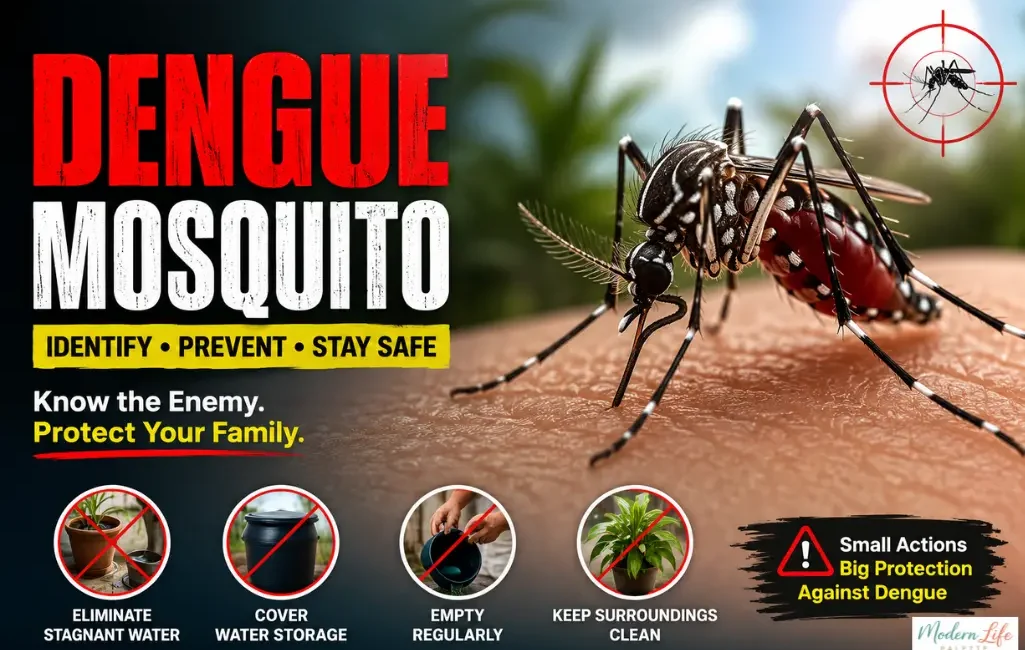
The dengue fever mosquito is one of the main reasons dengue cases rise during the monsoon. However, not every mosquito spreads dengue. The disease is mainly transmitted by a specific dengue mosquito known as the Aedes mosquito.
Knowing the dengue mosquito name, how it looks, when it bites, and where it breeds can help you protect yourself and your family.
In this guide, you’ll learn how to identify the dengue mosquito, understand how it spreads the virus, and discover simple facts that can help lower your risk of infection.
What is the Dengue Fever Mosquito?
The dengue fever mosquito is commonly called the Aedes mosquito, and its scientific name is Aedes aegypti. It is the primary mosquito responsible for spreading dengue in India and many other tropical countries.
Unlike common mosquitoes, the dengue mosquito is active during the day and prefers to breed in clean, stagnant water found around homes.
Quick Facts About the Dengue Mosquito
- Dengue mosquito name: Aedes aegypti
- Common name: Dengue mosquito
- Active time: Early morning and late afternoon
- Breeding place: Clean stagnant water
- Found in: Homes, schools, offices, gardens, and urban areas
- Diseases spread: Dengue, Chikungunya, Zika, and Yellow Fever
What Does a Dengue Mosquito Look Like?
At first glance, a dengue mosquito may look like any other mosquito. However, if you look closely, you’ll notice a few distinct features that make it easy to identify.
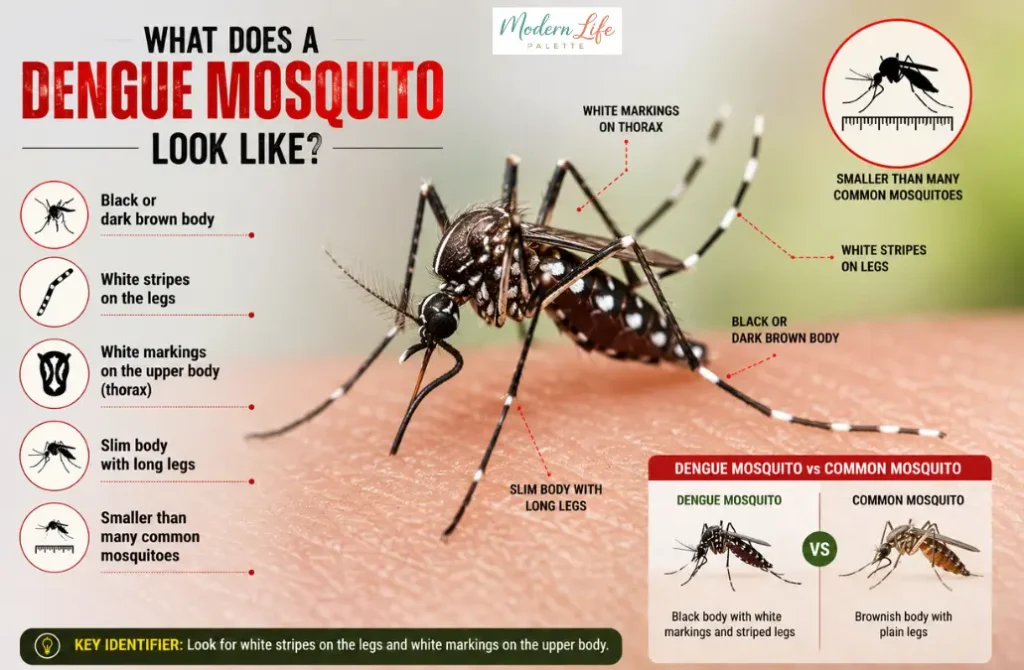
The Aedes aegypti mosquito is smaller than many common mosquitoes and has striking white markings on its body and legs.
Look for these characteristics:
- Black or dark brown body
- White stripes on the legs
- White markings on the upper body (thorax)
- Slim body with long legs
- Smaller than many common mosquitoes
Tip: The white-striped legs are one of the easiest ways to recognize a dengue fever mosquito.
Does Every Aedes Mosquito Spread Dengue?
No, an Aedes mosquito can spread dengue only after it bites a person who is already infected with the dengue virus.
Here’s how it happens:
- A female mosquito bites a person infected with dengue.
- The virus develops inside the mosquito over several days.
- The infected mosquito bites another person.
- The virus is transmitted through the bite.
Why Do Only Female Mosquitoes Bite?
Only female Aedes mosquitoes bite humans because they need the protein found in blood to develop their eggs.
Male mosquitoes feed on flower nectar and plant juices, so they do not spread dengue.
Did You Know? A single female dengue mosquito can lay 100 – 200 eggs at a time, and its eggs can survive for months in dry conditions until they come into contact with water.
Dengue Mosquito vs Common Mosquito
Although both can bite humans, they are quite different in appearance and behaviour.
| Feature | Dengue Mosquito (Aedes aegypti) | Common Mosquito |
| Body colour | Black with white stripes | Brown or grey |
| Legs | White-striped | Plain |
| Biting time | Mostly during the day | Mostly at night |
| Breeding place | Clean stagnant water | Dirty or stagnant water |
| Diseases spread | Dengue, Chikungunya, Zika | Malaria, Filariasis (depending on species) |
Quick Fact: Not all mosquitoes spread dengue. Only an infected Aedes mosquito can transmit the dengue virus.
When Does a Dengue Mosquito Bite?
One of the biggest misconceptions is that dengue mosquitoes bite only at night. In reality, the dengue mosquito is most active during the daytime.
Peak Biting Times
- Early morning (around sunrise)
- Late afternoon (before sunset)
However, they can also bite indoors if they find people resting or sitting nearby.
Unlike some other mosquitoes that usually bite once, a dengue mosquito may bite multiple people in a single feeding cycle. This increases the chances of spreading the virus.
Good to Know: Wearing full-sleeved clothing and using mosquito repellent during the day is just as important as protecting yourself at night.
Where Do Dengue Mosquitoes Breed?
The dengue mosquito prefers clean, stagnant water, not dirty drains or sewage as many people believe.
Even a small amount of standing water is enough for female mosquitoes to lay eggs.
Common Breeding Places Indoors:
- Flower vases
- Water storage containers
- Buckets
- Desert coolers
- Plant trays
- Refrigerator drip trays
Common Breeding Places Outdoors:
- Old tyres
- Coconut shells
- Plastic bottles and cups
- Bird baths
- Open water tanks
- Roof gutters
- Construction sites with standing water
The best way to reduce the risk of dengue is to eliminate mosquito breeding sites and protect yourself from bites. We’ve shared practical home, workplace, and travel safety tips in our detailed Dengue Prevention guide.
Did You Know? A bottle cap filled with water can be enough for a female Aedes mosquito to lay eggs.
How Fast Do Dengue Mosquitoes Multiply?
Under favourable conditions, the mosquito’s life cycle is surprisingly short.
- Eggs hatch within 2 – 3 days when submerged in water.
- Larvae develop into pupae in a few days.
- Adult mosquitoes can emerge in 7 – 10 days.
That’s why it’s important to empty and clean water containers at least once every week.
Can You Tell If a Dengue Mosquito Has Bitten You?
No, a dengue mosquito bite usually looks similar to the bite of any other mosquito. You cannot tell whether the mosquito was carrying the dengue virus just by looking at the bite.
In most cases, the bite may cause:
- Mild itching
- A small red bump
- Slight swelling
Read our complete guide on Dengue Symptoms to learn the early warning signs and when to seek medical care.
When Should You Be Concerned?
If you develop any of the following symptoms 4 – 10 days after a mosquito bite, consult a doctor promptly:
- High fever
- Severe headache
- Pain behind the eyes
- Muscle and joint pain
- Skin rash
- Nausea or vomiting
- Extreme tiredness
Can One Dengue Mosquito Infect More Than One Person?
Yes, it can. A female Aedes mosquito may bite more than one person during a single feeding cycle.
If the mosquito is infected with the dengue virus, each bite has the potential to transmit the infection to another person.
This is one of the reasons why dengue can spread quickly in densely populated areas.
Diseases Spread by the Aedes Mosquito
Although the dengue mosquito is best known for spreading dengue, it can also transmit other viral diseases.
These include:
- Dengue
- Chikungunya
- Zika virus disease
- Yellow fever (mainly in parts of Africa and South America)
While these diseases are caused by different viruses, they are all spread by infected Aedes mosquitoes.
Conclusion
The dengue fever mosquito, also known as the Aedes mosquito, is the primary carrier of the dengue virus. Knowing its appearance, breeding habits, and biting patterns can help you take timely action and reduce the risk of infection.
While you can’t tell whether a mosquito is infected just by looking at it, you can reduce your chances of dengue by eliminating breeding sites, protecting yourself from bites, and staying alert to early symptoms.
FAQs
1. Why do dengue mosquitoes bite during the day?
Unlike many other mosquito species, Aedes aegypti mosquitoes are most active during the early morning and late afternoon. They prefer daylight hours, although they may also bite indoors during the day.
2. Can dengue mosquitoes bite through clothes?
Dengue mosquitoes can sometimes bite through thin or tight-fitting clothing. Wearing loose-fitting, long-sleeved clothes provides better protection, especially during peak biting hours.
3. Do dengue mosquitoes bite more than once?
Yes. A female Aedes aegypti mosquito may bite more than one person during a single egg-laying cycle, increasing the chances of transmitting the dengue virus if it is infected.
4. Which season do dengue mosquitoes thrive in?
Dengue mosquitoes are most common during and after the monsoon season because rainwater creates ideal breeding conditions. However, they can breed throughout the year wherever warm temperatures and stagnant water are present.
5. Can air conditioners or fans keep dengue mosquitoes away?
Strong airflow from ceiling or pedestal fans can make it harder for mosquitoes to fly and land on people, but fans alone do not eliminate them. Removing breeding sites remains the most effective control measure.
6. Are dengue mosquitoes found only outdoors?
No. Aedes aegypti mosquitoes often live both indoors and outdoors. They commonly rest in dark, cool places inside homes, such as under furniture, behind curtains, or in storage areas.
7. Can dengue mosquitoes survive in winter?
Their survival depends on the climate. In warmer regions, they can remain active throughout the year. In colder areas, mosquito activity decreases, but eggs can survive until conditions become favourable.
8. What attracts dengue mosquitoes to humans?
Dengue mosquitoes are attracted by:
- Carbon dioxide released while breathing
- Body heat
- Human body odour
- Sweat and certain skin chemicals
9. How far can a dengue mosquito fly?
Most Aedes aegypti mosquitoes stay within about 100 – 200 metres of where they hatch, which is why controlling breeding sites near your home is so important.
10. How long do dengue mosquito eggs survive?
The eggs can survive in dry conditions for several months and hatch when they come into contact with water.
11. Can dengue mosquitoes breed in saltwater?
Aedes aegypti mosquitoes primarily breed in clean, fresh stagnant water rather than saltwater.